Lifestyle is one of the most important parts of a person’s life. It includes the way we eat, sleep, work, study, relax, communicate with others, and spend our free time. In today’s fast-moving world, people are often busy with work, education, social media, technology, and other responsibilities. As a result, many people forget to take care of their physical and mental health. A healthy lifestyle is not about making extreme changes; it is about developing simple and positive habits that improve our quality of life.
What Is a Healthy Lifestyle?
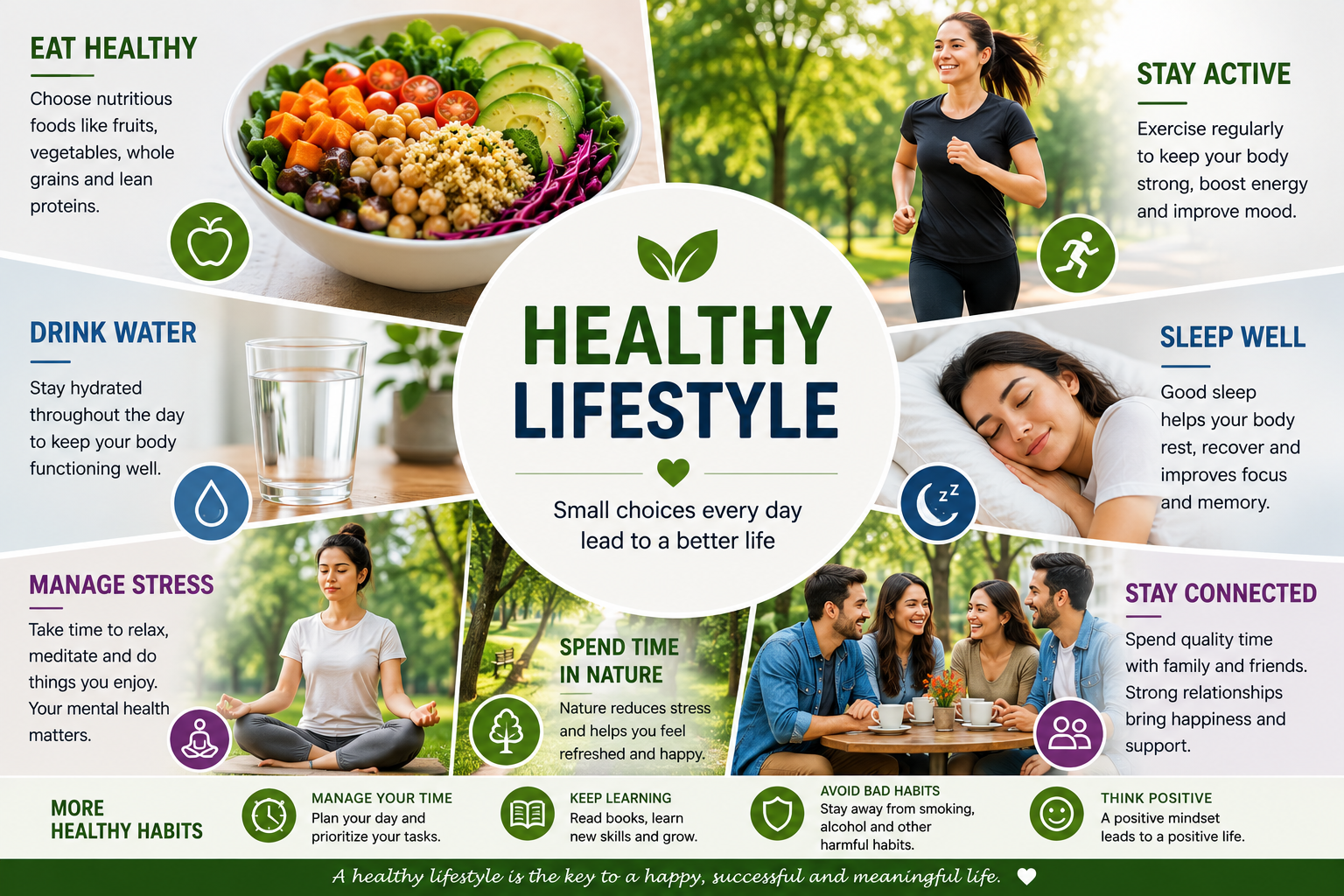
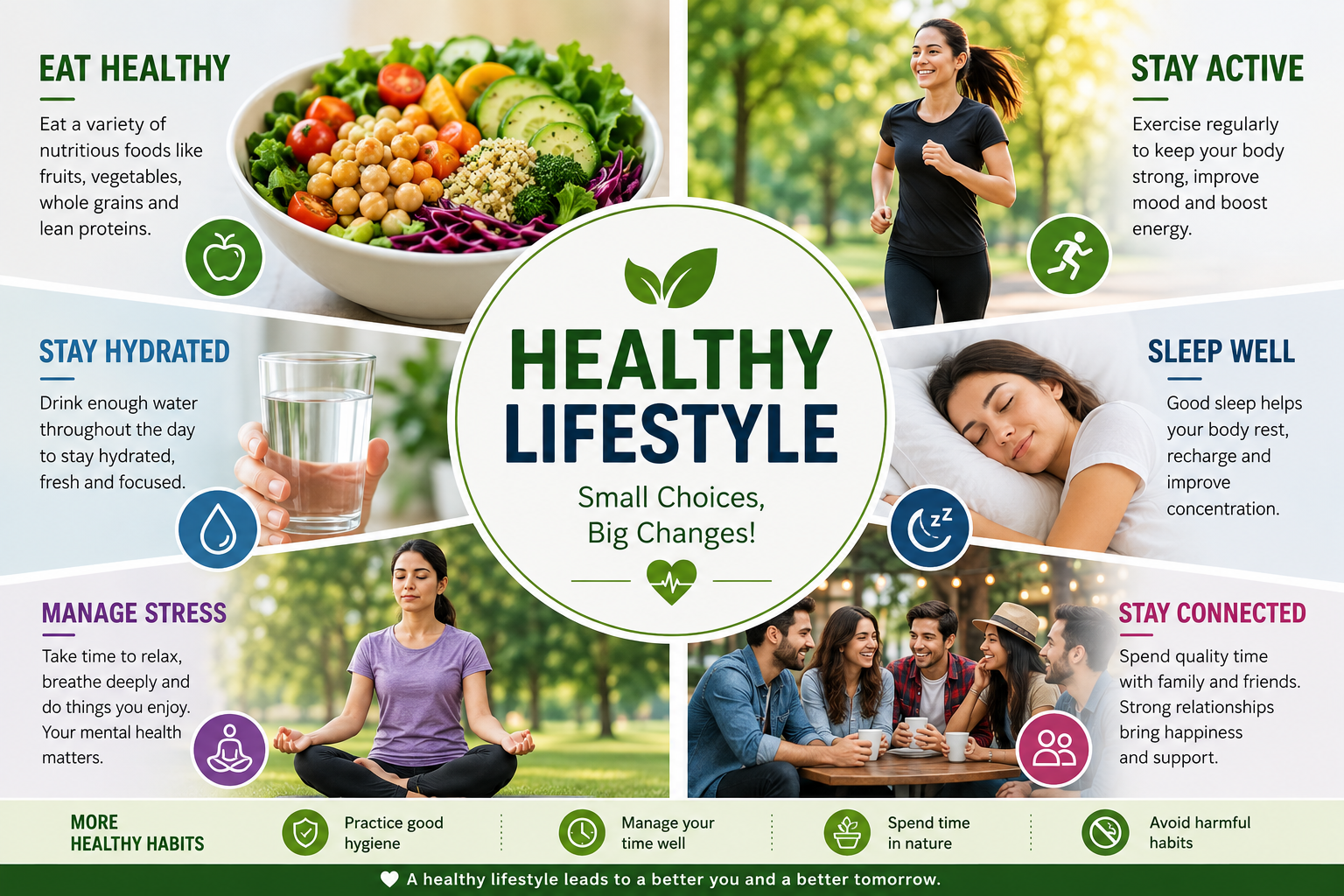
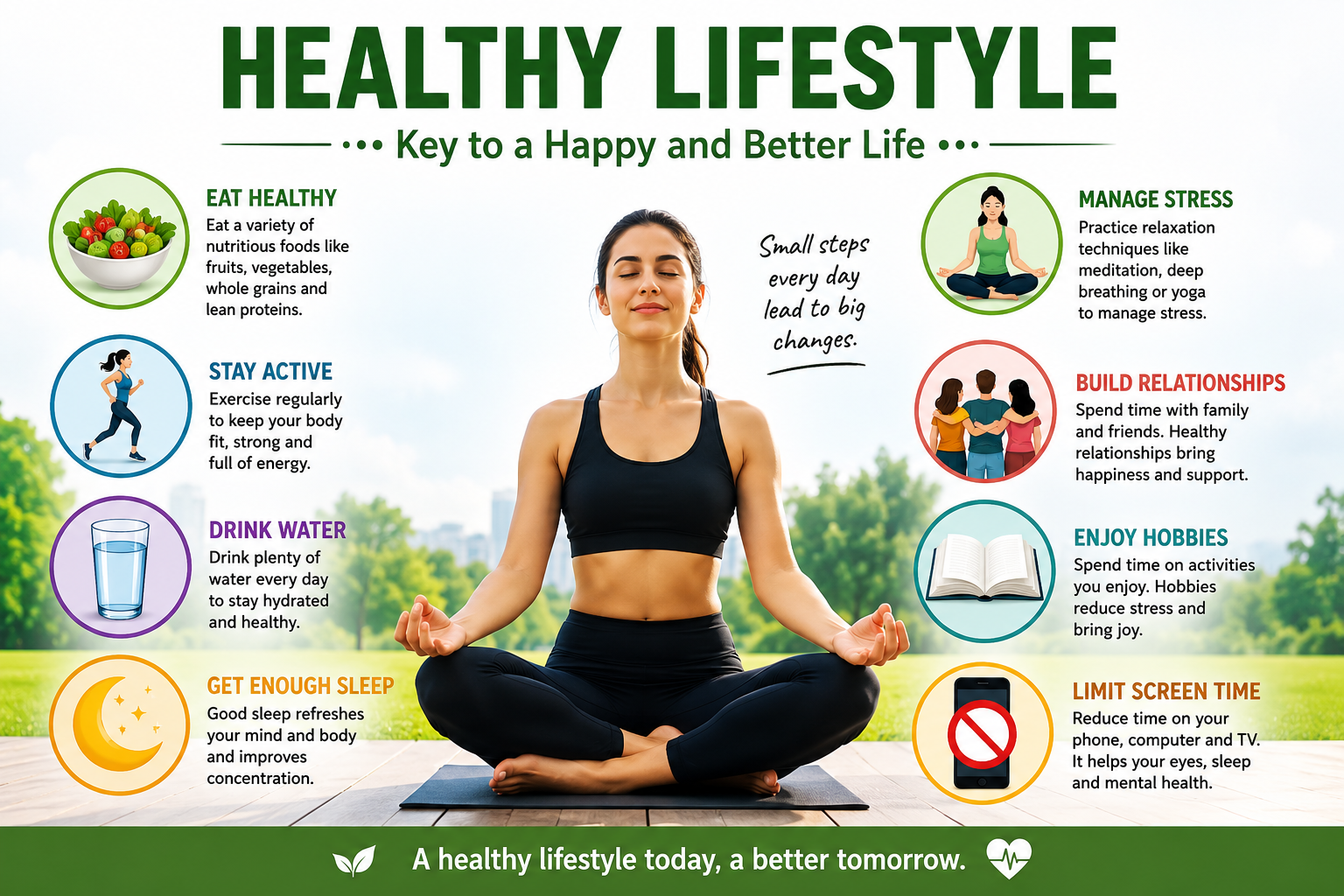
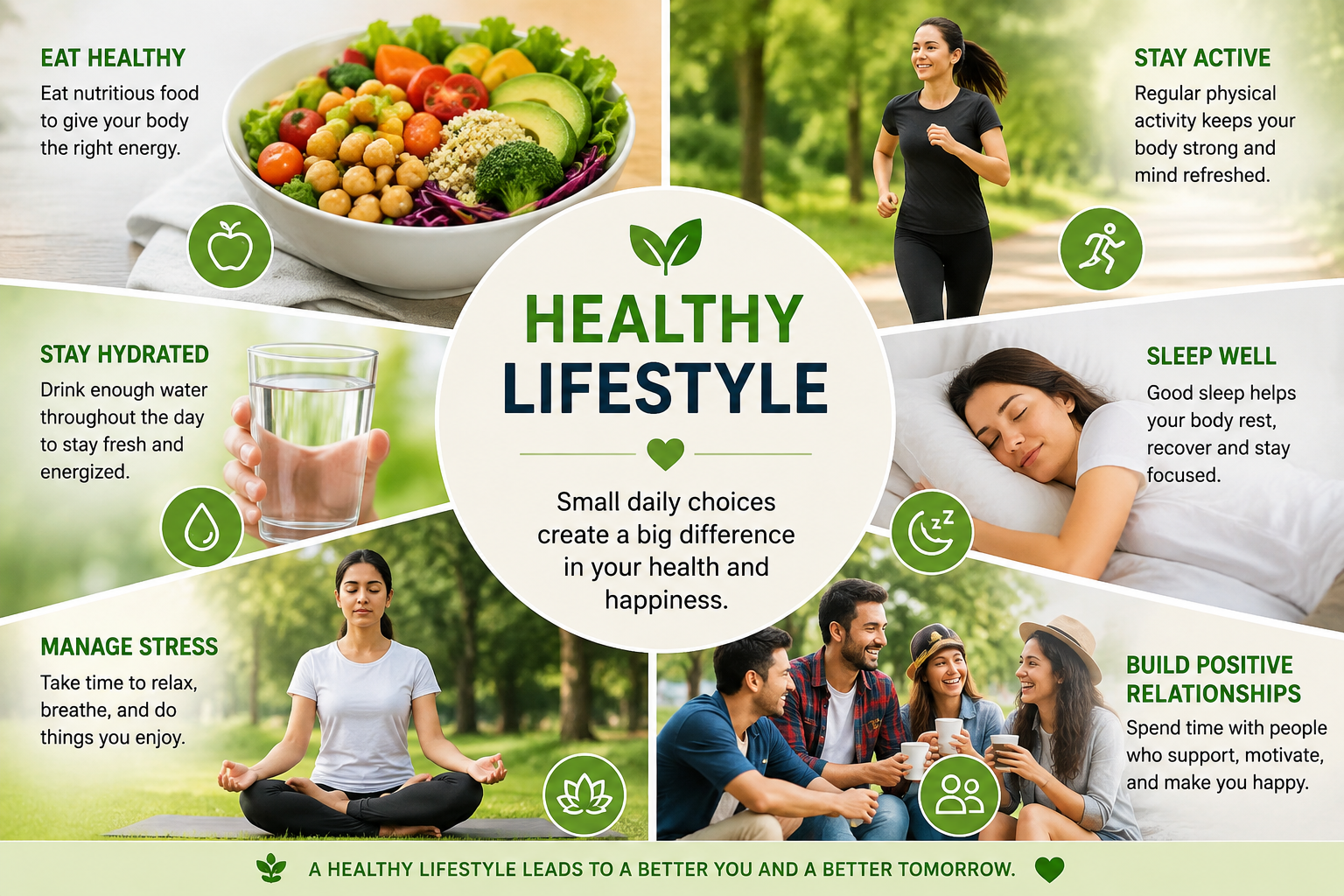
A healthy lifestyle means following daily habits that support physical, mental, and emotional well-being. It includes eating nutritious food, staying physically active, getting enough sleep, managing stress, maintaining personal hygiene, and having positive relationships. It also means avoiding harmful habits and making responsible choices.
A healthy lifestyle does not have to be complicated. Small changes, such as drinking more water, walking every day, eating more fruits and vegetables, and sleeping on time, can have a positive impact on overall health.
Importance of a Balanced Diet
Food provides the energy and nutrients that our bodies need to function properly. A balanced diet should include fruits, vegetables, whole grains, proteins, and healthy fats. Drinking enough water is also essential.
People should try to reduce excessive amounts of processed food, sugary drinks, and unhealthy fast food. Eating nutritious meals can support the immune system, maintain energy levels, and help people maintain a healthy weight.
It is also useful to eat meals at regular times instead of frequently skipping meals. Healthy eating is not about completely avoiding favorite foods; it is about maintaining balance and making nutritious choices most of the time.
Exercise and Physical Activity
Physical activity is another important part of a healthy lifestyle. Exercise helps strengthen muscles and bones and supports heart health. It can also improve energy and mood.
Exercise does not always require a gym membership. Walking, cycling, swimming, gardening, dancing, playing sports, and exercising at home are all useful ways to stay active. People who spend many hours sitting should take regular breaks and move around during the day.
Regular physical activity can become easier when people choose activities they enjoy. Making exercise part of a daily routine can help turn it into a long-term habit.
The Importance of Good Sleep
Sleep is essential for both the body and mind. Many people stay awake late because of smartphones, social media, entertainment, or work. However, regularly getting insufficient sleep can affect concentration, mood, energy, and overall well-being.
Following a regular sleep schedule can help the body rest and recover. Reducing screen time before bedtime, creating a relaxing nighttime routine, and keeping the sleeping environment comfortable can also improve sleep quality.
Mental Health and Stress Management
Mental health is an important part of a healthy lifestyle. People may experience stress because of education, work, relationships, financial difficulties, or personal responsibilities. While some stress is normal, continuous stress can negatively affect well-being.
People should make time for activities that help them relax. Reading, listening to music, gardening, exercising, spending time outdoors, and talking with trusted friends or family members can be helpful ways to manage everyday stress.
It is also important to recognize that asking for support is not a weakness. Talking to someone trustworthy when life feels difficult can provide emotional support and a different perspective.
Technology and Modern Lifestyle
Technology has made communication, education, entertainment, and work easier. Smartphones and social media are now part of everyday life. However, excessive screen time can become unhealthy.
Spending too much time on social media may reduce physical activity and interfere with sleep. It can also encourage people to compare themselves with others. A healthy lifestyle requires a balanced relationship with technology.
Taking regular breaks from screens and spending time with family, friends, hobbies, and outdoor activities can create a healthier daily routine.
Healthy Relationships
Social relationships have an important influence on our lifestyle and happiness. Family members, friends, and supportive communities can provide encouragement and emotional support.
Healthy relationships are based on respect, honesty, communication, trust, and understanding. At the same time, people should maintain healthy boundaries and avoid relationships that consistently create unnecessary stress or negativity.
Spending quality time with people who respect and support us can contribute to emotional well-being.
Personal Hygiene and Cleanliness
Personal hygiene is another basic part of a healthy lifestyle. Regular bathing, brushing teeth, washing hands, wearing clean clothes, and keeping the surrounding environment clean can help protect against illness.
Good hygiene can also improve confidence and make social interactions more comfortable. Keeping the home, workplace, or study area organized can create a more peaceful environment.
Avoiding Harmful Habits
A healthy lifestyle also involves avoiding habits that can damage physical and mental health. Smoking, drug use, excessive alcohol consumption, and other harmful behaviors can have serious long-term effects.
Young people should learn about the consequences of harmful habits and make responsible choices. Developing healthy habits early in life can help create a stronger and healthier future.
Time Management and Daily Routine
Good time management can make everyday life more organized. People often feel stressed because they have many responsibilities but do not have a clear routine.
Creating a simple daily schedule can help people balance education, work, exercise, family, hobbies, and rest. Setting realistic goals is also useful. Instead of trying to change everything immediately, people can begin with small improvements.
For example, someone can start by walking for 20 minutes, drinking more water, sleeping earlier, or reducing unnecessary phone use. These small actions can gradually become healthy habits.
Spending Time in Nature
Nature can have a positive influence on physical and mental well-being. Walking in a park, gardening, spending time outdoors, or simply enjoying fresh air can provide a break from busy routines.
Gardening and other outdoor hobbies can also encourage physical activity and reduce stress. Spending time away from screens and busy environments can help people feel calmer and more refreshed.
Healthy Lifestyle for Students
A healthy lifestyle is especially important for students. Students need enough energy and concentration to learn effectively. They should balance their studies with sleep, exercise, healthy meals, friendships, hobbies, and relaxation.
Studying for long hours without taking breaks can lead to tiredness and stress. A balanced routine can help students remain focused while also protecting their health.
Academic success is important, but health should not be ignored in the process. A healthy student is more likely to have better energy, concentration, motivation, and confidence.
Conclusion
A healthy lifestyle is a combination of positive physical, mental, emotional, and social habits. Eating nutritious food, exercising regularly, getting enough sleep, managing stress, maintaining relationships, practicing good hygiene, using technology responsibly, and avoiding harmful habits can improve everyday life.
A person does not need to make extreme changes to live a healthier life. Small positive actions repeated consistently can create meaningful results over time. By taking care of our health today, we can build a more energetic, confident, productive, and fulfilling future.
Frequently Asked Questions (FAQs)
1. What is a healthy lifestyle?
A healthy lifestyle means following habits that support physical, mental, and emotional well-being. It includes healthy eating, regular exercise, sufficient sleep, stress management, good hygiene, and positive relationships.
2. Why is a healthy lifestyle important?
A healthy lifestyle can improve energy, fitness, mood, concentration, and overall quality of life. It can also help people develop better long-term health habits.
3. What should I eat for a healthy lifestyle?
A balanced diet should include vegetables, fruits, whole grains, proteins, healthy fats, and enough water. Highly processed foods and excessive sugary drinks should be limited.
4. How much exercise is needed for a healthy lifestyle?
The amount of exercise a person needs can vary depending on age, health, and individual circumstances. Regular activities such as walking, cycling, sports, or home exercises can help people stay active.
5. How does sleep affect lifestyle?
Good sleep helps the body and mind rest and recover. Poor sleep can affect concentration, mood, energy, and daily performance.
6. How can I reduce stress?
Stress can be managed through regular physical activity, relaxation, hobbies, time in nature, good sleep, and talking to trusted people. Organizing daily tasks can also make life feel more manageable.
7. How can I create a healthy daily routine?
Start with simple habits such as waking and sleeping at regular times, eating balanced meals, staying active, drinking enough water, limiting unnecessary screen time, and making time for relaxation.
8. Can technology affect a healthy lifestyle?
Yes. Technology can be useful, but excessive screen time may reduce physical activity and interfere with sleep. Taking regular screen breaks and maintaining a balance between online and offline activities is important.
9. Is a healthy lifestyle expensive?
Not necessarily. Many healthy habits are inexpensive. Walking, exercising at home, drinking water, eating seasonal fruits and vegetables, and spending time outdoors can all support a healthy lifestyle without requiring a large budget.
10. What is the easiest way to start living healthier?
Start with one or two small changes. For example, drink more water, walk regularly, improve your sleep schedule, or add more vegetables to your meals. Once these habits become easier, gradually add other healthy habits.