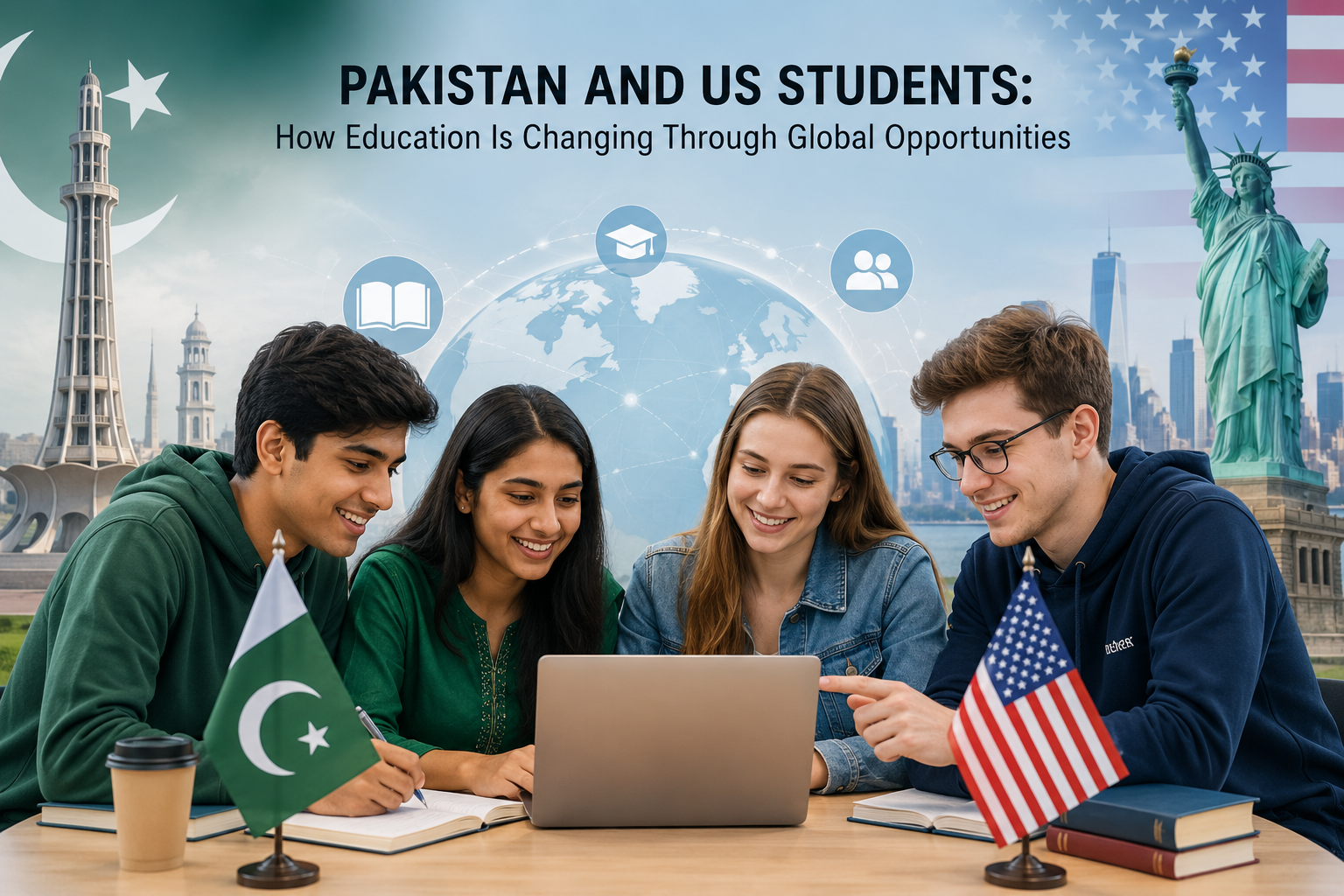
Education is no longer limited by national borders. In the modern world, students can connect with universities, teachers, researchers and classmates from almost anywhere. The growing educational connection between Pakistan and the United States is a strong example of how globalization is changing the way young people learn. Pakistani students are increasingly interested in international education, while American students have opportunities to learn about Pakistan through cultural exchange, academic programs, research and digital collaboration.
The relationship between Pakistan and US students goes beyond studying in a foreign country. It includes online learning, scholarships, student exchange programs, research partnerships, international competitions and cultural activities. These opportunities can help students develop academic knowledge as well as communication, teamwork and cross-cultural skills.
As technology continues to improve, students in Pakistan and the United States can communicate and work together without always needing to travel. This has created new possibilities for education and has made international collaboration more accessible.
Growing Interest in International Education: Students today have access to more educational choices than previous generations. Universities around the world offer programs in computer science, engineering, business, medicine, social sciences, artificial intelligence, information technology and many other fields.
For Pakistani students, American universities can represent an opportunity to experience a different academic environment. Many students are interested in advanced research facilities, diverse academic programs and opportunities to interact with students from different parts of the world.
At the same time, American students can benefit from learning about Pakistan. Pakistan has a large and diverse population, a rich cultural history and a growing technology and entrepreneurial sector. Students interested in South Asian studies, international relations, economics, technology or cultural studies may find Pakistan an important area of academic interest.
This two-way exchange can make education more meaningful because students are not simply learning from textbooks. They are also learning from people with different experiences and perspectives.
Opportunities for Pakistani Students in the United States:
One of the major reasons Pakistani students consider the United States is the wide variety of academic programs available. Students can choose from universities and colleges offering undergraduate, graduate and research programs in numerous fields.
A student interested in computer science, for example, may explore programs involving software development, artificial intelligence, data science or cybersecurity. Another student may be interested in engineering, business, economics, social sciences or creative subjects.
International education can also expose students to different teaching approaches. Students may participate in research projects, presentations, group assignments, practical activities and discussions that encourage critical thinking.
However, studying abroad requires careful preparation. Students need to understand admission requirements, tuition costs, living expenses, language requirements, application deadlines and other conditions before applying.
The Importance of Scholarships:
Financial costs can be one of the biggest challenges for students who want to study internationally. Tuition fees, accommodation, transportation, food, books and other expenses can make studying abroad difficult for some families.
Scholarships can help make international education more accessible. Universities, educational organizations and other institutions may offer scholarships or financial assistance to eligible students.
Students should research opportunities carefully and check the requirements of each scholarship. Some programs may consider academic achievement, leadership activities, community involvement, personal statements or other factors.
It is important for students to use reliable and official information when searching for scholarships. They should check university websites and official program information instead of depending entirely on social media posts or unofficial claims.
Good preparation can make a significant difference. Students who know their academic goals early can begin preparing their documents, improving their skills and researching opportunities well before application deadlines.
Technology Is Changing Student Connections:
Technology has completely changed international education. In the past, students from Pakistan and the United States might have needed to travel thousands of miles to communicate directly. Today, they can connect through video meetings, online classrooms, educational platforms and collaborative digital tools.
A Pakistani student can attend an online lecture organized by an international institution. An American student can participate in a virtual discussion with students in Pakistan. Groups from both countries can even work together on projects without being in the same physical classroom.
This is particularly important for students who cannot afford international travel. Digital education can provide access to global learning experiences from home.
Technology also makes it easier for students to exchange ideas. They can discuss academic subjects, share presentations, participate in competitions and collaborate on research.
Virtual Student Exchange Programs:
Traditional exchange programs often involve students physically travelling to another country for a specific period. While these opportunities remain valuable, virtual exchange programs are creating another option.
Through online platforms, students can meet international classmates, participate in discussions and learn about different cultures without leaving their home country.
For example, Pakistani and American students could be placed into an online group where they discuss environmental challenges, education, technology or entrepreneurship. Each student brings knowledge from their own community, creating a richer learning experience.
Virtual exchanges can also help students improve communication skills. Communicating with people from different cultural backgrounds requires listening, patience and respect.
These skills are valuable not only in education but also in future workplaces, where international teams are increasingly common.
Cultural Exchange and Understanding:
Academic knowledge is only one part of international education. Cultural understanding is equally important.
Students from Pakistan and the United States may have different traditions, languages, social experiences and educational backgrounds. When they communicate directly, they can learn about these differences in a positive environment.
A Pakistani student may introduce an American classmate to Pakistani traditions, literature or regional culture. An American student may share information about life and education in the United States.
Such interactions can challenge stereotypes and encourage mutual understanding.
Instead of learning about another country only through news or social media, students can hear directly from people who live there. Personal interaction can create a more balanced understanding of different societies.
What American Students Can Learn From Pakistan:
International exchange should not be viewed as something that benefits only students who travel to the United States. American students can also gain valuable knowledge through connections with Pakistani students.
Pakistan has a long and diverse history, with many languages, regional cultures, traditions and forms of literature. It is also a country with a large young population and an expanding digital and technology sector.
American students interested in South Asia can learn about Pakistan through academic courses, research, cultural programs and conversations with Pakistani students.
They can explore subjects such as Pakistani history, economics, literature, environmental issues, entrepreneurship and technological development.
Direct communication with Pakistani students can make these subjects more personal and understandable.
Research Collaboration:
Research is another important area where Pakistani and American students can work together.
Students from different countries may have different experiences and approaches to solving problems. Bringing these perspectives together can encourage creativity.
Research collaboration could involve areas such as artificial intelligence, climate change, renewable energy, public health, agriculture, education, cybersecurity or social development.
For example, students interested in environmental science could explore how communities in different countries respond to environmental challenges. Technology students could collaborate on digital projects. Business students could study entrepreneurship in different markets.
Such projects can teach students how to collect information, communicate ideas, divide responsibilities and work toward a shared goal.
Building Career Skills:
International educational experiences can help students develop skills that are increasingly important in the modern workplace. Communication is one example. Students who regularly communicate with people from different backgrounds may become more comfortable explaining their ideas clearly.
Teamwork is another important skill. International projects require students to coordinate responsibilities and respect different opinions.
Problem-solving and adaptability are also valuable. Working with people who have different approaches can encourage students to think about problems from multiple perspectives.
These skills can benefit students regardless of whether they eventually work in Pakistan, the United States or another country.
Challenges for Pakistani Students:
Although international education provides many opportunities, students can also face challenges when studying abroad.
One challenge is adapting to a different academic environment. Teaching methods, classroom expectations and assessment systems may be different from those students are familiar with.
Language can also require adjustment. Even students who have strong English skills may need time to become comfortable with academic writing, presentations and everyday communication.
Financial pressure can be another concern. Students and their families need to plan carefully for tuition and living expenses.
Homesickness can also affect students living far away from family and friends. Staying connected with loved ones and building a supportive community can make the transition easier.
Understanding these challenges before travelling can help students prepare mentally, academically and financially.
Preparing for International Education:
Students interested in studying abroad should begin preparation early.
The first step is identifying academic interests. Students should think about what subjects they enjoy and what career direction they may want to pursue.
Next, they should research universities and programs carefully. Important factors may include course content, admission requirements, costs, location and available student services.
Students should also organize their academic documents and pay attention to application deadlines.
Improving communication skills can be particularly useful. Strong reading, writing, listening and speaking abilities can make academic life easier in an English-speaking environment.
Financial planning is equally important. Students should calculate expected costs and research scholarships or other forms of financial support.
Most importantly, students should verify information through official sources before making major decisions.
The Role of Online Learning:
Online learning has become an important part of modern education. It allows students to access lectures, courses, educational resources and international communities without travelling.
For Pakistani students who cannot immediately study abroad, online education can provide a way to gain international exposure.
Similarly, American students can use online resources to learn about Pakistani institutions, culture and academic subjects.
Online learning also makes lifelong education easier. Students can continue learning new skills even after completing school or university.
This is especially important in rapidly changing fields such as technology. New tools and concepts appear regularly, so students need to continue developing their knowledge.
Student Entrepreneurship and Innovation:
Entrepreneurship is another area where international student connections can be valuable.
Pakistan has a growing community of young entrepreneurs and technology professionals. American universities also provide environments where students can explore startups, innovation and business ideas.
Students from both countries can exchange ideas about entrepreneurship and learn how different markets operate.
A collaborative project might involve developing a digital product, creating an educational platform or exploring a solution to a social problem.
International collaboration can help students understand that successful ideas do not always come from one country or one community. Innovation often develops when people with different experiences work together.
The Future of Pakistan and US Student Relations:
The future of educational relations between Pakistan and the United States is likely to become increasingly digital and collaborative.
Physical student exchange programs will continue to provide valuable experiences, but online collaboration can expand participation to students who cannot travel.
Virtual classrooms, international research projects, online competitions and digital conferences can connect students from both countries more frequently.
Emerging technologies may create even more opportunities. Artificial intelligence, virtual learning environments and advanced communication tools could make international education more interactive.
The future generation of students will likely work in a world where international cooperation is normal. Learning how to communicate across cultures can therefore become an important part of education.
Why Global Education Matters:
Global education is not simply about earning a degree in another country. It is about developing a broader understanding of the world.
Students who interact with people from different backgrounds can learn that there are many ways to approach the same problem. They can become more open to different ideas and more prepared to work in diverse environments.
For Pakistan and the United States, student connections can also create a foundation for long-term academic and cultural relationships.
Today's students may become tomorrow's researchers, entrepreneurs, teachers, engineers, lawyers, scientists and leaders. The relationships they build during their education can influence future cooperation between communities and countries.
Conclusion:
The connection between Pakistan and US students demonstrates how education is changing in a globalized world. Students can now access international opportunities through universities, scholarships, exchange programs, research partnerships and digital platforms.
For Pakistani students, international education can provide exposure to new academic environments, research opportunities and global networks. For American students, interaction with Pakistani students can offer valuable insight into Pakistan's culture, society, history and developing fields.
Technology has made these connections easier than ever. Students can collaborate across borders without always needing to travel, while virtual exchange programs can bring international experiences into ordinary classrooms.
There are still challenges, including financial costs, cultural adjustment, academic differences and communication barriers. However, careful planning and reliable information can help students manage these difficulties.
Ultimately, the greatest value of international student connections is the exchange of ideas. When Pakistani and American students learn together, they develop more than academic knowledge. They build communication skills, cultural understanding, confidence and international perspectives.
As education continues to evolve, these connections can help create a generation of students who are prepared not only for their own countries but for a world where collaboration, technology and global understanding are increasingly important.
FAQs
1. Why is international education important for Pakistan and US students?
It helps students gain global exposure, learn different perspectives, and develop communication and professional skills.
2. How can Pakistani students study in the USA?
Students can apply to US universities and explore suitable programs, admission requirements, scholarships, and financial-aid opportunities.
3. Can Pakistani and US students collaborate online?
Yes, they can connect through virtual classrooms, research projects, online competitions, and international educational programs.
4. What can students learn through cultural exchange?
They can learn about different cultures, traditions, educational systems, and ways of thinking while building mutual understanding.
5. What are the main benefits of Pakistan-US student connections?
They provide opportunities for academic learning, networking, research, cultural exchange, innovation, and future career development.