Introduction
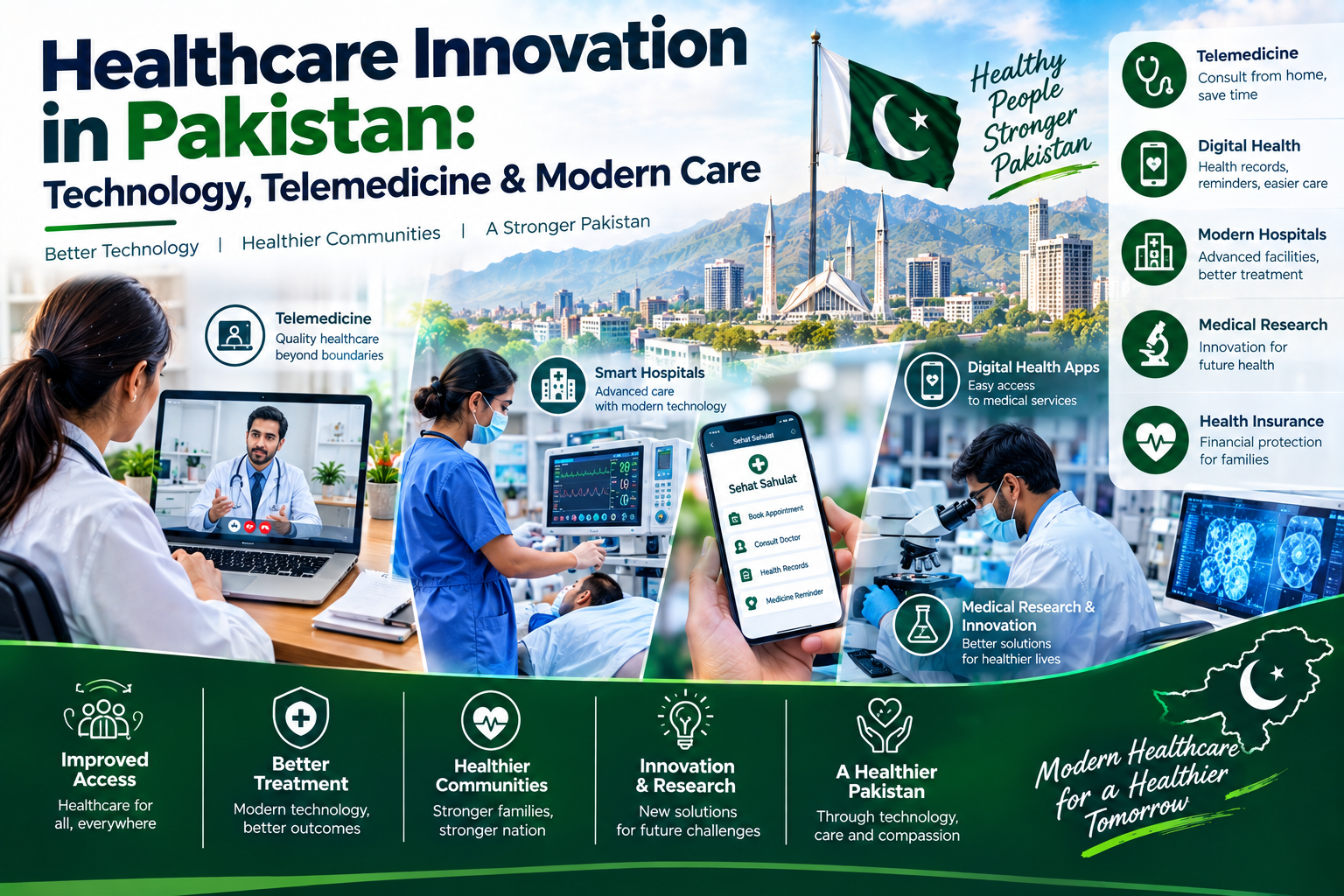
Healthcare is one of the most important sectors in every country because the health of people directly affects the quality of life, education, employment, and economic development. In Pakistan, the healthcare sector is gradually changing as technology, digital services, modern medical equipment, and innovative healthcare solutions become more common. Healthcare innovation in Pakistan is helping doctors, hospitals, patients, researchers, and healthcare organizations find new ways to improve medical services.
For many years, healthcare in Pakistan has faced challenges such as limited access to specialized doctors, differences between urban and rural healthcare facilities, overcrowded hospitals, high treatment costs, and difficulties in reaching medical experts. Innovation cannot solve every problem immediately, but technology is creating new possibilities for improving healthcare delivery.
Telemedicine, digital health applications, electronic medical records, online appointments, modern diagnostic equipment, artificial intelligence, wearable devices, and digital payment systems are examples of technologies that are changing healthcare. These developments can make healthcare services more accessible and convenient when they are implemented responsibly.
Healthcare innovation is particularly important for Pakistan because the country has a large population spread across major cities, small towns, villages, and remote areas. Digital healthcare can help connect patients with qualified professionals even when a specialist is not physically available nearby.
What Is Healthcare Innovation?
Healthcare innovation means using new ideas, technologies, processes, and services to improve healthcare. It can involve medical treatment, diagnosis, prevention, hospital management, patient communication, medical education, or healthcare administration.
Innovation does not always mean inventing a completely new machine or medicine. Sometimes a simple digital system can make a major difference. For example, an online appointment system can reduce unnecessary waiting at a hospital. A digital medical record can help doctors access a patient's previous information more efficiently.
Healthcare innovation can include:
Telemedicine and online consultations
Digital health applications
Electronic medical records
Modern diagnostic equipment
Artificial intelligence
Remote patient monitoring
Wearable health devices
Online appointment systems
Digital pharmacies and medicine information services
Health education platforms
Hospital management software
These technologies are becoming increasingly relevant to Pakistan's healthcare system.
The Growth of Digital Healthcare in Pakistan
Digital technology has changed many parts of daily life in Pakistan, and healthcare is also becoming more digital. Smartphones, internet access, mobile applications, and online communication have created new ways for patients and healthcare professionals to interact.
Instead of depending completely on physical visits, patients can increasingly use digital services for some healthcare needs. They may search for healthcare information, schedule appointments, communicate with healthcare providers, or receive follow-up guidance through digital platforms.
This does not mean that technology can replace doctors. Rather, technology can support healthcare professionals and make certain services easier to access.
Digital healthcare can be particularly useful when patients need basic guidance, follow-up consultations, medical information, or communication with specialists.
Telemedicine in Pakistan
Telemedicine is one of the most important areas of healthcare innovation. It allows patients to communicate with healthcare professionals through digital technologies instead of always visiting a hospital or clinic physically.
A telemedicine consultation may involve a video call, phone call, or another secure digital communication method.
Telemedicine can be useful for people living in areas where specialized healthcare services are limited. A patient in a smaller city or rural area may be able to communicate with a doctor located in a major urban center.
This can reduce travel requirements and save time for patients and families.
Benefits of Telemedicine
Telemedicine can provide several benefits:
Easier access to doctors
Reduced travel time
Convenient follow-up consultations
Better connection between rural patients and specialists
Support for people with mobility difficulties
Easier communication between healthcare professionals
More convenient access to certain healthcare services
However, telemedicine is not suitable for every medical situation. Emergencies, physical examinations, surgeries, and many diagnostic procedures still require appropriate in-person medical care.
Healthcare Innovation and Rural Pakistan
One of the biggest opportunities for healthcare innovation is improving access in rural areas.
Major cities generally have more hospitals, specialists, laboratories, and medical facilities. Rural communities may have fewer healthcare resources. Long travel distances can make specialist consultations difficult for some families.
Digital healthcare can help reduce this gap by connecting healthcare professionals with patients through technology.
For example, a local healthcare center could potentially use digital communication to connect with specialists in another city. This type of system can support local healthcare workers and help patients receive specialist guidance when appropriate.
Healthcare innovation should therefore focus not only on advanced hospitals in large cities but also on solutions that can work in smaller communities.
Artificial Intelligence in Pakistani Healthcare
Artificial intelligence is becoming an important area of global healthcare innovation. AI systems can process large amounts of information and assist professionals in areas such as medical imaging, research, data analysis, and administrative work.
In Pakistan, AI has potential applications in healthcare, although its use requires appropriate infrastructure, professional oversight, data protection, and careful testing.
AI may support doctors by helping analyze certain types of medical information. It can also assist hospitals with administrative processes and data management.
However, AI should not be treated as a replacement for qualified healthcare professionals. Medical decisions can involve complex factors that require professional judgment.
The responsible use of AI means keeping healthcare professionals involved and ensuring that patients receive appropriate medical supervision.
Modern Diagnostic Technology
Diagnosis is an essential part of healthcare. Doctors need accurate information to understand a patient's condition and decide on appropriate treatment.
Modern diagnostic equipment has improved the ability of healthcare providers to examine different medical conditions. Imaging technologies, laboratory systems, digital monitoring devices, and other diagnostic tools can provide valuable information.
Innovation in diagnostic technology can help improve efficiency and may support earlier identification of certain health problems.
Pakistan's healthcare institutions can benefit from investment in modern diagnostic facilities, trained professionals, equipment maintenance, and quality standards.
Technology alone is not enough. A machine is useful only when it is properly operated, maintained, and interpreted by qualified professionals.
Electronic Medical Records
Traditional paper records can be difficult to organize, store, and transfer. Electronic medical records provide a digital approach to storing patient information.
A digital medical record can potentially contain information such as previous consultations, laboratory results, prescriptions, and other relevant healthcare information.
For doctors, organized records can make it easier to understand a patient's medical history.
For hospitals, electronic records can improve administrative organization and reduce dependence on physical paperwork.
However, medical records contain sensitive information. Healthcare organizations must therefore take privacy and cybersecurity seriously.
Mobile Health Applications
Smartphones have created another opportunity for healthcare innovation.
Mobile health applications can provide services such as:
Appointment scheduling
Health reminders
Medical information
Fitness tracking
Medication reminders
Communication with healthcare providers
Access to health records where supported
Such applications can make healthcare information more accessible.
At the same time, users should be careful about relying on unverified health information online. A mobile application should not automatically be considered a substitute for professional medical advice.
Wearable Technology and Health Monitoring
Wearable devices such as smartwatches and fitness trackers are becoming increasingly popular around the world. Some devices can monitor information such as physical activity, heart rate, or sleep patterns.
These technologies can encourage people to pay more attention to their health and daily habits.
In the future, wearable technology may also contribute to remote monitoring systems for certain patients under professional supervision.
However, users should understand that consumer wearable devices are not necessarily medical diagnostic devices. Their readings may have limitations and should not automatically be interpreted as a medical diagnosis.
Healthcare Innovation and Hospitals
Hospitals can benefit from innovation in many ways.
Hospital management systems can help organize appointments, patient information, billing, laboratory records, and other administrative activities.
Digital systems can also improve communication between different departments.
For example, a hospital may use technology to coordinate laboratory services, pharmacy information, patient records, and appointment schedules.
Better organization can save time for healthcare workers and patients.
Innovation can therefore improve not only medical treatment but also the overall patient experience.
Online Appointment Systems
Waiting for long periods at hospitals can be frustrating for patients. Online appointment systems provide a way to schedule visits in advance.
Patients can potentially select an available time and receive appointment information through a digital platform.
This can help hospitals manage patient flow more effectively.
Appointment systems are a relatively simple form of healthcare innovation, but they can make healthcare services more convenient.
Digital Health Education
Healthcare innovation is not limited to hospitals and doctors. Education is another important area.
Digital platforms can provide health education materials to the public. People can learn about general health practices, disease prevention, nutrition, hygiene, exercise, and other topics from reliable sources.
Healthcare professionals and institutions can use websites, applications, videos, and social media to communicate health information.
However, online health information should come from reliable and qualified sources. Incorrect information can create confusion and may lead people to make unsafe decisions.
Innovation in Medical Education
Medical students and healthcare professionals can also benefit from technology.
Online courses, digital libraries, medical simulations, recorded lectures, and virtual learning platforms can provide additional educational resources.
Technology can help students study complex subjects using diagrams, interactive materials, and educational software.
For healthcare professionals, digital education can provide opportunities for continuing professional development.
Pakistan's medical education system can benefit from responsible use of technology alongside traditional teaching methods and practical training.
Healthcare Startups in Pakistan
Startups are another important part of healthcare innovation.
Entrepreneurs can develop technology-based solutions for areas such as:
Telemedicine
Appointment management
Health information
Medical logistics
Digital payments
Laboratory services
Pharmacy services
Hospital management
Health education
Healthcare startups can help introduce new business models and technologies.
However, healthcare is a sensitive sector. Startups need to consider patient safety, privacy, professional regulations, data security, and reliability.
A healthcare application should focus on solving a real problem rather than simply adding technology without a clear purpose.
Digital Payments in Healthcare
Financial technology is also connected to healthcare innovation.
Digital payment systems can make it easier for patients to pay for consultations, laboratory services, medicines, and other healthcare expenses where such payment options are supported.
Digital receipts and payment records can also help organizations maintain better financial records.
The combination of fintech and healthcare can create more convenient healthcare experiences for patients.
Challenges of Healthcare Innovation in Pakistan
Although healthcare innovation provides many opportunities, Pakistan also faces several challenges.
Limited Digital Infrastructure
Reliable internet connectivity and digital infrastructure are important for telemedicine and online healthcare services. Areas with poor connectivity may not benefit equally from digital healthcare.
Cost of Technology
Modern medical equipment and digital systems can be expensive. Hospitals and healthcare organizations need investment to purchase, operate, and maintain them.
Training
Healthcare professionals need appropriate training to use new technologies effectively.
Introducing technology without training can reduce its usefulness.
Data Privacy
Healthcare information is sensitive. Digital systems must protect patient information from unauthorized access.
Cybersecurity
As hospitals become more digital, cybersecurity becomes increasingly important. Healthcare organizations need secure systems, responsible data practices, and appropriate safeguards.
Digital Literacy
Some patients may not be comfortable using online healthcare platforms. Simple interfaces and basic digital education can help improve accessibility.
The Importance of Patient Privacy
Privacy should remain a major priority in healthcare innovation.
A patient's medical information should be handled responsibly. Digital healthcare providers need to consider how information is collected, stored, accessed, and shared.
Patients should also be informed about how their information is being used when appropriate.
Strong privacy practices can increase public confidence in digital healthcare services.
Healthcare Innovation and Women
Technology can create additional opportunities for women to access healthcare services.
In some communities, transportation, distance, or social circumstances can make healthcare access difficult. Telemedicine and online health services may provide additional options for consultations where appropriate.
Digital health education can also help women access reliable information about general health and healthcare services.
However, digital solutions should be designed to remain accessible to people with different levels of digital literacy and internet access.
Healthcare Innovation and Young People
Young people in Pakistan are among the most active users of smartphones and digital platforms. This creates opportunities for digital health education.
Young people can use technology to learn about healthy habits, general wellness, mental wellbeing, physical activity, nutrition, and preventive healthcare from reliable sources.
Schools, colleges, healthcare organizations, and technology companies can contribute to responsible digital health education.
The Role of Government and Healthcare Institutions
Healthcare innovation requires cooperation between different groups.
Government institutions can contribute by developing appropriate policies, improving infrastructure, supporting healthcare facilities, and encouraging responsible innovation.
Hospitals can adopt digital systems and train staff.
Universities can conduct research and develop healthcare technologies.
Technology companies can create secure and accessible platforms.
Healthcare professionals can help ensure that innovations are medically appropriate.
Patients can provide feedback about their experiences and needs.
Cooperation between these groups can make healthcare innovation more useful and sustainable.
The Role of Universities and Research
Universities play an important role in innovation because they provide environments for research, education, experimentation, and collaboration.
Pakistani universities can contribute to healthcare innovation through research in areas such as artificial intelligence, biomedical engineering, medical technology, public health, biotechnology, and data science.
Collaboration between universities, hospitals, technology companies, and researchers can help turn ideas into practical solutions.
Research is particularly important because healthcare technologies should be evaluated carefully before widespread adoption.
Future of Healthcare Innovation in Pakistan
The future of healthcare in Pakistan is likely to involve greater use of digital technologies.
Telemedicine may continue to expand where infrastructure and professional systems support it. Digital medical records may become more common. AI may assist with research, administration, and selected clinical tasks. Wearable technology may provide additional health monitoring capabilities.
Remote healthcare could become especially important for communities that have limited access to specialists.
At the same time, traditional healthcare facilities will remain essential. Technology should complement hospitals, clinics, laboratories, doctors, nurses, pharmacists, and other healthcare professionals rather than simply replacing them.
The most useful innovations will likely be those that are affordable, accessible, secure, practical, and designed around real healthcare needs.
How Healthcare Innovation Can Improve Pakistan's Future
Healthcare innovation can contribute to Pakistan's future in several ways.
First, it can improve access to healthcare services.
Second, it can help healthcare organizations manage information more efficiently.
Third, it can support medical education and research.
Fourth, it can create opportunities for technology entrepreneurs and healthcare startups.
Fifth, it can help connect patients with specialists through digital communication.
Finally, innovation can encourage a more connected healthcare system in which technology supports patients and professionals.
However, innovation should always be combined with quality healthcare, professional standards, patient safety, privacy, and responsible implementation.
Conclusion
Healthcare innovation in Pakistan is creating new possibilities for improving medical services and access to healthcare. Telemedicine, digital health applications, electronic medical records, modern diagnostic technology, artificial intelligence, wearable devices, and online appointment systems are examples of innovations that can support the healthcare sector.
Pakistan still faces challenges related to infrastructure, cost, training, digital literacy, privacy, and cybersecurity. These challenges mean that healthcare innovation needs careful planning rather than simply adopting new technology.
The future of healthcare innovation in Pakistan will depend on cooperation among healthcare professionals, government institutions, universities, technology companies, startups, and communities. With responsible development and proper implementation, technology can help make healthcare more accessible, organized, and convenient.
Most importantly, healthcare innovation should remain focused on people. Technology is valuable when it helps patients receive better information, easier access, and appropriate professional care. By combining human expertise with responsible innovation, Pakistan can continue developing a modern healthcare system prepared for future needs.
FAQs
1. What is healthcare innovation in Pakistan?
Healthcare innovation in Pakistan means using modern technology, digital services, new processes, and improved medical solutions to make healthcare more accessible and efficient.
2. What is telemedicine in Pakistan?
Telemedicine allows patients to communicate with healthcare professionals through digital technologies such as online video or phone consultations when appropriate.
3. How can technology improve healthcare in Pakistan?
Technology can support online consultations, digital medical records, appointment systems, modern diagnostics, health education, and communication between patients and healthcare professionals.
4. What are the challenges of healthcare innovation in Pakistan?
Major challenges include infrastructure limitations, technology costs, staff training, digital literacy, data privacy, and cybersecurity.
5. What is the future of healthcare innovation in Pakistan?
The future may include greater use of telemedicine, digital records, artificial intelligence, remote monitoring, healthcare applications, and modern medical technologies alongside traditional healthcare services.