Introduction
Health is one of the most important foundations of a strong and successful country. A healthy population can study, work, earn, and contribute positively to society. Pakistan has made progress in many areas of healthcare, but the country still faces several major health challenges. These challenges affect children, adults, women, families, and communities in both urban and rural areas.
The health system of Pakistan includes public hospitals, private hospitals, clinics, basic health units, rural health centers, pharmacies, laboratories, and community-based services. However, access to quality healthcare is not equal for everyone. Some people have modern medical facilities nearby, while others have to travel long distances to receive basic treatment.
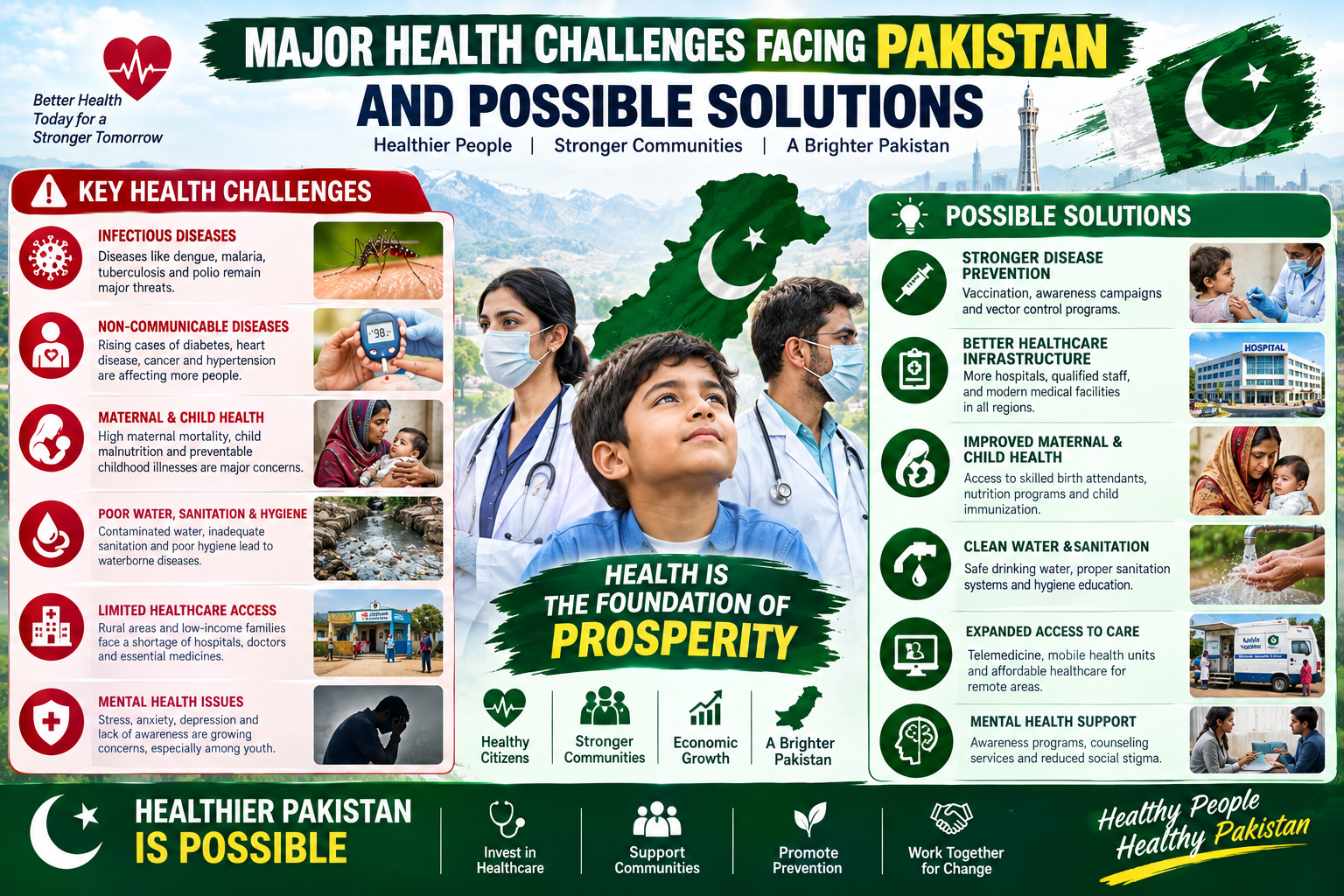
Health challenges in Pakistan are connected with many factors, including poverty, limited healthcare facilities, lack of awareness, malnutrition, unsafe drinking water, poor sanitation, environmental pollution, infectious diseases, non-communicable diseases, and mental health problems.
Understanding these challenges is important because effective solutions require cooperation between the government, healthcare professionals, communities, families, schools, and individuals.
Limited Access to Quality Healthcare
One of the major health challenges in Pakistan is limited access to quality healthcare. Healthcare facilities are not equally available in all parts of the country. Large cities generally have more hospitals, doctors, laboratories, and specialized medical services than smaller towns and villages.
People living in remote areas may have difficulty reaching hospitals. Long distances, transportation problems, and financial limitations can prevent people from getting timely medical attention.
Improving access to healthcare requires better distribution of medical facilities and healthcare workers across different regions.
Rural and Urban Healthcare Gap
There is a noticeable difference between healthcare opportunities in urban and rural communities. Major cities often have private hospitals, specialized doctors, diagnostic centers, and advanced medical equipment.
In many rural areas, people may depend on basic health units or small clinics. Some communities may have limited access to specialists and diagnostic services.
This rural-urban gap can create serious difficulties for families who need specialized treatment. Strengthening rural healthcare facilities can help reduce this difference.
Shortage and Unequal Distribution of Healthcare Workers
Doctors, nurses, pharmacists, technicians, and other healthcare professionals are essential for an effective health system. Pakistan faces challenges related to the availability and distribution of healthcare workers.
Healthcare professionals are often concentrated in major cities because cities provide better professional opportunities and facilities. Rural communities may have fewer healthcare workers available.
Training more healthcare professionals and encouraging them to serve underserved communities can help improve healthcare access.
Healthcare Infrastructure Challenges
Hospitals and clinics need proper buildings, medical equipment, laboratories, medicines, electricity, clean water, and trained staff. Weak infrastructure can reduce the quality of healthcare services.
Some healthcare facilities may require modernization, maintenance, or additional equipment. A strong healthcare system depends not only on the number of hospitals but also on the quality and reliability of their services.
Investment in healthcare infrastructure can improve patient care and strengthen the overall health system.
High Cost of Healthcare
The cost of healthcare can be a major concern for many families. Medical consultations, diagnostic tests, medicines, transportation, and hospital services can become expensive, particularly when treatment is needed for a long period.
Families with limited income may delay medical care because of financial concerns. In some cases, people may rely on home remedies or informal advice instead of consulting qualified healthcare professionals.
Affordable and accessible healthcare services are important for reducing financial barriers.
Maternal Health Challenges
Maternal health is another important area requiring attention. Women need appropriate healthcare before, during, and after pregnancy. Access to qualified healthcare professionals and proper health information can help support safer pregnancies and healthier families.
Women living in remote areas may face additional barriers such as distance from healthcare facilities, transportation problems, and limited awareness.
Improving maternal healthcare requires accessible medical services, trained healthcare professionals, health education, and support for mothers and families.
Child Health Challenges
Children need proper nutrition, vaccination, clean water, education, and access to healthcare. Health problems during childhood can affect physical development, learning, and overall well-being.
Parents and communities can support child health by encouraging healthy habits and seeking professional medical care when children become ill.
Schools can also play an important role by teaching students about hygiene, nutrition, exercise, and healthy lifestyles.
Malnutrition
Malnutrition remains an important public health concern. Good nutrition is essential for growth, development, learning, and overall health.
Children and families may experience nutritional problems because of poverty, limited access to nutritious foods, lack of awareness, or food insecurity.
Health education can help families understand the importance of balanced nutrition. Community programs and appropriate public policies can also contribute to improving nutritional outcomes.
Communicable Diseases
Communicable diseases can spread between people or through contaminated food, water, insects, or other sources. Diseases such as tuberculosis, dengue, hepatitis, and other infections can place pressure on healthcare services.
Prevention plays an important role in controlling infectious diseases. Clean water, sanitation, hygiene, vaccination, disease surveillance, and public awareness can reduce many health risks.
Communities also need reliable information so that people can recognize health risks and seek qualified medical advice when necessary.
Non-Communicable Diseases
Pakistan also faces increasing challenges from non-communicable diseases. These include conditions such as diabetes, cardiovascular diseases, cancer, and chronic respiratory problems.
Many non-communicable diseases are influenced by a combination of genetic, environmental, and lifestyle factors. Regular health checkups, healthy eating, physical activity, avoiding tobacco, and following professional medical advice can support better health.
Public awareness is important because prevention and early detection can help reduce the long-term impact of many diseases.
Mental Health Awareness
Mental health is an important part of overall health, but it is often misunderstood. People may hesitate to discuss stress, anxiety, depression, or other emotional difficulties because of social stigma.
Lack of awareness can prevent people from seeking appropriate support. Schools, families, workplaces, and communities can help create an environment where mental well-being is taken seriously.
Mental health education should focus on awareness, compassion, and encouraging people to seek help from qualified professionals when needed.
Unsafe Drinking Water
Clean drinking water is essential for public health. Contaminated water can contribute to the spread of several diseases.
Access to safe water remains an important challenge in some communities. Water quality can be affected by pollution, poor infrastructure, and inadequate sanitation.
Improving water systems, monitoring water quality, and educating communities about safe water practices can help protect public health.
Poor Sanitation and Hygiene
Sanitation and hygiene are closely connected with health. Poor sanitation can increase the risk of infectious diseases and create unhealthy living conditions.
Simple practices such as regular handwashing, safe food handling, proper waste disposal, and maintaining clean surroundings can contribute to disease prevention.
Government agencies and local communities both have important roles in improving sanitation facilities.
Environmental Pollution
Air, water, and land pollution can affect public health. Air pollution may be caused by traffic, industrial activities, burning waste, and other sources.
Polluted environments can create health risks, especially for vulnerable groups. Reducing pollution requires environmental regulations, better waste management, cleaner transportation, public awareness, and responsible community behavior.
Environmental protection is therefore an important part of long-term health planning.
Lack of Preventive Healthcare
althcare should not only focus on treating diseases after they occur. Prevention is equally important.
Preventive healthcare includes vaccination, health education, regular checkups, hygiene, nutrition, physical activity, aHend awareness of health risks.
A stronger focus on prevention can reduce pressure on hospitals and help people maintain better health.
Vaccination Challenges
Vaccination is an important tool for preventing several infectious diseases. However, vaccination programs can face challenges such as misinformation, lack of awareness, difficult access, and logistical problems.
Communities need accurate and understandable information about vaccination. Healthcare professionals and public health organizations can help address questions and concerns using reliable medical guidance.
Health Education and Awareness
A lack of health knowledge can contribute to unhealthy decisions. People need understandable information about nutrition, hygiene, disease prevention, mental health, and when to seek professional care.
Schools are especially important for health education because students can develop healthy habits at an early age.
Public awareness campaigns through television, radio, schools, community organizations, and responsible digital platforms can also improve health knowledge.
Misinformation About Health
The internet and social media have made health information easier to access, but not all information online is reliable.
False or misleading health claims can cause confusion. People may follow advice that is not supported by qualified medical professionals.
It is important to check health information through trustworthy medical sources and qualified healthcare professionals.
Digital Healthcare Challenges
Technology can improve healthcare through telemedicine, electronic records, online appointments, and digital health education. However, not everyone has equal access to reliable internet, smartphones, or digital services.
The digital divide can prevent some communities from benefiting from healthcare technology.
Expanding digital infrastructure and teaching people how to use reliable digital health services can help reduce this gap.
Emergency Healthcare Preparedness
Pakistan can face emergencies such as floods, earthquakes, heatwaves, outbreaks, and other disasters. These events can place additional pressure on healthcare facilities.
Emergency preparedness requires trained teams, medical supplies, communication systems, emergency plans, and cooperation between government agencies and communities.
A strong emergency healthcare system can help communities respond more effectively during difficult situations.
The Role of Government
The government has a major responsibility in improving healthcare. It can support healthcare through funding, policy development, infrastructure improvement, healthcare worker training, disease prevention programs, and public awareness.
Government efforts should focus on making healthcare accessible and affordable while improving service quality.
Strong monitoring and effective implementation are also important because healthcare policies need to reach the communities they are designed to serve.
Role of the Private Sector
Private hospitals, clinics, laboratories, pharmacies, and technology companies also contribute to Pakistan's healthcare system.
Responsible cooperation between the public and private sectors can increase healthcare capacity, improve technology, and expand access to medical services.
However, healthcare should remain focused on patient safety, quality, affordability, and ethical standards.
Role of Non-Governmental Organizations
Non-governmental organizations and community groups can support healthcare awareness, vaccination campaigns, nutrition programs, emergency response, and services for underserved communities.
Their work can complement government healthcare programs and help reach people in areas where resources are limited.
Role of Communities
Communities can play an important role in improving public health. Local people can support cleanliness, safe water practices, vaccination awareness, health education, and responsible waste management.
Community participation is especially important because many health challenges cannot be solved by hospitals alone.
Role of Families
Families influence the health habits of children and adults. Parents and guardians can encourage healthy eating, personal hygiene, physical activity, proper sleep, and timely professional healthcare.
Creating a healthy home environment can have long-term benefits for family members.
Role of Schools
Schools are important places for promoting healthy habits. Students can learn about hygiene, nutrition, physical activity, environmental cleanliness, and mental well-being.
Schools can also encourage students to share accurate health information with their families and communities.
How Pakistan Can Improve Its Healthcare System
Pakistan can address its health challenges through several long-term measures.
First, healthcare facilities should be strengthened in rural and underserved areas. Second, more healthcare professionals should be trained and distributed according to community needs.
Third, preventive healthcare should receive greater attention. Vaccination, health education, nutrition, sanitation, and disease prevention can reduce many health risks.
Fourth, healthcare should become more affordable for families with limited resources. Fifth, digital technology should be used responsibly to expand access to healthcare information and services.
Finally, cooperation between government institutions, healthcare professionals, schools, communities, private organizations, and families can create stronger results.
Importance of Public Health Awareness
Public health awareness can help people understand how their everyday choices affect their well-being. Awareness campaigns can encourage healthier lifestyles and help communities recognize common health risks.
Reliable information is particularly important in the digital age because people are exposed to a large amount of health-related content online.
Health awareness should be simple, practical, culturally appropriate, and based on trustworthy information.
The Role of Young People
Young people can contribute to better public health by learning about healthy lifestyles and sharing reliable information with their communities.
Students can participate in cleanliness activities, awareness campaigns, environmental initiatives, and educational programs. Young people can also use digital platforms to promote responsible health information.
Building health awareness among youth can create long-term benefits for society.
Future of Healthcare in Pakistan
The future of healthcare in Pakistan depends on investment, innovation, education, prevention, and cooperation. Technology can create new opportunities for healthcare delivery, while improved infrastructure can make medical services more accessible.
At the same time, basic public health needs such as clean water, sanitation, nutrition, vaccination, and health education must remain priorities.
A balanced healthcare strategy should combine modern medical technology with strong primary and preventive healthcare.
Conclusion
Pakistan faces several major health challenges, including limited healthcare access, rural-urban inequality, healthcare costs, inadequate infrastructure, malnutrition, infectious diseases, non-communicable diseases, mental health concerns, unsafe water, poor sanitation, pollution, and health misinformation.
These challenges are serious, but they can be addressed through long-term planning and cooperation. Government investment, qualified healthcare professionals, strong communities, responsible private organizations, schools, families, and informed citizens can all contribute to improving public health.
A healthier Pakistan can build a stronger economy, better education system, more productive communities, and improved quality of life. Improving healthcare should therefore remain an important national priority.
FAQs
1. What are the major health challenges in Pakistan?
Major challenges include limited healthcare access, healthcare costs, malnutrition, infectious diseases, non-communicable diseases, mental health concerns, unsafe water, sanitation problems, and pollution.
2. Why is healthcare access difficult in some areas of Pakistan?
Distance, limited healthcare facilities, shortage of healthcare professionals, transportation problems, and financial barriers can make healthcare access difficult in some communities.
3. How can Pakistan improve public health?
Pakistan can improve public health through better healthcare infrastructure, preventive healthcare, health education, vaccination, clean water, sanitation, and improved access to medical services.
4. Why is preventive healthcare important?
Preventive healthcare focuses on reducing health risks before serious problems develop. It includes vaccination, hygiene, health education, healthy lifestyles, and appropriate checkups.
5. What role can technology play in Pakistan's healthcare?
Technology can support healthcare through telemedicine, digital records, online health information, appointment systems, and other digital services when implemented responsibly.