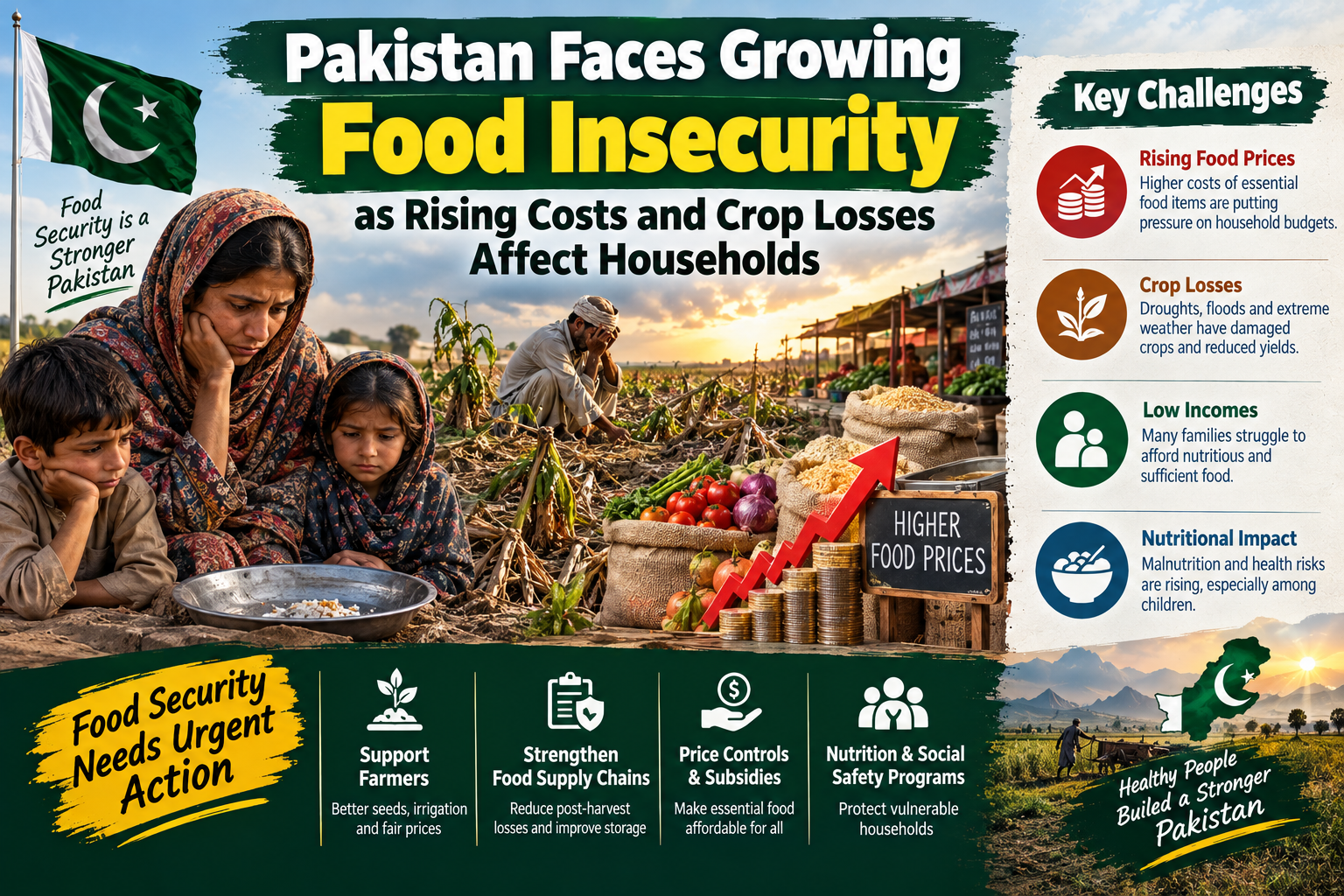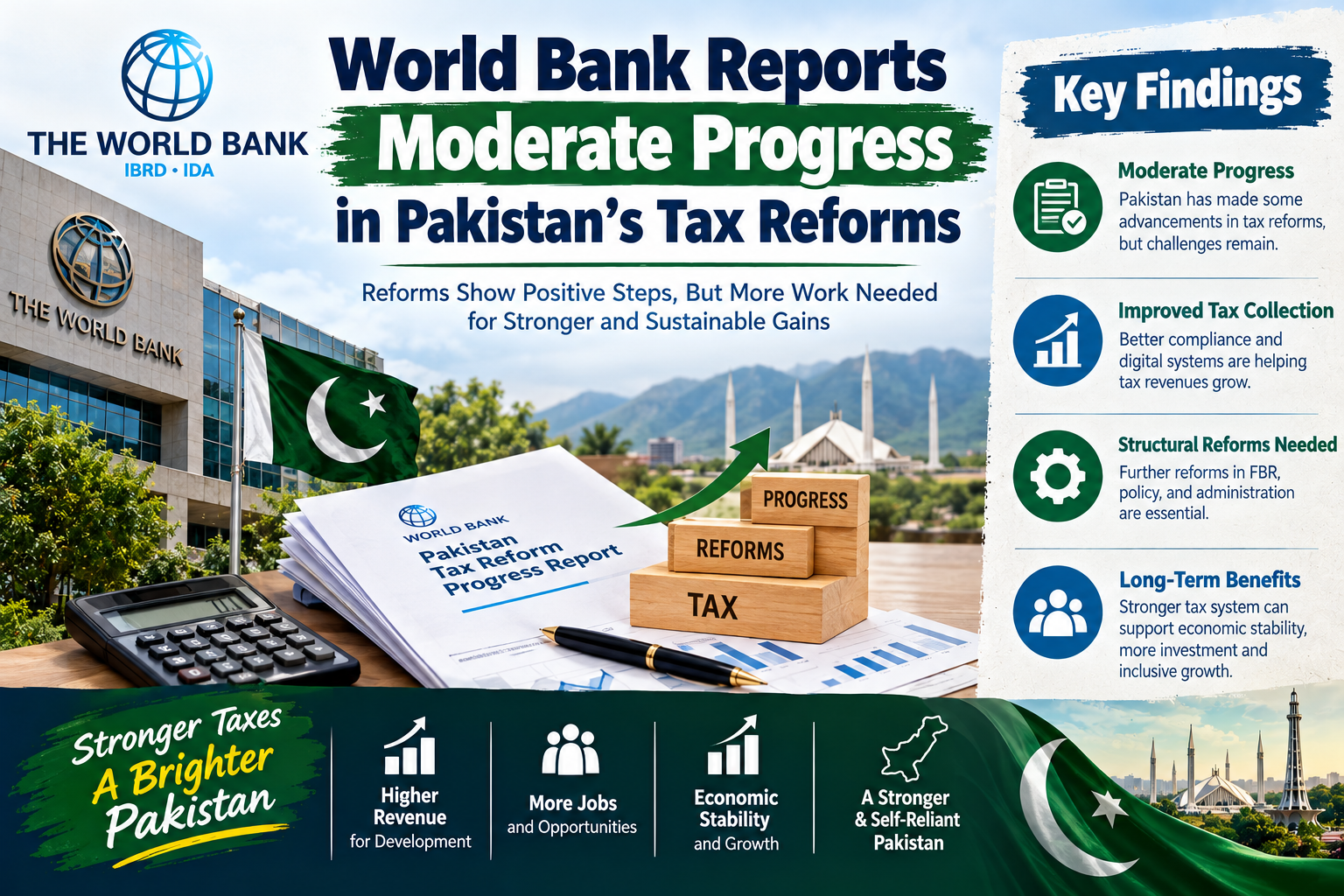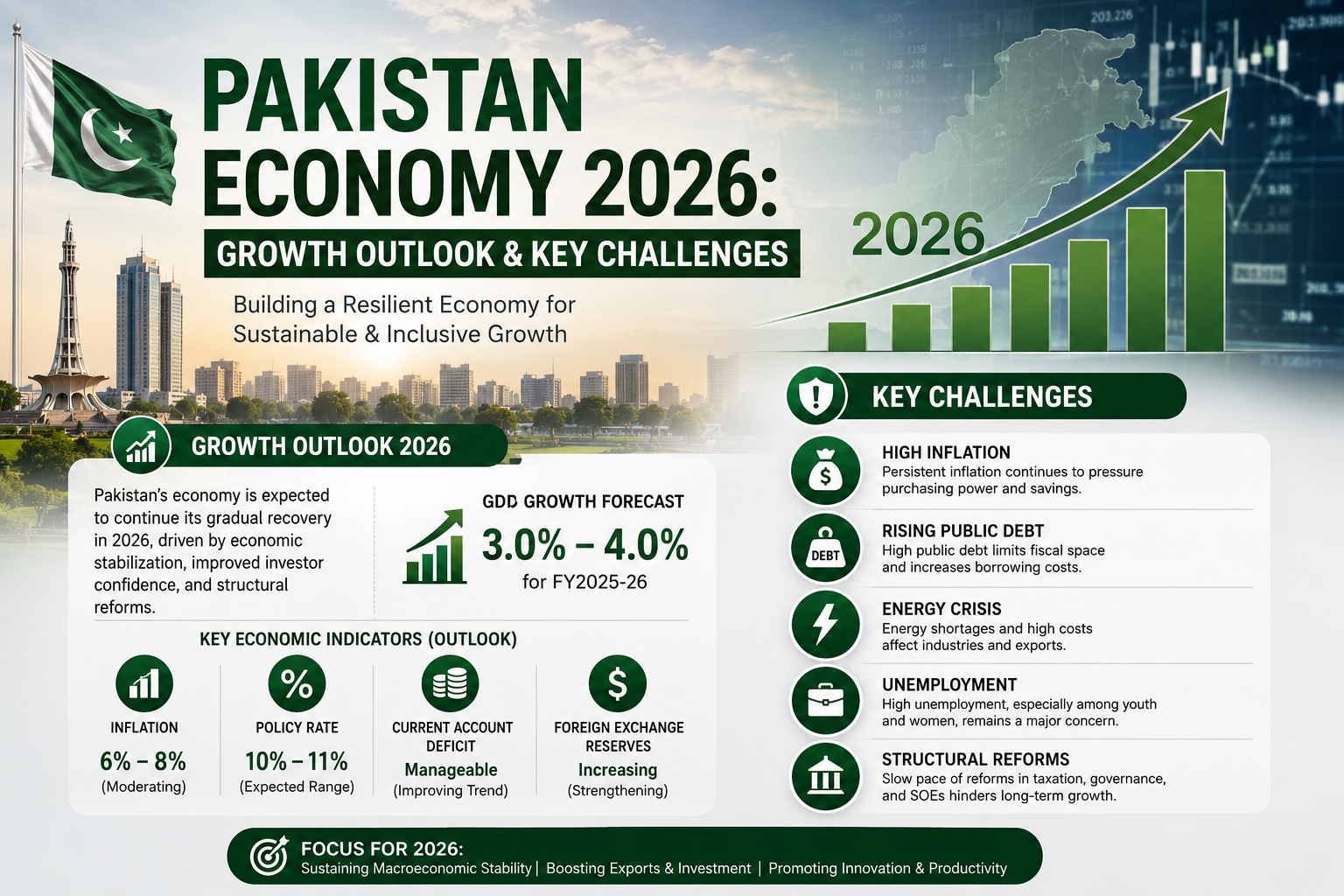
Pakistan’s economy is entering 2026 at an important stage. After facing years of economic pressure, inflation, foreign-exchange challenges, high financing costs and fiscal difficulties, the country is now focused on achieving greater economic stability and creating the foundations for sustainable growth. The economic outlook for 2026 is neither entirely positive nor entirely negative. Instead, it presents a combination of encouraging opportunities and serious challenges that will shape Pakistan’s financial and economic future.
The International Monetary Fund (IMF) projects Pakistan’s real GDP growth at around 3.6% in 2026, while continuing to emphasize the importance of reforms, fiscal discipline, investment and external stability. At the same time, international economic conditions, commodity prices and geopolitical developments could affect the country’s performance.
For Pakistan, the central question is not simply whether the economy will grow in 2026. The more important question is whether this growth can become stronger, sustainable and inclusive enough to improve living standards, create employment and encourage investment.
Pakistan’s Economic Position in 2026
Pakistan has experienced significant economic challenges in recent years. High inflation, pressure on foreign-exchange reserves, increasing debt-servicing requirements, energy costs and fiscal constraints have made economic management difficult.
The government and economic institutions have therefore concentrated on stabilization. The objective has been to restore confidence, control financial pressures and create a more predictable environment for businesses and investors.
The World Bank has emphasized that Pakistan needs structural reforms to move from short-term stabilization toward sustained and inclusive economic growth. Such reforms include improving revenue collection, strengthening institutions, encouraging private investment and increasing productivity.
This transition is important because stabilization alone does not automatically produce strong economic growth. A stable economy must also become more productive and competitive.
GDP Growth Outlook
Gross Domestic Product, commonly known as GDP, is one of the most important indicators used to measure economic activity.
For 2026, the IMF expects Pakistan’s real GDP growth to be approximately 3.6%. This represents a gradual improvement in economic activity, but it is not yet the kind of rapid expansion that could completely transform the country’s employment and income situation in a short period.
Gradual growth can nevertheless provide a foundation for improvement. If industrial production increases, agriculture performs well, exports expand and private investment improves, GDP growth could become stronger over time.
Pakistan therefore needs to focus not only on the growth rate itself but also on the quality of economic growth. Growth driven by productive investment, exports and employment is generally more beneficial over the long term than growth based primarily on temporary consumption increases.
Inflation and the Cost of Living
Inflation remains one of the most important economic concerns for Pakistani households.
When prices of food, transportation, housing, electricity and other necessities rise, families have less purchasing power. Inflation can also affect businesses because higher input costs can make production more expensive.
The IMF’s 2026 projections put Pakistan’s average consumer-price inflation at around 7.2%, while also warning that higher commodity and energy prices could create additional pressure.
Managing inflation will therefore remain an important priority.
Stable prices can help households plan their spending and allow businesses to make investment decisions with greater confidence. However, controlling inflation must also be balanced with the need to maintain economic activity.
A successful economic strategy should aim for price stability while supporting employment, production and investment.
Exports as a Major Growth Opportunity
Exports are one of Pakistan’s biggest opportunities for improving its economic position.
Pakistan already has established export industries, especially textiles, garments, leather, sports goods, surgical instruments and agricultural products. These sectors have created international markets for Pakistani businesses and provide valuable foreign-exchange earnings.
However, Pakistan can do more by diversifying its exports.
The country can increase exports of information technology, software, digital services, processed food, engineering products and other higher-value goods and services.
The IMF has emphasized the importance of external competitiveness and exports in Pakistan’s medium-term economic strategy.
Increasing exports can help reduce pressure on the external account and strengthen the country’s ability to finance necessary imports.
The Growing Digital Economy
Technology is becoming increasingly important to economic growth around the world, and Pakistan has significant potential in this area.
The digital economy includes software development, information technology services, e-commerce, online platforms, digital payments, freelancing and other technology-related activities.
Pakistan’s young population provides a potentially valuable workforce for the digital sector. With appropriate education and skills development, young people can participate in global digital markets without necessarily needing to relocate abroad.
Digital services can also allow small businesses to reach customers outside Pakistan.
For example, a software developer can provide services to an international company, while a Pakistani online business can potentially sell products to customers in other countries.
The World Bank has highlighted the importance of digital infrastructure and private-sector development in supporting Pakistan’s economic transformation.
Agriculture and Rural Economic Development
Agriculture remains an important part of Pakistan’s economy. Millions of people depend directly or indirectly on farming and related activities.
The performance of agriculture affects food prices, rural incomes, employment and industrial activity.
Pakistan has considerable agricultural potential, but the sector faces challenges including water shortages, outdated farming practices, climate-related risks, inefficient supply chains and limited access to modern technology.
Modernizing agriculture could therefore become a major source of economic growth.
Better irrigation systems, improved seeds, modern farming equipment, agricultural research, storage facilities and digital farming tools could increase productivity.
Pakistan can also focus more on value-added agricultural exports rather than exporting raw products alone. Processing agricultural products domestically can create additional employment and increase export earnings.
Climate Change and Economic Risks
Climate change has become an important economic issue for Pakistan.
Floods, extreme heat, irregular rainfall and other climate-related events can damage crops, infrastructure and businesses. These events can also place additional pressure on government finances.
For this reason, future economic planning needs to include climate resilience.
Investment in stronger infrastructure, improved water management, climate-smart agriculture and disaster preparedness can reduce potential economic losses.
The World Bank has identified climate shocks among the risks that can affect Pakistan’s economic outlook.
Economic development and environmental protection therefore need to be considered together.
Energy Sector and Economic Growth
Energy is another major factor affecting Pakistan’s economy.
Industries need reliable and affordable electricity to operate efficiently. When electricity costs increase or supply becomes unreliable, businesses may face higher production costs.
Households are also affected by energy prices because electricity and fuel expenses influence the overall cost of living.
In July 2026, the World Bank approved $375.9 million for Pakistan’s Grid Stability Enhancement Project. The project is intended to strengthen the electricity transmission network, improve reliability and support greater integration of clean energy.
Improving the energy system can support economic growth by reducing disruptions and creating a more reliable environment for businesses.
Pakistan also has opportunities to expand renewable energy. Solar, wind and other clean-energy sources could help diversify the country’s energy mix and potentially reduce dependence on imported fuels over time.
Private Investment and Business Growth
Private investment is essential for a growing economy.
When businesses invest in factories, technology, equipment, offices and new services, they create productive capacity and employment opportunities.
Pakistan needs a business environment in which investors have confidence that regulations will remain predictable and that businesses can operate efficiently.
The World Bank’s Pakistan Country Partnership Framework emphasizes private-sector development, productivity and investment as important components of long-term economic progress.
Small and medium-sized enterprises are particularly important because they can create jobs and support local economies.
Improving access to finance, simplifying registration procedures and reducing unnecessary regulatory barriers could help more small businesses expand.
Small and Medium-Sized Enterprises
Small and medium-sized enterprises, commonly known as SMEs, are an important part of economic activity.
Small businesses operate in almost every sector, including retail, manufacturing, agriculture, services, transportation, technology and tourism.
However, many small businesses struggle with access to finance, formal registration, technology and markets.
Helping SMEs become more productive could provide significant economic benefits.
Digital payments, online marketplaces, business training and easier access to financial services could help small enterprises become more competitive.
Supporting entrepreneurship can also create opportunities for young people who want to establish their own businesses.
Tourism as an Economic Opportunity
Tourism is another sector with significant potential.
Pakistan has mountains, valleys, historical locations, cultural heritage, deserts, lakes and coastal areas that can attract domestic and international visitors.
Khyber Pakhtunkhwa, Gilgit-Baltistan, Punjab, Sindh, Balochistan and Azad Jammu and Kashmir all offer different tourism experiences.
Developing tourism infrastructure can generate income for hotels, restaurants, transportation providers, guides, shops and local communities.
Improved roads, digital tourism services, better accommodation and stronger visitor facilities could help Pakistan increase tourism-related economic activity.
Tourism can also contribute to regional development by creating opportunities in areas where large industrial projects may be difficult to establish.
Infrastructure Development
Infrastructure is a basic requirement for economic growth.
Roads, railways, airports, ports, electricity networks, telecommunications and water systems allow businesses and consumers to participate in economic activity.
Better infrastructure can reduce transportation costs and improve access to markets.
Pakistan’s geographic position also gives it opportunities to benefit from regional trade and connectivity.
Modern infrastructure can help connect producers with domestic and international customers.
However, infrastructure projects need careful planning and financial management. Projects that are delayed or poorly maintained can reduce their economic benefits.
Fiscal Challenges
One of Pakistan’s continuing economic challenges is fiscal management.
The government needs sufficient revenue to finance public services, infrastructure, education, healthcare and development projects.
At the same time, high debt-servicing costs can reduce the amount of money available for development.
The World Bank has highlighted the importance of stronger fiscal management and revenue mobilization for Pakistan’s long-term development.
Improving the tax system could therefore be an important part of economic reform.
A broader tax base, better administration and greater documentation of economic activity could help increase government revenues.
At the same time, public spending should focus on productive investments and essential services.
The Importance of Tax Reforms
Tax reform is often discussed in Pakistan because government revenue remains an important issue.
A sustainable tax system should encourage compliance while ensuring that public finances remain strong.
Digitalization can play a role in improving tax administration. Better use of technology can help reduce paperwork, improve record keeping and make economic transactions more transparent.
Tax reforms should also be accompanied by improvements in public services so that citizens can see the benefits of contributing to the formal economy.
Foreign Investment Opportunities
Foreign direct investment can provide capital, technology, expertise and access to international markets.
Pakistan has opportunities to attract investment in sectors such as information technology, renewable energy, agriculture, manufacturing, logistics, tourism and infrastructure.
However, investors generally look for economic and regulatory stability.
A predictable business environment, efficient institutions and transparent regulations can make Pakistan more attractive to international investors.
The country can also benefit when foreign investment creates links between Pakistani companies and global supply chains.
Human Capital and Education
Economic growth depends heavily on the skills and productivity of the population.
Pakistan has a large young population, which can become an important economic advantage if young people have access to quality education and relevant skills.
Traditional education is important, but the modern economy also requires digital literacy, communication skills, technical knowledge, entrepreneurship and vocational training.
Improving education can increase productivity and help workers move into higher-value economic activities.
The connection between education and employment is therefore extremely important.
Youth and Employment Opportunities
Young people represent both an opportunity and a challenge for Pakistan’s economy.
A growing working-age population can support economic expansion if enough productive jobs are available.
Technology, freelancing, entrepreneurship, manufacturing, tourism and services can provide new opportunities.
However, young people need access to training, financing and professional networks.
Encouraging entrepreneurship can allow young people to become job creators rather than depending entirely on traditional employment.
Remittances and Overseas Pakistanis
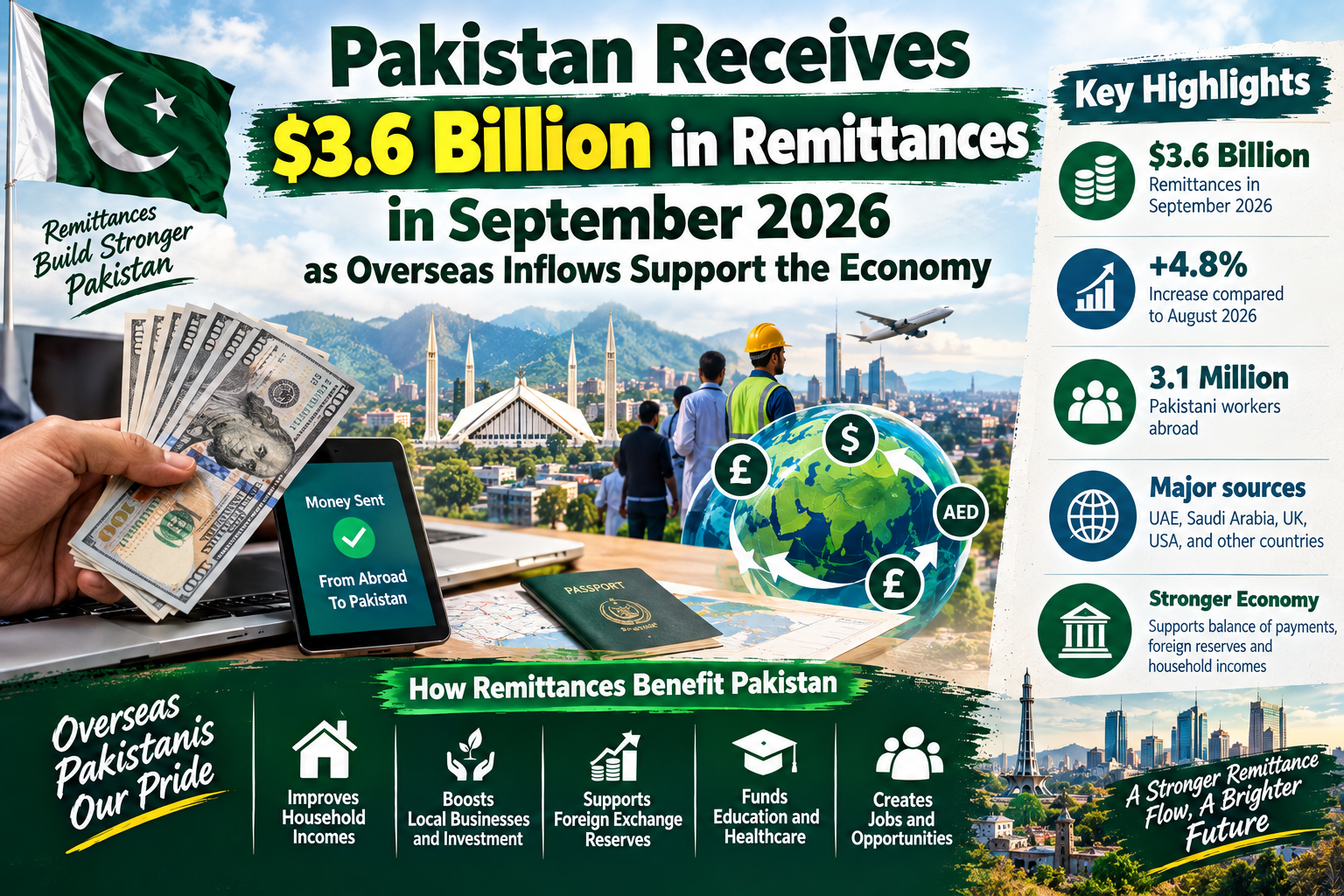
Remittances from Pakistanis working abroad are another important part of the country’s economy.
Money sent home by overseas Pakistanis supports household consumption and provides foreign exchange.
Pakistan can potentially increase the economic impact of its overseas workforce by encouraging investment in productive sectors.
Better financial services and investment opportunities could make it easier for overseas Pakistanis to channel some of their savings toward businesses and development projects.
Regional Trade Opportunities
Pakistan’s geographic location provides access to important regional markets.
The country is situated near Central Asia, China, South Asia and the Middle East.
Improved transportation infrastructure and stronger trade relationships could help Pakistan expand regional exports.
Greater regional connectivity can also support logistics, tourism and investment.
However, trade opportunities depend on political stability, infrastructure and effective trade policies.
Global Economic Risks
Pakistan’s economy is influenced by developments outside its borders.
Changes in global oil prices can affect the country because Pakistan imports significant amounts of energy.
International interest rates can influence borrowing costs.
Global economic slowdowns can reduce demand for Pakistani exports.
Geopolitical conflicts can also disrupt energy markets and international trade.
The IMF has warned that geopolitical developments, including conflict-related energy-price increases, can affect Pakistan’s growth and inflation outlook.
This makes economic diversification especially important.
The Importance of Economic Stability
Economic stability provides the foundation for investment and long-term planning.
Businesses need predictable conditions to make decisions about hiring, production and expansion.
Households also benefit when inflation is controlled and employment opportunities are stable.
For Pakistan, maintaining stability while implementing reforms will be a major challenge.
Economic policies need to be consistent enough to build confidence among consumers, businesses and investors.
Structural Reforms
Structural reforms are among the most important requirements for long-term economic development.
These reforms can include improving tax collection, strengthening public institutions, increasing competition, improving energy-sector performance, modernizing state-owned enterprises and encouraging private investment.
The World Bank has repeatedly emphasized that structural reforms are necessary for Pakistan to move beyond stabilization toward sustained and inclusive growth.
Such reforms may take time to produce results, but they can strengthen the economy’s foundations.
What Could Drive Pakistan’s Growth in 2026?
Several sectors could contribute to economic growth during 2026 and beyond:
Information technology and digital services
Textiles and value-added exports
Agriculture and food processing
Renewable energy
Manufacturing
Tourism
Logistics and transportation
Construction and infrastructure
Small and medium-sized enterprises
Financial and digital services
The strongest economic strategy would be one that develops several sectors simultaneously rather than depending heavily on one source of growth.
Key Challenges Ahead
Despite the opportunities, Pakistan still faces serious challenges.
Inflation can reduce purchasing power. Energy costs can affect businesses. Fiscal pressures can limit public investment. Climate-related disasters can damage infrastructure and agriculture. Global economic conditions can influence exports and energy prices.
Another challenge is maintaining consistency in economic policy.
Long-term investment requires confidence that economic rules and policies will remain predictable.
The country therefore needs to focus on reforms that can continue beyond short-term economic cycles.
A More Inclusive Economic Future
Economic growth is most meaningful when its benefits reach a broad section of society.
Pakistan’s economic strategy should therefore focus not only on GDP but also on employment, productivity, education, infrastructure and opportunities for small businesses.
Rural communities, young people and low-income households should have opportunities to participate in economic development.
Digital technology can help broaden access to markets and financial services.
Improved transport and infrastructure can connect smaller cities and rural areas with larger economic centers.
Outlook for Pakistani Businesses
For businesses, 2026 could present a combination of opportunities and uncertainty.
Companies that invest in technology, improve productivity, develop export markets and manage costs effectively may be better positioned for growth.
Businesses should also pay attention to changing consumer behavior.
Digital commerce and online services are becoming increasingly important, while international customers are looking for competitive products and reliable services.
Pakistani companies that can improve quality and build international partnerships may find new opportunities in global markets.
Pakistan’s Long-Term Economic Potential
Pakistan has several fundamental strengths.
It has a large population, a young workforce, agricultural resources, diverse geography, established industries and a growing technology sector.
Its strategic location also gives it potential as a regional trade and connectivity hub.
However, these advantages need to be supported by strong institutions, investment and effective economic policies.
Natural and demographic advantages alone do not guarantee economic success.
Countries achieve sustainable development when they convert their resources and human capital into productivity, innovation and competitive industries.
What Pakistan Needs to Focus on
To strengthen its economic outlook, Pakistan can focus on several priorities.
First, maintaining macroeconomic stability is essential.
Second, exports should be expanded and diversified.
Third, productivity in agriculture and manufacturing should be improved.
Fourth, digital infrastructure and technology skills should be developed.
Fifth, energy-sector reforms should continue.
Sixth, the tax system should become more effective and transparent.
Seventh, private investment should be encouraged.
Finally, education and skills development should remain central to economic policy.
These areas can work together to create a stronger foundation for sustainable economic growth.
Conclusion
Pakistan’s economic growth outlook for 2026 is shaped by both opportunity and uncertainty. The IMF expects real GDP growth of around 3.6%, suggesting continued economic expansion, while inflation, energy prices, fiscal pressures and external risks remain important concerns.
The country has significant opportunities in exports, digital services, agriculture, tourism, renewable energy, manufacturing and private investment. Its young population can also become a major economic asset if young people receive the education and skills needed for a modern economy.
At the same time, Pakistan cannot rely on short-term improvements alone. Sustainable growth requires structural reforms, better institutions, stronger public finances, reliable energy, productive investment and a business-friendly environment.
The coming years will therefore be important for Pakistan’s economic direction. If the country can combine economic stability with meaningful reforms and investment in people and infrastructure, it can build a more productive and resilient economy.
The goal should not simply be higher GDP. Pakistan needs sustainable economic growth that creates jobs, strengthens businesses, improves living standards and provides opportunities for future generations. With consistent policies and long-term planning, the country has the potential to turn its economic challenges into opportunities for stronger and more inclusive development.
5 FAQs
1. What is Pakistan’s economic growth outlook for 2026?
Pakistan’s economy is expected to continue growing in 2026, with the IMF projecting real GDP growth of around 3.6%.
2. What are the main challenges facing Pakistan’s economy?
Key challenges include inflation, energy costs, fiscal pressures, debt, climate risks and global economic uncertainty.
3. Which sectors can drive Pakistan’s economic growth?
IT, exports, agriculture, manufacturing, tourism, renewable energy and SMEs can play an important role.
4. How can exports help Pakistan’s economy?
Higher and more diversified exports can increase foreign-exchange earnings and strengthen Pakistan’s external position.
5. Why are young people important to Pakistan’s economy?
A skilled young workforce can support entrepreneurship, technology, innovation, employment and long-term economic development.