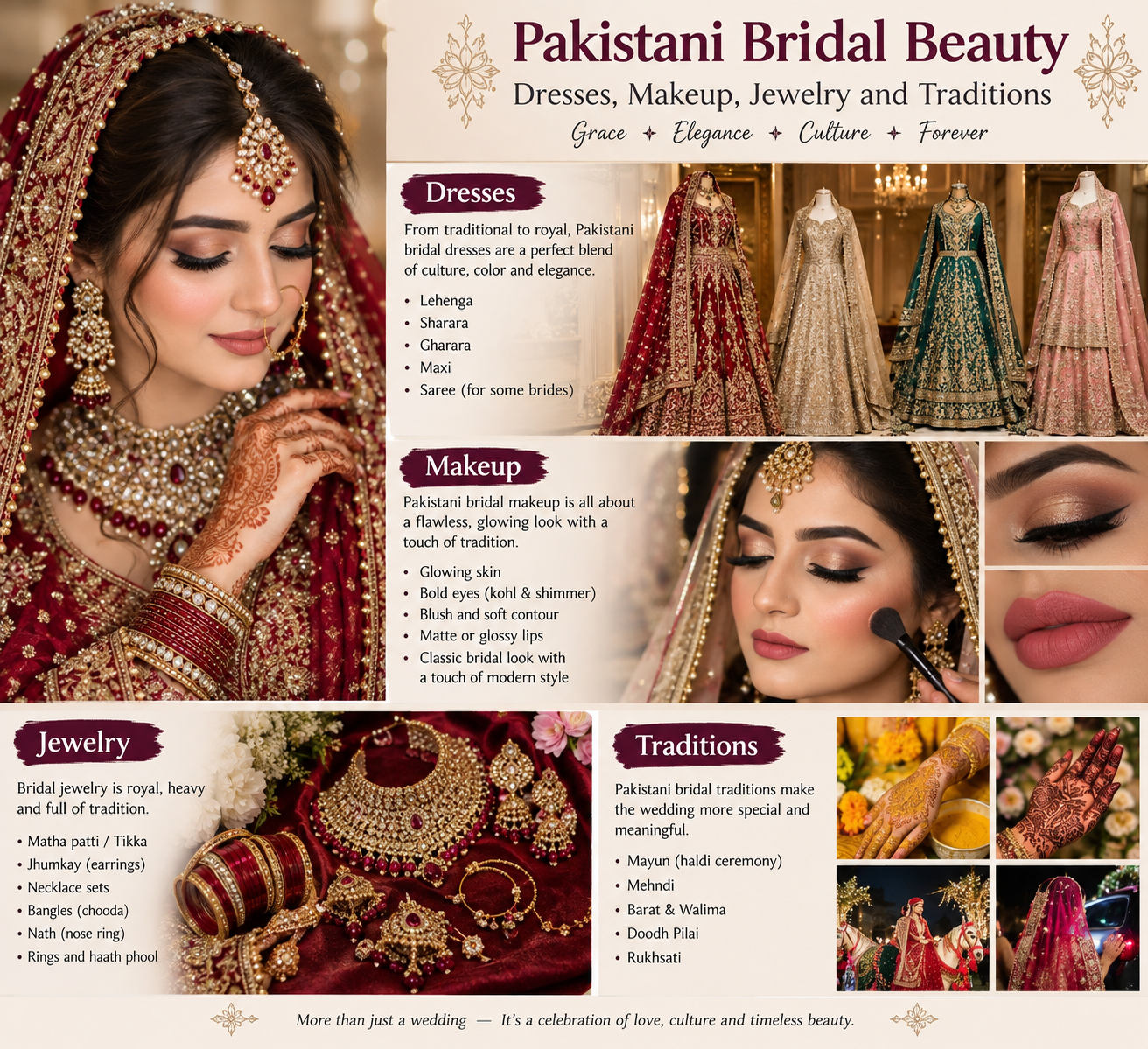
Pakistani weddings are known for their beautiful traditions, colorful celebrations, elegant clothing, detailed embroidery, traditional jewelry, and carefully planned beauty looks. Bridal beauty is one of the most important parts of Pakistani wedding culture because it brings together fashion, makeup, hairstyles, jewelry, mehndi, and cultural traditions in one complete look.
A Pakistani bride may wear several outfits during different wedding events. Each event can have its own colors, fabrics, jewelry, makeup style, hairstyle, and overall theme. Traditional bridal fashion continues to be popular, while modern designers and makeup artists have introduced new ways to style classic Pakistani bridal looks.
From the colorful mehndi ceremony to the formal wedding day and reception, Pakistani bridal beauty offers a wide variety of styles. Traditional red bridal dresses remain important, but modern brides also explore shades such as pink, maroon, gold, green, ivory, peach, and other colors.
The Cultural Importance of Pakistani Bridal Beauty
A Pakistani wedding is more than a single event. It is often a collection of celebrations involving family members, friends, traditions, food, music, clothing, and cultural customs.
Bridal beauty reflects this atmosphere. The bride's clothing and accessories are carefully selected to match the occasion.
Traditional bridal beauty often includes:
Embroidered bridal dresses
Jewelry
Mehndi
Traditional makeup
Decorative hairstyles
Dupattas
Bangles
Bridal footwear
Coordinated accessories
These elements combine to create a complete bridal appearance.
Pakistani Wedding Events
Wedding celebrations vary between families and regions, but several events are commonly associated with Pakistani weddings.
The mehndi or dholki celebrations are often colorful and festive. The main wedding ceremony is usually more formal, while the reception can have its own elegant style.
Some families also arrange engagement ceremonies, mayun, bridal showers, or other gatherings.
Each event gives the bride an opportunity to choose a different outfit and beauty style.
Mehndi Bridal Fashion
The mehndi event is often associated with bright colors, playful designs, floral decorations, and traditional music.
Bridal outfits for mehndi celebrations may include yellow, green, orange, pink, or combinations of several bright shades.
Ghararas, shararas, lehengas, and embroidered shirts are common choices.
Lightweight jewelry can be paired with colorful clothing, while floral accessories may add a festive touch.
The overall styling is often cheerful and vibrant.
Bridal Dresses for the Main Wedding
The main wedding ceremony is usually the most formal bridal event.
Traditional bridal dresses can include lehengas, long shirts, shararas, ghararas, and heavily embroidered formal outfits.
Red has historically been an important bridal color in South Asian culture. Many brides continue to choose different shades of red, including deep red, maroon, ruby, and burgundy.
However, modern bridal fashion has expanded the color palette.
Gold, pink, peach, green, ivory, champagne, and other colors are increasingly seen in bridal collections.
The Evolution of Red Bridal Dresses
Red remains strongly associated with Pakistani bridal fashion, but modern designers have introduced many variations.
A bride may choose a deep red lehenga with gold embroidery or a maroon outfit with contrasting embellishments.
Some brides prefer a combination of red with pink, orange, gold, or green.
This flexibility allows traditional bridal fashion to remain recognizable while giving brides more choices.
Modern Bridal Color Trends
Modern bridal fashion includes a wide range of colors.
Soft pink can create a delicate appearance, while maroon provides a deeper and more traditional feel.
Gold and champagne shades can create a luxurious formal appearance.
Green can be used for traditional or festive styling, particularly for mehndi-related events.
Ivory and peach have also become popular choices for brides who want a softer color palette.
The choice of color depends on personal preference, event type, embroidery, jewelry, and overall wedding theme.
Bridal Embroidery
Embroidery is one of the most important elements of Pakistani bridal fashion.
Bridal dresses can feature detailed handwork, zari, sequins, beads, threadwork, stones, pearls, and other decorative techniques.
Traditional motifs may include flowers, leaves, paisleys, geometric patterns, and cultural designs.
Heavy embroidery can make a bridal outfit visually rich, while more delicate embroidery can create a lighter appearance.
The Role of Pakistani Designers
Pakistani designers have played an important role in developing modern bridal fashion.
Designers often combine traditional craftsmanship with contemporary cuts and styling.
A bridal dress may include classic embroidery but use a modern silhouette.
Some collections focus on elaborate traditional bridal wear, while others introduce minimalist or contemporary interpretations.
Fashion shows, digital platforms, and social media have also made bridal collections accessible to a larger audience.
Bridal Jewelry
Jewelry is one of the most recognizable elements of Pakistani bridal beauty.
Traditional bridal jewelry may include:
Jhumkas
Tikka
Matha patti
Necklace
Earrings
Bangles
Rings
Bridal bracelets
Nath
Other traditional ornaments
The jewelry is usually selected according to the bridal dress, neckline, embroidery, hairstyle, and overall wedding theme.
Jhumkas for Brides
Jhumkas are a classic choice for Pakistani bridal styling.
Large decorative jhumkas can complement heavily embroidered dresses and traditional hairstyles.
Some brides prefer elaborate gold-colored designs, while others choose pieces decorated with pearls, stones, or colorful details.
Jhumkas can also be worn with less formal outfits for pre-wedding events.
Tikka and Matha Patti
The tikka is traditionally worn on the forehead and is an important bridal accessory.
Matha patti is a more elaborate headpiece that can extend across the forehead and connect with the sides of the hair.
These accessories can make a bridal hairstyle look more traditional and formal.
They are often coordinated with earrings and necklaces to create a complete jewelry set.
Bridal Nath
The nath is another traditional bridal accessory.
It is particularly associated with formal bridal styling and can add a distinctive cultural element to the overall look.
Some brides choose elaborate designs, while others prefer smaller and simpler versions.
The choice often depends on personal preference and the style of the wedding outfit.
Bridal Bangles and Chura
Bangles are an important part of Pakistani bridal traditions.
Bridal bangles may include glass bangles, metal bangles, embellished bracelets, or traditional chura.
Red, white, gold, green, and other colors may be used depending on cultural and personal preferences.
Bangles also create movement and visual detail when combined with embroidered bridal clothing.
Bridal Mehndi
Mehndi is one of the most recognizable parts of Pakistani wedding beauty.
Brides often have intricate designs applied to their hands and sometimes their feet.
Traditional mehndi patterns can include floral motifs, paisleys, leaves, geometric designs, and detailed decorative patterns.
Some modern brides choose customized designs that incorporate initials, wedding dates, symbols, or other personal elements.
Mehndi can take considerable time to apply, so brides often schedule the process before the main wedding day.
Bridal Makeup
Pakistani bridal makeup has developed significantly over the years.
Modern bridal makeup often combines traditional preferences with contemporary techniques.
The makeup may include carefully prepared skin, foundation, concealer, blush, eye makeup, eyeliner, mascara, lipstick, and other products.
The exact style varies depending on the bride's preference, outfit, lighting, event, and makeup artist.
Natural Bridal Makeup
Some modern brides prefer a softer makeup style.
Natural-looking bridal makeup may use a lighter-looking base, subtle blush, softly defined eyes, and neutral or pink lip colors.
This style can create an elegant appearance while allowing the bride's natural features to remain visible.
Glamorous Bridal Makeup
Other brides prefer a more dramatic appearance.
Glamorous bridal makeup may include stronger eye definition, more noticeable eyeshadow, carefully blended contouring, highlighter, and bold lip colors.
This style is often selected for evening weddings or formal events.
Pakistani Eye Makeup
Eye makeup is a major part of Pakistani bridal beauty.
Eyeliner, kajal, mascara, eyeshadow, and defined eyebrows can create a polished appearance.
Gold, bronze, brown, copper, champagne, and other shades are often suitable for bridal clothing.
The makeup can be adjusted to complement the colors of the bridal dress and jewelry.
Bridal Lip Colors
Lip color can dramatically influence a bridal makeup look.
Traditional bridal shades may include red, maroon, berry, rose, and deep pink.
Modern brides may also choose nude, peach, pink, or mauve shades.
The choice should complement the clothing, jewelry, and overall makeup style.
Bridal Hairstyles
The hairstyle is another important part of bridal styling.
Traditional buns remain a popular choice because they provide a practical base for jewelry and dupattas.
Braids, waves, curls, and half-up hairstyles are also common for different wedding events.
The hairstyle should work with the jewelry and head accessories.
For example, a heavily decorated matha patti may require a hairstyle that keeps the forehead and sides of the head visible.
Floral Bridal Hairstyles
Flowers can add a traditional and romantic touch to bridal hairstyles.
Fresh flowers may be incorporated into buns or other hairstyles.
Jasmine and other flowers have a long association with South Asian celebrations.
Floral accessories are particularly suitable for mehndi and pre-wedding events.
Bridal Dupatta Styling
The dupatta is an important part of Pakistani bridal clothing.
A bride may wear one or more dupattas depending on the outfit and personal preference.
One dupatta can be placed over the head, while another may be styled across the shoulders.
The border, embroidery, and fabric of the dupatta can significantly influence the overall appearance.
Modern brides may experiment with different draping techniques while maintaining traditional elements.
Bridal Footwear
Footwear completes the bridal outfit.
Traditional choices can include embellished khussas, sandals, heels, and other decorative shoes.
Bridal footwear may feature embroidery, beads, sequins, pearls, or metallic details.
Comfort can also be important because weddings often involve long hours of standing, walking, and participating in ceremonies.
Bridal Accessories
Accessories can include handbags, clutches, hairpieces, jewelry boxes, decorative pins, and other small details.
Accessories should generally coordinate with the bridal outfit rather than competing with it.
A heavily decorated outfit may work well with simpler additional accessories, while a simpler outfit can accommodate more noticeable accessories.
Bridal Fashion for Different Events
Each wedding event can have its own styling.
Mehndi
Bright colors, floral accessories, colorful jewelry, and lively hairstyles are common.
Mayun
Yellow and green shades are often associated with traditional pre-wedding celebrations.
Baraat
The main bridal outfit may be more formal, heavily embroidered, and traditionally styled.
Reception
The bride may choose an elegant formal dress, gown, lehenga, or other contemporary outfit depending on personal preference.
Pakistani Bridal Fashion and Regional Traditions
Pakistan's regional diversity creates many bridal styles.
Punjabi weddings may feature colorful outfits, traditional jewelry, and lively celebrations.
Sindhi bridal traditions can include distinctive embroidery, ajrak-inspired elements, and regional jewelry.
Balochi bridal clothing is known for detailed embroidery and cultural craftsmanship.
Pashtun bridal traditions have their own clothing, accessories, and cultural elements.
These regional variations demonstrate that Pakistani bridal fashion does not follow a single formula.
Modern Fusion Bridal Fashion
Modern brides increasingly combine traditional and contemporary elements.
A bride may wear a traditional embroidered lehenga with a modern makeup style.
Another may choose a contemporary gown with traditional jewelry.
Some brides combine classic red bridal clothing with modern hairstyles.
Fusion fashion provides flexibility while maintaining cultural references.
Bridal Skincare Preparation
Skincare has become an important part of modern bridal preparation.
Many brides focus on establishing a simple skincare routine before the wedding.
Basic skincare can include cleansing, moisturizing, and sun protection.
Some people may seek professional skincare services, but routines should be selected according to individual skin needs.
Trying many new products immediately before a wedding can be risky because unexpected irritation may occur.
Bridal Haircare
Haircare can also become part of wedding preparation.
Regular washing, conditioning, gentle handling, and appropriate haircare products can help maintain healthy-looking hair.
People may consult professional hairstylists before choosing a bridal hairstyle.
The selected hairstyle should consider hair length, texture, jewelry, dress design, and comfort.
Bridal Beauty and Social Media
Social media has transformed the way brides discover inspiration.
Pinterest, Instagram, TikTok, YouTube, and other platforms provide thousands of bridal makeup, hairstyle, dress, and jewelry ideas.
Brides can save references and discuss them with makeup artists, designers, and hairstylists.
However, online images may be professionally photographed, edited, or specially lit. Therefore, they should be used as inspiration rather than as exact expectations.
Bridal Makeup Artists
Professional makeup artists have become an important part of Pakistani wedding culture.
Many artists specialize in bridal makeup and offer different packages for wedding events.
Brides often consider makeup style, products, experience, appointment timing, and overall service when selecting an artist.
A trial session can help clarify the desired style before the wedding.
Bridal Fashion on Different Budgets
Pakistani bridal fashion is available at many price levels.
Designer bridal outfits can involve extensive handwork and premium materials.
However, ready-to-wear and locally tailored options can provide alternatives for different budgets.
Artificial jewelry can also provide decorative styles without the cost of precious metals.
Creative styling can make an outfit look complete even when individual pieces are relatively simple.
Preserving Traditional Bridal Crafts
Bridal fashion provides an important platform for preserving traditional crafts.
Embroidery, handwork, weaving, jewelry making, and other techniques are often used in bridal clothing.
Supporting skilled artisans can help maintain these cultural traditions.
Modern designers can also reinterpret traditional techniques for contemporary customers.
The Future of Pakistani Bridal Beauty
Pakistani bridal beauty will likely continue combining tradition with modern influences.
Traditional red bridal dresses, jewelry, mehndi, embroidery, and cultural hairstyles will remain important.
At the same time, contemporary colors, lighter makeup styles, modern silhouettes, fusion outfits, and digital inspiration will continue shaping bridal fashion.
Social media will probably remain a major source of ideas for future brides.
The industry is also likely to continue developing through new designers, makeup artists, photographers, hairstylists, and beauty entrepreneurs.
Conclusion
Pakistani bridal beauty is a rich combination of culture, fashion, craftsmanship, makeup, jewelry, hairstyles, mehndi, and family traditions. From traditional red lehengas and detailed embroidery to modern pastel dresses and contemporary makeup, Pakistani brides have many ways to express their personal style.
Regional traditions make bridal fashion even more diverse, while modern designers and beauty professionals continue introducing new ideas.
The most distinctive feature of Pakistani bridal beauty is the way it connects the past with the present. Traditional jewelry can be combined with modern clothing, classic mehndi can accompany contemporary bridal styling, and traditional embroidery can appear on modern silhouettes.
As Pakistani weddings continue to evolve, bridal beauty will likely remain a strong expression of cultural heritage while making room for new trends and individual creativity.
FAQs
1. What is Pakistani bridal beauty?
Pakistani bridal beauty combines traditional clothing, jewelry, makeup, hairstyles, mehndi, embroidery, and cultural wedding traditions.
2. What colors are popular for Pakistani bridal dresses?
Red and its different shades remain traditional choices, while pink, maroon, gold, green, peach, ivory, and other colors are also popular.
3. What jewelry is commonly worn by Pakistani brides?
Common bridal jewelry includes jhumkas, tikka, matha patti, necklaces, bangles, rings, nath, and other traditional ornaments.
4. What makeup is popular for Pakistani brides?
Both natural-looking and glamorous makeup styles are popular, with defined eyes, polished skin, blush, and coordinated lip colors often used for bridal looks.
5. Why is mehndi important in Pakistani weddings?
Mehndi is an important cultural and decorative tradition associated with Pakistani wedding celebrations and is commonly applied to the bride's hands and sometimes feet.