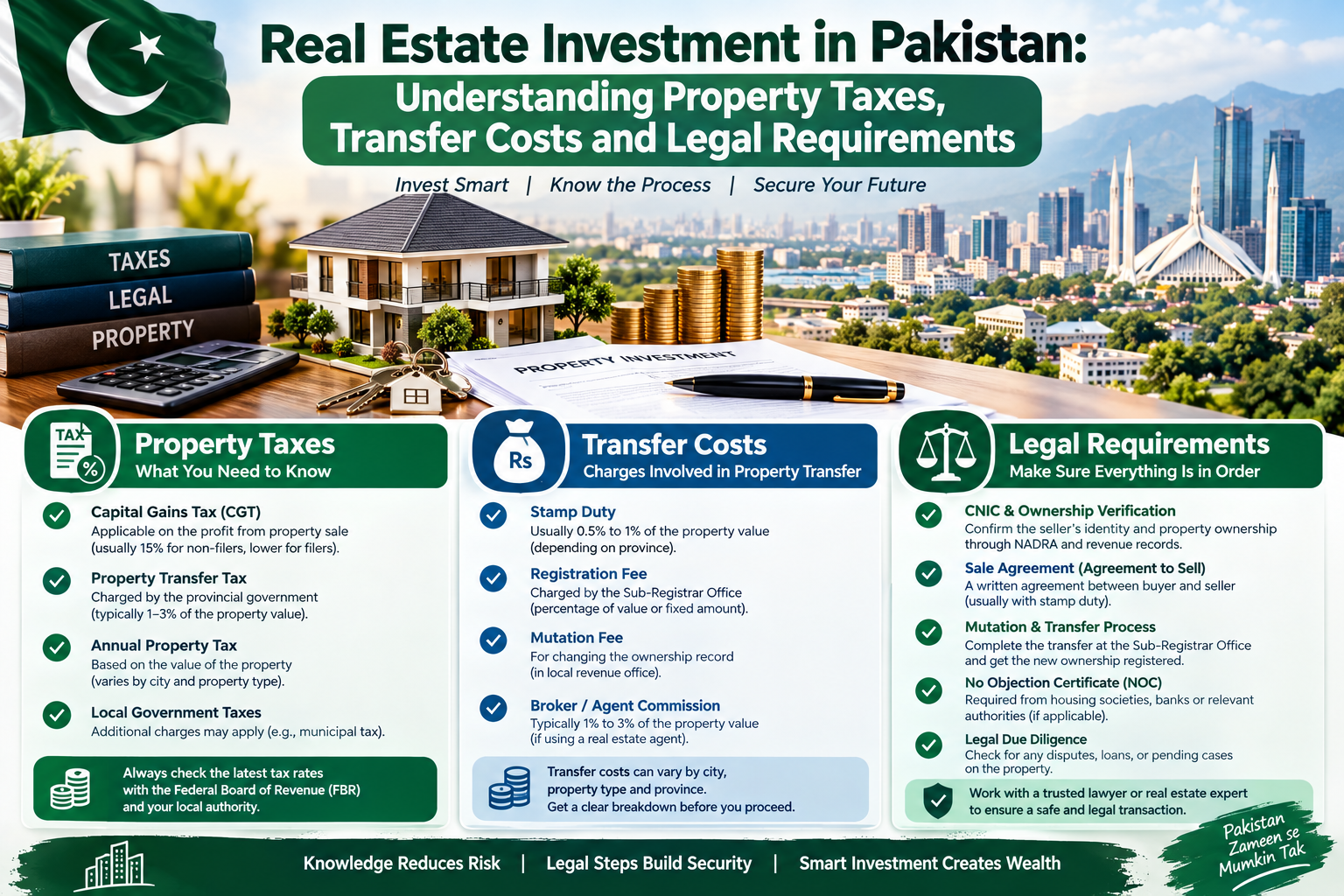
Real estate investment is an important part of Pakistan's property market. People buy houses, plots, apartments, shops, offices, and other properties for personal use, rental income, business purposes, or long-term investment. However, buying property involves more than simply agreeing on a price with a seller.
Property transactions in Pakistan can involve taxes, transfer charges, registration expenses, documentation, and legal verification. These requirements can vary depending on the type of property, location, transaction value, and applicable government rules.
For beginners, understanding these basic requirements is important. A buyer who knows what to check before purchasing can better understand the total cost of a transaction and reduce the risk of avoidable problems.
This guide explains the major areas that property buyers and investors should understand before completing a real estate transaction in Pakistan.
Understanding Property Transactions in Pakistan
A property transaction usually involves a buyer and seller agreeing on the transfer of ownership or rights in a property.
Depending on the property, the process may involve documents such as:
Sale agreement
Registry or sale deed
Allotment letter
Transfer letter
Possession documents
Mutation records
Proof of ownership
Tax-related documents
No-objection certificates where applicable
The exact documents required can differ according to the property and jurisdiction.
For this reason, buyers should not assume that the procedure for a house in one city will be exactly the same as the procedure for a plot or commercial property in another area.
Why Property Taxes Matter
Taxes are an important part of real estate transactions.
Depending on the transaction and applicable laws, taxes can apply to buyers, sellers, or both.
Tax rules can change over time, so buyers should check the current requirements with the relevant tax authorities or a qualified tax professional before completing a transaction.
The amount payable may depend on factors such as:
Property value
Type of transaction
Property type
Taxpayer status
Location
Applicable tax rules
Therefore, buyers should calculate potential taxes before finalizing their budget.
Buyer and Seller Responsibilities
One of the most important things to understand is that different taxes and charges can have different responsibilities.
Some charges may be paid by the buyer, while others may apply to the seller. In some transactions, the parties may agree on certain costs according to the applicable legal framework.
The exact responsibility should be confirmed before the transaction.
Buyers should avoid relying only on verbal statements such as "all taxes are included" or "there are no additional charges."
It is better to ask for a written breakdown of the expected costs.
Registration and Transfer Costs
Property ownership generally needs to be properly transferred and recorded through the relevant legal process.
Depending on the property, the transaction may involve registration, stamp-related charges, transfer fees, or other government and authority charges.
These costs can vary based on:
Province
City
Property type
Property value
Relevant authority
Transaction type
A buyer should ask the relevant authority or qualified professional for the current applicable charges.
Stamp Duty and Related Charges
Stamp-related charges can form part of the property transaction process.
The applicable amount depends on the relevant laws and the nature of the transaction.
Because rates and rules can change, buyers should verify current requirements rather than relying on old information found online or from previous transactions.
Proper documentation is important because the sale agreement and other transaction documents can have legal significance.
Capital Gains Tax
A property owner who sells property may potentially face tax implications on the gain from the sale, depending on the applicable tax rules.
Capital gains taxation can depend on several factors, including the nature of the property, holding period, transaction details, and applicable legislation.
Because tax rules can change, anyone selling property should check the current rules with the relevant tax authority or a qualified tax professional.
Advance or Withholding Taxes
Certain property transactions can also involve withholding or advance tax requirements.
The applicable amount and treatment may depend on the taxpayer's status and the transaction.
For example, tax treatment may differ between individuals who are properly registered taxpayers and those who do not have the same tax status.
Before purchasing or selling property, it is useful to confirm the current tax position rather than estimating the amount based on older transactions.
Filer and Non-Filer Considerations
Taxpayer status can affect certain tax obligations in Pakistan.
People who file their tax returns and appear on the relevant active taxpayer records may receive different tax treatment from people who are not in the same status.
However, tax laws and rates can change.
Anyone involved in a property transaction should check their current status and applicable rates through official tax information or with a qualified tax professional.
Property Valuation
Property valuation is another important part of the transaction.
Government authorities may use official valuation methods or valuation tables for tax and registration purposes.
The market price agreed between a buyer and seller may not always be identical to a government valuation used for calculating certain charges.
Therefore, buyers should understand which valuation is being used for each part of the transaction.
Why Legal Verification Is Important
Legal verification is one of the most important steps before purchasing property.
A buyer should confirm that the person selling the property actually has the legal right to sell it.
Important checks may include:
Ownership
Title documents
Previous transaction history
Land records
Property boundaries
Outstanding dues
Court disputes
Mortgages or other claims
Development authority approval
Possession status
The exact checks depend on the type and location of the property.
Checking Ownership
Ownership verification helps confirm that the seller has a valid legal interest in the property.
Buyers should compare the seller's identification and ownership documents with the relevant land or property records.
If there are multiple owners, the buyer should understand whether all necessary parties have agreed to the transaction.
A buyer should be especially careful when someone claims to be selling property on behalf of another person.
The authority to sell should be properly verified.
Checking Land Records
Land records can provide important information about ownership and property history.
In areas where computerized land-record systems are available, buyers may be able to obtain relevant information through the appropriate government system.
The process differs across provinces and jurisdictions.
Punjab, Sindh, Khyber Pakhtunkhwa, and Balochistan have different administrative systems and procedures.
Therefore, buyers should use the relevant provincial or local authority for verification.
Checking for Outstanding Dues
Before purchasing a property, buyers should check whether there are outstanding payments associated with it.
These may include:
Property taxes
Development charges
Maintenance charges
Utility bills
Society dues
Other authority-related payments
The buyer and seller should clearly determine how any outstanding amount will be handled before completing the transaction.
Checking Approval Status
Approval status is particularly important for plots and housing developments.
A buyer should confirm whether a housing project or development is approved by the relevant authority where approval is required.
Marketing material may use attractive claims about future facilities or development.
However, buyers should independently verify such claims.
An official approval document or record is more reliable than a promotional statement.
No-Objection Certificates
In some property developments, a No-Objection Certificate, commonly called an NOC, may be relevant.
The importance and requirements of an NOC depend on the project and the relevant authority.
Before purchasing property in a housing scheme or development project, buyers should verify its current approval status with the appropriate authority.
Sale Agreement
A sale agreement records important terms between the buyer and seller.
It may contain information such as:
Property description
Agreed price
Payment schedule
Deposit
Transfer conditions
Possession
Responsibilities of both parties
Consequences of default
A buyer should carefully read the agreement before signing it.
If the transaction is significant, professional legal review can help the buyer understand the terms.
Token Money and Advance Payments
Property transactions sometimes involve token money or advance payments.
Before paying a significant amount, buyers should ensure that the basic property information and seller's ownership have been verified.
The payment should also be properly documented.
A receipt should clearly state the amount paid and the purpose of the payment.
Buyers should avoid making large undocumented cash payments.
Bank Payments and Financial Records
Keeping proper financial records can make a property transaction easier to document.
Where appropriate, payments through traceable banking channels can provide evidence of the transaction.
Buyers should keep copies of:
Payment receipts
Bank transaction records
Agreements
Tax documents
Transfer documents
Correspondence related to the transaction
Good record-keeping can be useful if questions arise later.
Property Transfer Process
The transfer process depends on the property and the authority responsible for maintaining its records.
For some properties, the process may involve registration and mutation, while properties in housing societies may have their own transfer procedures.
A buyer should determine:
Which authority controls the property?
What documents are required?
Which taxes and fees apply?
Where must the transfer take place?
When will possession be provided?
When will the buyer's ownership be recorded?
Understanding these steps before paying the full amount can reduce confusion.
Importance of Mutation
Mutation is a process through which a change in ownership or rights may be recorded in land records.
The exact procedure and terminology can vary by jurisdiction.
A buyer should confirm that the ownership change has been properly recorded after completing the relevant transaction.
Property Possession
Ownership documentation and physical possession are important but can represent different aspects of a transaction.
A buyer should understand whether the property is:
Ready for possession
Under development
Sold without immediate possession
Subject to future development
The possession date or status should be clearly documented.
Buying Property Through a Housing Society
Housing societies may have their own procedures for allotment, transfer, membership, and possession.
Before buying a plot or house in a society, buyers should verify:
Society approval
Plot number
Ownership or allotment
Transfer procedure
Development status
Outstanding dues
Possession status
The society's records should be compared with the seller's documents.
Buying Commercial Property
Commercial property can involve additional considerations.
A buyer should verify whether the property is legally approved for commercial use.
Other important factors can include:
Commercial category
Permitted business activity
Parking
Building approval
Utility connections
Outstanding charges
Rental status
A property should not be assumed to have unlimited commercial use simply because it is located near businesses.
Common Legal Mistakes
1. Buying Without Document Verification
A low price should never replace proper legal verification.
2. Trusting Verbal Promises
Important terms should be written in the agreement.
3. Ignoring Approval Status
Buyers should verify development approval with the relevant authority.
4. Paying Before Checking Ownership
Ownership should be verified before substantial payments are made.
5. Not Checking Outstanding Dues
Unpaid charges can create problems after purchase.
6. Using Outdated Tax Information
Tax rules change. Buyers should check current requirements.
7. Signing Without Understanding
A buyer should understand the documents before signing them.
How Beginners Can Prepare a Property Budget
A beginner can create a simple property budget by dividing expenses into categories.
Property Price
This is the amount agreed with the seller.
Taxes
Estimate applicable taxes based on current rules.
Registration and Transfer
Include relevant registration and transfer charges.
Legal Expenses
Consider professional legal fees where required.
Development or Society Charges
Check whether any additional charges are outstanding.
Renovation or Construction
If buying a plot or older property, include possible construction or renovation expenses.
This approach helps buyers understand the total financial commitment.
How to Reduce Property Transaction Risks
There is no way to eliminate every risk, but buyers can take practical steps to reduce avoidable problems.
Verify Before Paying
Check ownership and approval before making significant payments.
Use Written Agreements
Important terms should be documented.
Keep Records
Maintain copies of all receipts and documents.
Visit the Property
Physical inspection can identify issues that may not appear in advertisements.
Consult Professionals
A property lawyer or tax professional can provide specialized guidance.
Check Current Government Information
Use official sources for current taxes, fees, approvals, and procedures.
Importance of Professional Advice
Real estate transactions can involve legal and tax matters that are difficult for beginners to understand.
A qualified property lawyer can help review documents and identify potential legal issues.
A tax professional can help explain applicable tax obligations.
Professional advice can be particularly valuable when the transaction involves a large amount of money, multiple owners, inherited property, disputed documents, commercial buildings, or complicated ownership structures.
Conclusion
Real estate investment in Pakistan involves more than selecting a property and agreeing on a price. Taxes, transfer charges, registration, documentation, ownership verification, approval status, and other legal requirements can all affect the final transaction.
For beginners, the safest approach is to understand the total cost before making a commitment. Buyers should verify ownership, check relevant property records, confirm approval status, review the sale agreement, and understand applicable taxes and charges.
Tax rates and property regulations can change, so current information should always be obtained from the relevant government authority or qualified professional before completing a transaction.
Keeping proper records and using written agreements can also help protect both buyers and sellers.
A careful property purchase requires patience and research. By understanding taxes, legal requirements, documentation, and transfer procedures, beginners can approach Pakistan's real estate market with a clearer understanding of the responsibilities involved.
FAQs
1. What should I check before buying property in Pakistan?
You should verify ownership, property records, approval status, outstanding dues, possession, taxes, and transfer requirements.
2. Are there taxes on property transactions in Pakistan?
Yes, applicable taxes and charges can arise in property transactions. The amount and responsibility depend on the transaction and current tax rules.
3. Why is legal verification important?
Legal verification helps confirm ownership and identify potential issues such as disputes, unpaid dues, unclear documentation, or unauthorized development.
4. Should I consult a property lawyer before buying?
For significant or complicated transactions, consulting a qualified property lawyer can help you understand documents, ownership issues, agreements, and legal requirements.
5. Can property taxes and fees change?
Yes. Government tax rates, regulations, and property-related charges can change. Buyers should verify the current requirements before completing a transaction.