Introduction
Energy is one of the most important requirements for the development of any country. Homes, schools, hospitals, factories, businesses, farms, transport systems, and communication networks all depend on reliable energy. In Pakistan, the demand for electricity continues to make energy an important part of economic and social development. At the same time, concerns about energy costs, environmental pollution, fuel imports, and climate-related challenges have increased interest in renewable energy.
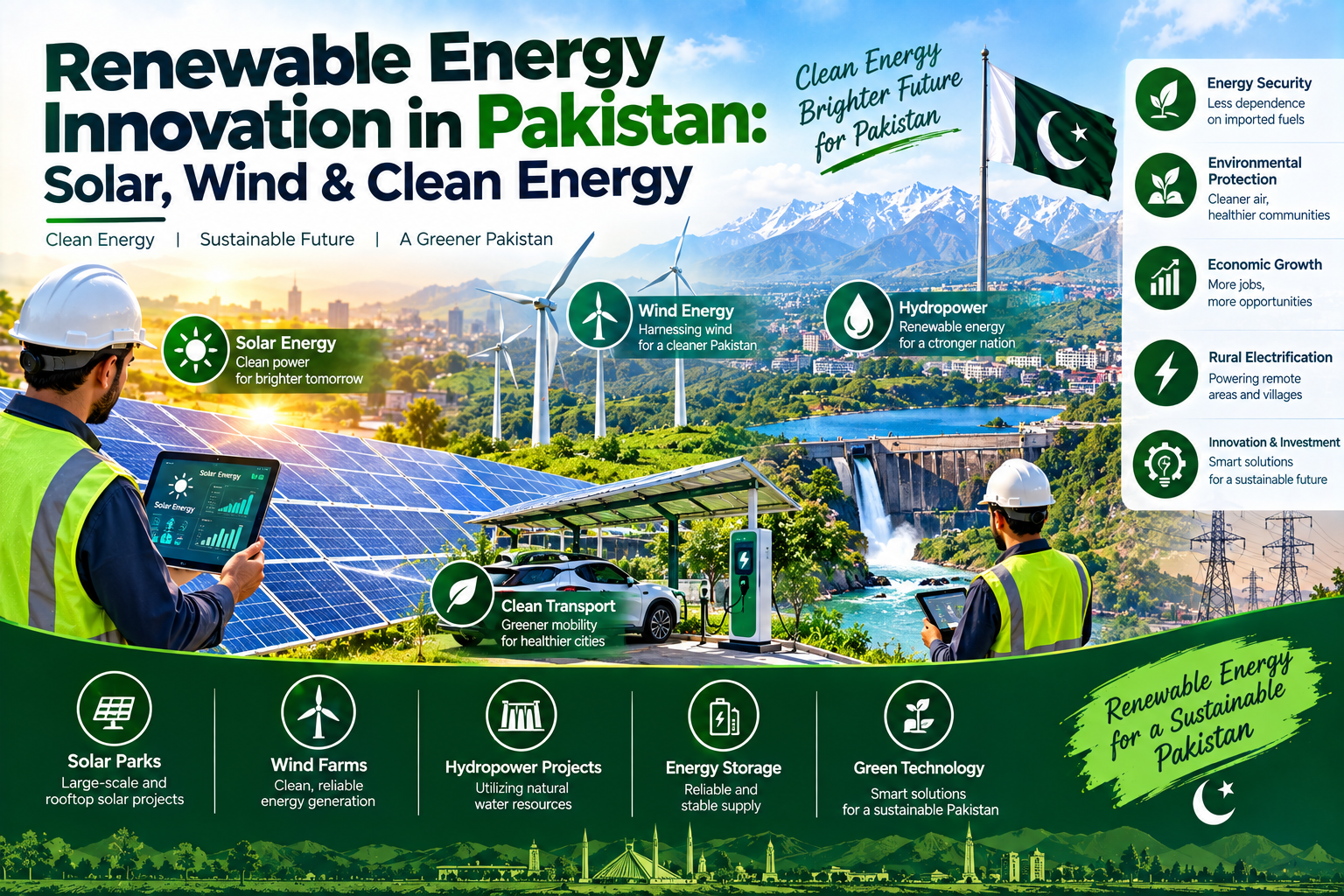
Renewable energy innovation in Pakistan is creating new possibilities for producing electricity from natural sources such as sunlight, wind, water, and agricultural materials. Among these sources, solar energy has become particularly visible because Pakistan receives substantial sunlight in many parts of the country. Wind energy is also important, especially in areas with suitable wind conditions, while hydropower has remained an important part of Pakistan's electricity system.
Innovation in renewable energy is not limited to large power plants. It also includes rooftop solar systems, solar-powered agricultural pumps, battery storage, smart energy management, energy-efficient equipment, mini-grids, and new financing models.
Pakistan has significant opportunities in clean energy, but the transition also requires careful planning, investment, technical skills, grid improvements, and suitable policies. Renewable energy can support Pakistan's energy needs while also creating opportunities for businesses, entrepreneurs, engineers, technicians, farmers, and communities.
What Is Renewable Energy?
Renewable energy comes from natural sources that can be replenished over time. Unlike finite fossil fuels, renewable energy sources are naturally renewed.
Common renewable energy sources include:
Solar energy
Wind energy
Hydropower
Biomass
Geothermal energy
Pakistan has opportunities to use several of these resources because of its geography, climate, rivers, agricultural activities, and large areas of land.
Renewable energy innovation focuses on finding better, more affordable, efficient, and reliable ways to use these natural resources.
Why Renewable Energy Matters for Pakistan
Pakistan's energy sector faces several challenges. Electricity demand, fuel costs, infrastructure requirements, and dependence on imported energy resources can all affect the country's energy situation.
Renewable energy can provide an additional source of electricity and reduce dependence on conventional fuels over time.
Clean energy can also support environmental goals by reducing some forms of pollution associated with fossil-fuel-based electricity generation.
Renewable energy is therefore relevant not only to electricity production but also to Pakistan's economy, environment, agriculture, industry, and households.
Solar Energy Innovation in Pakistan
Solar energy is one of the most promising areas of renewable energy innovation in Pakistan.
Solar panels convert sunlight into electricity. They can be installed on rooftops, commercial buildings, farms, schools, factories, and large solar projects.
The flexibility of solar technology is one reason it can be useful in Pakistan. A solar system can range from a small installation designed for basic household needs to a large project capable of generating substantial amounts of electricity.
Solar technology has also become an important part of discussions about reducing electricity costs and improving energy independence.
Rooftop Solar Systems
Rooftop solar is an important form of distributed energy generation.
Instead of electricity being produced only at a large power plant, solar panels can generate electricity close to where it is consumed.
Homes can install solar panels on rooftops, while businesses, schools, offices, and factories can use larger systems.
Rooftop solar can reduce the amount of electricity that a building needs to obtain from the conventional grid, depending on system size, electricity usage, sunlight, and other factors.
Solar Energy for Rural Communities
Solar power can also provide opportunities for rural communities.
Some rural areas face challenges related to electricity access or reliability. Small solar systems can potentially provide electricity for lighting, communication devices, water pumps, and other basic requirements.
Solar mini-grids can also provide electricity to groups of homes or community facilities where suitable.
Such systems need proper maintenance and technical support to remain reliable.
Solar Energy in Agriculture
Agriculture is an important part of Pakistan's economy, and energy is required for activities such as irrigation.
Solar-powered water pumps can provide an alternative energy source for agricultural pumping.
Farmers can potentially use solar energy during daylight hours to operate irrigation equipment.
However, the adoption of solar pumping needs proper planning. Excessive groundwater extraction can create environmental problems even when the electricity source is renewable.
Therefore, renewable energy and responsible water management need to work together.
Solar Energy for Businesses
Businesses are also exploring renewable energy solutions.
Shops, offices, factories, warehouses, restaurants, schools, and other organizations may use solar systems to generate electricity.
For businesses with significant daytime electricity consumption, solar generation can be particularly relevant.
Energy savings can potentially allow businesses to manage operating costs more effectively.
Wind Energy in Pakistan
Wind is another important renewable energy resource.
Pakistan has areas with suitable wind conditions that can support wind power projects. Wind turbines convert the movement of air into electricity.
Wind energy can complement solar power because electricity generation from wind does not depend on sunlight.
Large wind projects require careful assessment of wind resources, land, transmission infrastructure, environmental considerations, and project economics.
Wind Farms
Wind farms consist of multiple wind turbines installed in an area with suitable wind conditions.
They can produce electricity for the larger power system.
Wind power projects require significant investment and technical expertise.
Engineers need to evaluate wind speed, direction, terrain, infrastructure, and other factors before developing a project.
Hydropower Innovation
Pakistan has substantial hydropower potential because of its rivers and mountainous regions.
Hydropower uses flowing or falling water to generate electricity.
Large hydropower projects can produce significant amounts of electricity, while smaller projects can serve specific communities or local areas.
Innovation in hydropower includes improvements in turbine technology, monitoring systems, efficiency, and environmental management.
Small Hydropower Projects
Small hydropower systems can be useful in areas where large-scale projects are not practical.
They can provide electricity to communities located near suitable water resources.
Small projects may also support local economic development when properly planned and maintained.
Biomass Energy in Pakistan
Agriculture produces large quantities of organic material. Some agricultural waste can be used as biomass energy.
Biomass can include materials such as crop residues, animal waste, and certain forms of organic waste.
When managed properly, biomass can convert waste materials into useful energy.
This creates a connection between agriculture and renewable energy.
However, biomass systems need appropriate technology and environmental management to avoid harmful emissions or waste-management problems.
Biogas and Rural Energy
Biogas is produced when organic materials break down under controlled conditions.
Animal waste and other organic materials can be used in biogas systems.
For rural households and farms with suitable resources, biogas can provide energy for cooking and other purposes.
It can also create useful by-products that may support agricultural activities.
Battery Storage Innovation
One of the important challenges of renewable energy is that some sources are variable.
Solar power depends on sunlight, while wind power depends on wind conditions.
Battery storage can help store electricity for use at another time.
Battery technology is therefore becoming an important part of renewable energy systems.
For example, a solar system can generate electricity during the day and store some of the energy for later use.
Battery storage can make renewable energy systems more flexible.
Smart Energy Systems
Technology is also changing the way electricity systems are managed.
Smart energy systems use digital technologies, sensors, monitoring equipment, and automated controls to manage electricity more efficiently.
Smart systems can help identify energy usage patterns and improve system management.
In the future, smart energy technologies may become increasingly important as Pakistan integrates more renewable energy into its electricity system.
Microgrids and Mini-Grids
Microgrids and mini-grids can provide electricity to specific communities, buildings, or local areas.
They may combine solar panels, batteries, generators, and other energy sources.
These systems can be useful where connecting every location to a large centralized grid is difficult or expensive.
Rural communities, remote facilities, and critical services may benefit from appropriately designed local energy systems.
Renewable Energy and Industry
Pakistan's industrial sector consumes significant amounts of energy.
Factories need electricity for machinery, lighting, cooling, heating, production, and other operations.
Renewable energy can provide an additional electricity source for industrial facilities.
Some industries may install solar systems on factory rooftops or use renewable electricity through other arrangements.
Energy efficiency is also important because reducing unnecessary energy consumption can lower the amount of electricity required in the first place.
Renewable Energy and Small Businesses
Small businesses can also benefit from renewable energy.
A shop, workshop, office, or small manufacturing unit can potentially use solar panels to generate part of its electricity.
For small businesses, energy costs can be an important operating expense.
Renewable energy systems may help businesses manage energy consumption and improve resilience when properly designed.
Renewable Energy and Schools
Schools can use renewable energy as both an energy solution and an educational opportunity.
Solar panels installed at schools can provide electricity while also giving students a practical example of renewable energy technology.
Students can learn about:
Solar electricity
Energy efficiency
Climate
Engineering
Environmental protection
Sustainable development
Educational institutions can therefore become important centers for renewable energy awareness.
Renewable Energy in Healthcare
Hospitals and clinics require reliable electricity because medical equipment, refrigeration, lighting, communication systems, and other services depend on power.
Renewable energy systems with appropriate backup and storage can support healthcare facilities.
For remote healthcare centers, solar power can be particularly useful where electricity supply is limited or unreliable.
However, medical facilities require carefully designed systems because reliability is critical.
Electric Vehicles and Clean Energy
Renewable energy innovation is also connected to transportation.
Electric vehicles use electricity rather than conventional liquid fuels.
If the electricity used for charging comes increasingly from renewable sources, the connection between clean energy and transportation becomes stronger.
Pakistan's future energy system may therefore involve greater integration between renewable electricity, electric vehicles, charging infrastructure, and battery technology.
Energy Efficiency and Renewable Energy
Producing clean electricity is only one part of the energy solution.
Energy efficiency means using less energy to perform the same task.
Examples include:
Energy-efficient lighting
Efficient air conditioners
Better building insulation
Efficient motors
Smart appliances
Improved industrial equipment
Combining renewable energy with energy efficiency can reduce overall energy demand.
Renewable Energy and Climate Concerns
Renewable energy is also important in discussions about environmental sustainability.
Solar, wind, and hydropower do not require the same fuel combustion process used by many conventional power plants.
Reducing dependence on fossil fuels can contribute to lower greenhouse gas emissions over time.
However, renewable energy projects also need environmental planning. Large infrastructure projects can affect land, ecosystems, communities, and natural resources.
Responsible development therefore remains important.
Renewable Energy Startups in Pakistan
Renewable energy creates opportunities for entrepreneurs and startups.
Businesses can develop products and services related to:
Solar installation
Battery storage
Energy monitoring
Smart meters
Solar irrigation
Energy-efficient appliances
Renewable energy financing
Maintenance services
Energy consulting
Local entrepreneurs can contribute to the expansion of clean energy by developing solutions suitable for Pakistani consumers and businesses.
Financing Renewable Energy
The initial cost of renewable energy systems can be a major consideration.
Different financing models can make clean energy more accessible.
These may include:
Bank financing
Leasing
Installment plans
Business investment
Community projects
Energy service models
Financing options need to be transparent so consumers understand total costs, maintenance requirements, and contractual conditions.
Importance of Skilled Workers
Renewable energy expansion requires skilled professionals.
Pakistan needs engineers, electricians, technicians, project managers, researchers, installers, and maintenance specialists.
Training programs can help young people develop skills in solar installation, electrical systems, battery technology, energy management, and other related fields.
This can create employment opportunities while supporting the growth of the renewable energy industry.
Research and Innovation
Research is essential for long-term renewable energy development.
Universities and research organizations can work on:
Better solar panels
Improved batteries
Energy storage
Smart grids
Efficient turbines
Solar agriculture
Energy forecasting
Renewable energy integration
Local research can help develop solutions that are suitable for Pakistan's climate, geography, and economic conditions.
Challenges of Renewable Energy in Pakistan
Renewable energy offers many opportunities, but several challenges must be considered.
Initial Investment
Solar panels, batteries, wind turbines, and other systems require investment.
Grid Integration
Large amounts of variable renewable electricity require appropriate grid planning and management.
Storage
Energy storage can help manage differences between electricity generation and demand.
Technical Skills
Qualified workers are required to install and maintain renewable energy systems.
Equipment Quality
Poor-quality equipment can reduce system performance and reliability.
Maintenance
Renewable energy systems still require inspection, maintenance, and replacement of components.
Policy and Regulation
Clear and consistent policies can help businesses and consumers make long-term investment decisions.
The Importance of Quality Solar Equipment
As solar energy becomes more popular, consumers need to pay attention to equipment quality.
A solar system includes more than just panels. Depending on the system, it may include inverters, batteries, mounting structures, wiring, protection equipment, and monitoring systems.
Qualified installers should design systems according to electricity requirements and site conditions.
Consumers should also understand warranties, maintenance requirements, and expected system performance.
Renewable Energy and Pakistan's Economy
The renewable energy sector can contribute to economic activity in several ways.
It can create jobs in manufacturing, installation, maintenance, engineering, sales, finance, and research.
It can also create opportunities for businesses that provide energy services.
Local production of certain renewable energy components could further support industrial development if economically and technically practical.
Renewable Energy and Energy Independence
Pakistan imports significant amounts of energy resources, making international energy prices relevant to the country's economy.
Increasing the use of locally available renewable resources can diversify the energy mix.
Solar, wind, hydropower, and biomass are domestic resources that can contribute to energy production.
A diversified energy system can provide greater flexibility than depending heavily on one source.
Future of Renewable Energy in Pakistan
The future of renewable energy in Pakistan is likely to involve a combination of technologies.
Solar power may continue to expand through residential, commercial, agricultural, and utility-scale projects.
Wind energy can contribute in suitable regions.
Hydropower can remain an important part of electricity generation.
Battery storage may become increasingly important as renewable generation grows.
Smart energy systems can help manage electricity production and consumption.
The future energy system may therefore be more decentralized, digital, and diversified.
The Role of Government
Government institutions have an important role in creating an environment where renewable energy can develop responsibly.
Policies can support investment, technical standards, grid development, consumer protection, research, and workforce training.
Clear rules can help businesses and consumers understand their options.
Government programs can also encourage renewable energy in public buildings, schools, healthcare facilities, and other institutions where appropriate.
The Role of Consumers
Consumers also have an important role in energy innovation.
Households and businesses can reduce energy waste by using efficient appliances and managing electricity consumption carefully.
Those considering renewable energy systems should research equipment quality, installation requirements, maintenance, and costs.
Responsible consumer decisions can encourage better standards in the renewable energy market.
Conclusion
Renewable energy innovation in Pakistan is creating new opportunities for electricity generation, economic development, agriculture, businesses, and communities. Solar energy, wind power, hydropower, biomass, battery storage, microgrids, and smart energy systems can all contribute to a more diversified energy future.
Solar energy has particular potential for homes, businesses, farms, schools, and other buildings because it can be installed at different scales. Wind and hydropower can contribute through larger projects, while biomass and biogas can connect renewable energy with agriculture and waste management.
Pakistan still faces challenges involving investment, grid integration, storage, equipment quality, technical skills, maintenance, and policy. Addressing these challenges requires cooperation among government institutions, businesses, engineers, researchers, financial organizations, and consumers.
Renewable energy is not simply a technology issue. It is also an economic and social opportunity. With careful planning, investment, quality standards, and responsible development, clean energy innovation can contribute to a more reliable and sustainable energy future for Pakistan.
FAQs
1. What is renewable energy innovation in Pakistan?
It means developing and using modern technologies and solutions to generate energy from renewable sources such as solar, wind, water, and biomass.
2. Why is solar energy important in Pakistan?
Solar energy can be used in homes, businesses, farms, schools, and large projects, making it a flexible renewable energy option for many parts of Pakistan.
3. What renewable energy sources are available in Pakistan?
Pakistan has opportunities in solar, wind, hydropower, biomass, and biogas, depending on local geography and available resources.
4. What are the challenges of renewable energy in Pakistan?
Important challenges include initial investment, grid integration, energy storage, technical skills, equipment quality, maintenance, and policy requirements.
5. What is the future of renewable energy in Pakistan?
The future may include greater use of solar and wind power, improved battery storage, smart energy systems, distributed generation, and more energy-efficient technologies.