Introduction
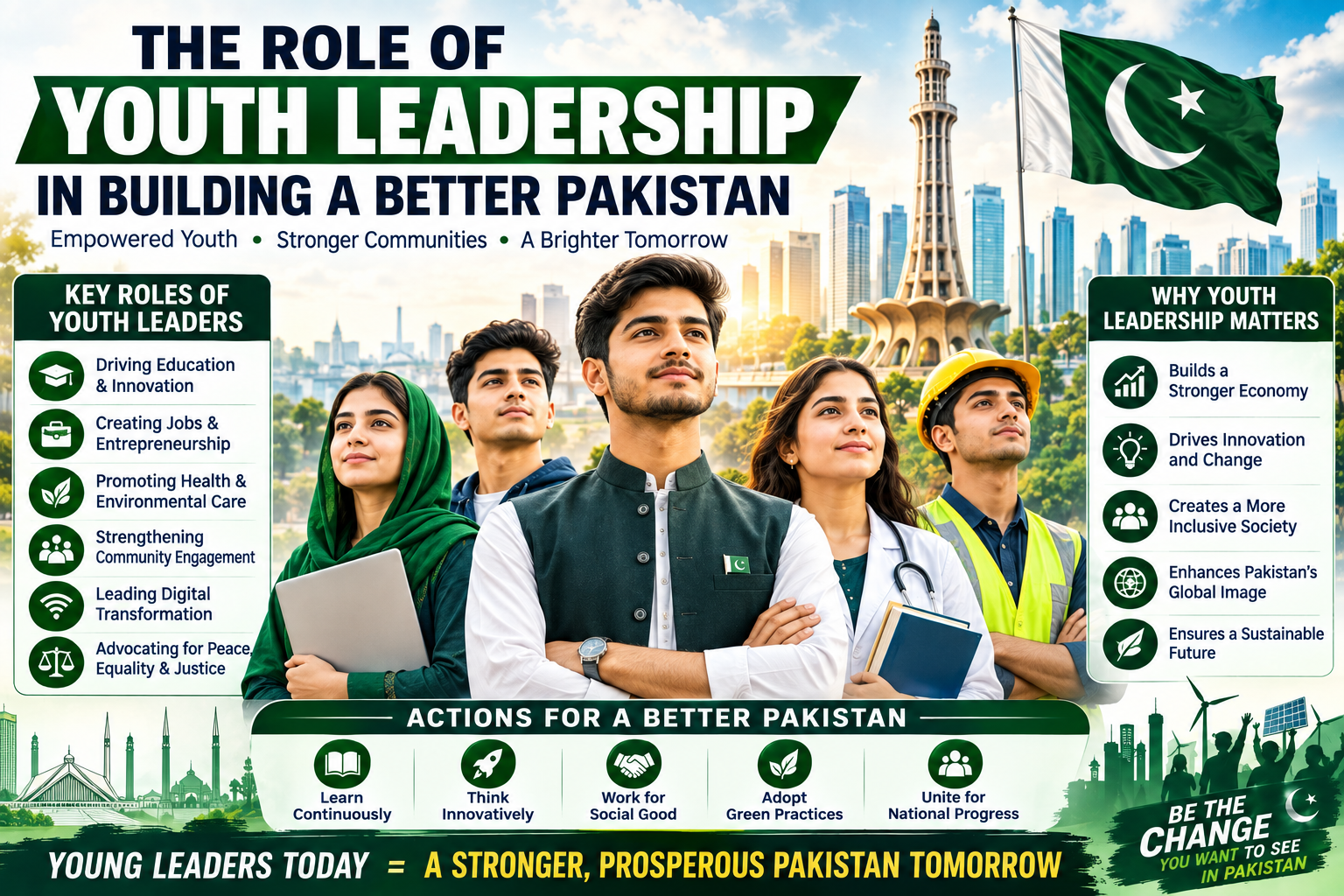
Young people are one of Pakistan’s greatest national assets. With a large and energetic youth population, Pakistan has enormous potential to achieve economic, social, technological, and educational progress. However, this potential can only be fully realized when young people are given opportunities to develop leadership skills and participate positively in society.
Youth leadership is not limited to becoming a political leader. It includes taking responsibility, solving problems, helping communities, developing innovative ideas, and inspiring others to work toward positive goals. A young person who leads a school project, starts a small business, volunteers in the community, or creates a useful technology solution is also demonstrating leadership.
In Pakistan, youth leadership can play an important role in creating a more educated, skilled, innovative, responsible, and prosperous society. By investing in young people today, the country can prepare capable leaders for tomorrow.
What Is Youth Leadership?
Youth leadership means the ability of young people to take responsibility, make positive decisions, influence others constructively, and contribute to the development of their communities and country.
A youth leader does not necessarily need a formal position. Leadership can begin with simple actions such as helping classmates, organizing a community activity, learning a useful skill, supporting an educational campaign, or developing an idea that solves a local problem.
Effective youth leadership is based on qualities such as:
Confidence
Honesty
Responsibility
Communication
Teamwork
Creativity
Critical thinking
Problem-solving
Discipline
Respect for others
These qualities help young people become productive members of society and prepare them for future professional and civic responsibilities.
Why Youth Leadership Is Important for Pakistan
Pakistan has a large young population, making youth an important part of the country's future. If young people receive quality education, practical skills, leadership opportunities, and proper guidance, they can become a powerful force for national development.
Young people can contribute to different sectors, including:
Education
Technology
Business
Agriculture
Healthcare
Science
Community development
Environmental protection
Digital innovation
Youth participation can also bring fresh ideas to problems that have existed for many years. Young people often have a strong ability to adapt to new technologies and changing circumstances.
Youth Leadership and Education
Education is one of the strongest foundations of effective leadership. Young people need more than textbook knowledge. They also need communication skills, critical thinking, teamwork, creativity, and problem-solving abilities.
Schools and colleges can develop youth leadership by giving students opportunities to participate in:
Debates
Presentations
Group projects
Sports activities
Science competitions
Technology projects
Volunteer programs
Student organizations
Such activities can help students become more confident and responsible.
Education should encourage students to ask questions, understand problems, and develop their own solutions. This can prepare them to become responsible leaders in their communities.
The Importance of Skill Development
Academic education is important, but practical skills are equally valuable in the modern world. Pakistan's youth can benefit from learning skills related to technology, communication, digital work, entrepreneurship, design, programming, and other professional fields.
Skill-based learning can help young people become more independent and better prepared for employment and entrepreneurship.
Leadership and skills are closely connected. A young person who knows how to communicate, manage time, solve problems, and work with a team is better prepared to lead others.
Youth Leadership and Technology
Technology has created new opportunities for young Pakistanis. The internet has made it possible for students and young professionals to learn from international resources, develop digital skills, start online businesses, and connect with people around the world.
Young technology enthusiasts can contribute to Pakistan through:
Software development
Artificial intelligence
Digital entrepreneurship
E-commerce
Freelancing
Educational technology
Mobile applications
Research and innovation
Youth leaders can also use technology to raise awareness about important social issues and create digital solutions for local problems.
Youth Entrepreneurship
Entrepreneurship is another important area where youth leadership can contribute to Pakistan's development.
A young entrepreneur does not only create an income opportunity for themselves. A successful business can also create jobs for other people and contribute to the economy.
Young entrepreneurs can identify problems in their communities and develop businesses around practical solutions. Areas such as agriculture, education, technology, e-commerce, tourism, and digital services can provide opportunities for innovation.
Entrepreneurship also teaches important leadership skills, including decision-making, financial planning, communication, teamwork, and responsibility.
Youth and Community Development
Young people can make a difference in their communities through volunteer activities and social projects.
For example, students can participate in:
Educational awareness programs
Tree-planting activities
Cleanliness campaigns
Literacy initiatives
Community support projects
Blood donation awareness
Digital literacy programs
These activities teach young people that leadership is about serving others rather than simply having authority.
Youth Leadership and National Unity
Pakistan is a diverse country with different languages, cultures, regions, and traditions. Youth leadership can help promote understanding and cooperation among different communities.
Young people can use education, social media, sports, cultural activities, and community projects to build positive relationships.
Respecting differences while working toward common national goals can strengthen social unity.
Young leaders should learn that disagreement does not always mean conflict. People can have different opinions while still cooperating for the improvement of their communities and country.
The Role of Young Women in Leadership
Young women are also an important part of Pakistan's future. Providing them with opportunities for education, skills development, entrepreneurship, and leadership can increase the country's overall human potential.
Young women can contribute in education, medicine, technology, business, research, public service, and many other fields.
A society benefits when talented young people have opportunities to develop their abilities and contribute positively.
Youth Leadership and Good Governance
Young people can contribute to better governance by developing an understanding of civic responsibility, public institutions, laws, and community needs.
Youth participation does not necessarily mean entering politics. It can involve learning about society, participating in constructive discussions, volunteering, and contributing ideas for community improvement.
Developing responsible and informed young citizens can strengthen democratic and institutional culture over time.
Challenges Facing Youth Leadership in Pakistan
Although Pakistani youth have significant potential, they face several challenges.
Lack of Opportunities
Many young people do not have enough opportunities to gain practical leadership experience.
Skill Gaps
The modern job market requires technical and soft skills that may not always be adequately covered by traditional education.
Limited Career Guidance
Students can benefit greatly from mentors, teachers, career counselors, and professionals who can guide them toward suitable educational and career paths.
Unemployment
Limited employment opportunities can make it difficult for young people to use their education and skills productively.
Digital Divide
Not every young person has equal access to computers, reliable internet, and digital learning resources.
Lack of Mentorship
Experienced mentors can help young people learn from real-world experiences and avoid common mistakes.
How Pakistan Can Promote Youth Leadership
Pakistan can strengthen youth leadership through several practical measures.
1. Improve Educational Opportunities
Schools and colleges should focus not only on examinations but also on creativity, communication, teamwork, and problem-solving.
2. Expand Skill-Based Education
Young people should have access to practical and technical training that prepares them for modern employment and entrepreneurship.
3. Create Leadership Programs
Leadership programs can teach young people communication, decision-making, teamwork, project management, and civic responsibility.
4. Encourage Entrepreneurship
Young entrepreneurs need access to training, mentorship, financial education, and suitable business support.
5. Provide Mentorship
Connecting students with experienced professionals can help them understand different careers and develop practical skills.
6. Support Innovation
Universities and educational institutions can encourage students to develop projects that solve real-world problems.
7. Encourage Community Participation
Volunteer work and community projects can give young people practical leadership experience.
The Role of Parents and Teachers
Parents and teachers have an important role in developing future leaders. Young people need encouragement to express ideas, take responsibility, learn from mistakes, and develop confidence.
Teachers can give students leadership responsibilities through group projects and educational activities.
Parents can support young people's learning and encourage them to develop useful skills.
Instead of making every decision for young people, adults can gradually teach them how to make responsible decisions themselves.
The Role of Universities
Universities can become important centers for youth leadership development. Students can participate in research, entrepreneurship programs, debates, technology projects, community initiatives, and professional internships.
Universities can also connect students with industries and organizations so that they gain practical experience.
This combination of education and experience can help young people become more capable professionals and leaders.
Youth Leadership and Environmental Responsibility
Environmental challenges are increasingly important for Pakistan. Young people can contribute by promoting awareness about cleanliness, water conservation, responsible waste management, tree planting, and sustainable practices.
Students can organize environmental projects in their schools and communities.
Such activities develop leadership while also creating positive social and environmental outcomes.
Youth Leadership in Rural Pakistan
Youth leadership is not limited to major cities. Young people in rural areas can also play an important role in national development.
Rural youth can contribute to agriculture, education, entrepreneurship, digital services, and community development.
Access to technology and skills training can help rural young people discover new opportunities without having to leave their communities.
Building Responsible Digital Leaders
Social media has become an important part of modern communication. Young people can use digital platforms to learn, communicate, promote businesses, and share educational information.
However, responsible digital leadership is important. Young people should learn to verify information, communicate respectfully, protect their privacy, and avoid spreading false information.
Digital skills should therefore be combined with digital responsibility.
Leadership Through Small Actions
Leadership does not always begin with a major project. It can start with small actions.
A student who helps classmates understand a difficult topic is showing leadership. A young person who organizes a cleanliness activity is demonstrating leadership. Someone who learns a skill and teaches others is also contributing to society.
These small actions can gradually create a culture of responsibility and cooperation.
Youth Leadership and Pakistan's Future
The future of Pakistan will depend greatly on how effectively the country develops its young population.
Young people will eventually become teachers, doctors, engineers, lawyers, entrepreneurs, researchers, administrators, technology professionals, and community leaders.
If they receive quality education, useful skills, ethical guidance, and opportunities to participate, they can contribute significantly to national development.
Youth leadership should therefore be treated as a long-term investment rather than a temporary initiative.
Conclusion
Youth leadership has an important role in building a better Pakistan. Young people have creativity, energy, adaptability, and the ability to learn new technologies. With proper education, skills, mentorship, and opportunities, they can become powerful contributors to national progress.
Developing youth leadership requires cooperation between families, schools, universities, businesses, communities, and institutions. Young people should be encouraged to take responsibility, develop useful skills, participate in community activities, and create innovative solutions.
Pakistan's future leaders are being prepared today. By investing in young people and giving them meaningful opportunities, the country can build a more skilled, innovative, responsible, and prosperous society.
FAQs
1. Why is youth leadership important for Pakistan?
It helps young people contribute to education, technology, entrepreneurship, community development, and national progress.
2. How can students develop leadership skills?
Students can develop leadership through teamwork, projects, debates, volunteering, communication, and problem-solving activities.
3. What role does education play in youth leadership?
Education develops knowledge, critical thinking, communication, and other skills needed for responsible leadership.
4. How can Pakistani youth contribute to economic development?
They can contribute through entrepreneurship, employment, technology, freelancing, innovation, and skill development.
5. How can Pakistan support young leaders?
Pakistan can provide quality education, skills training, mentorship, leadership programs, entrepreneurship opportunities, and platforms for youth participation.