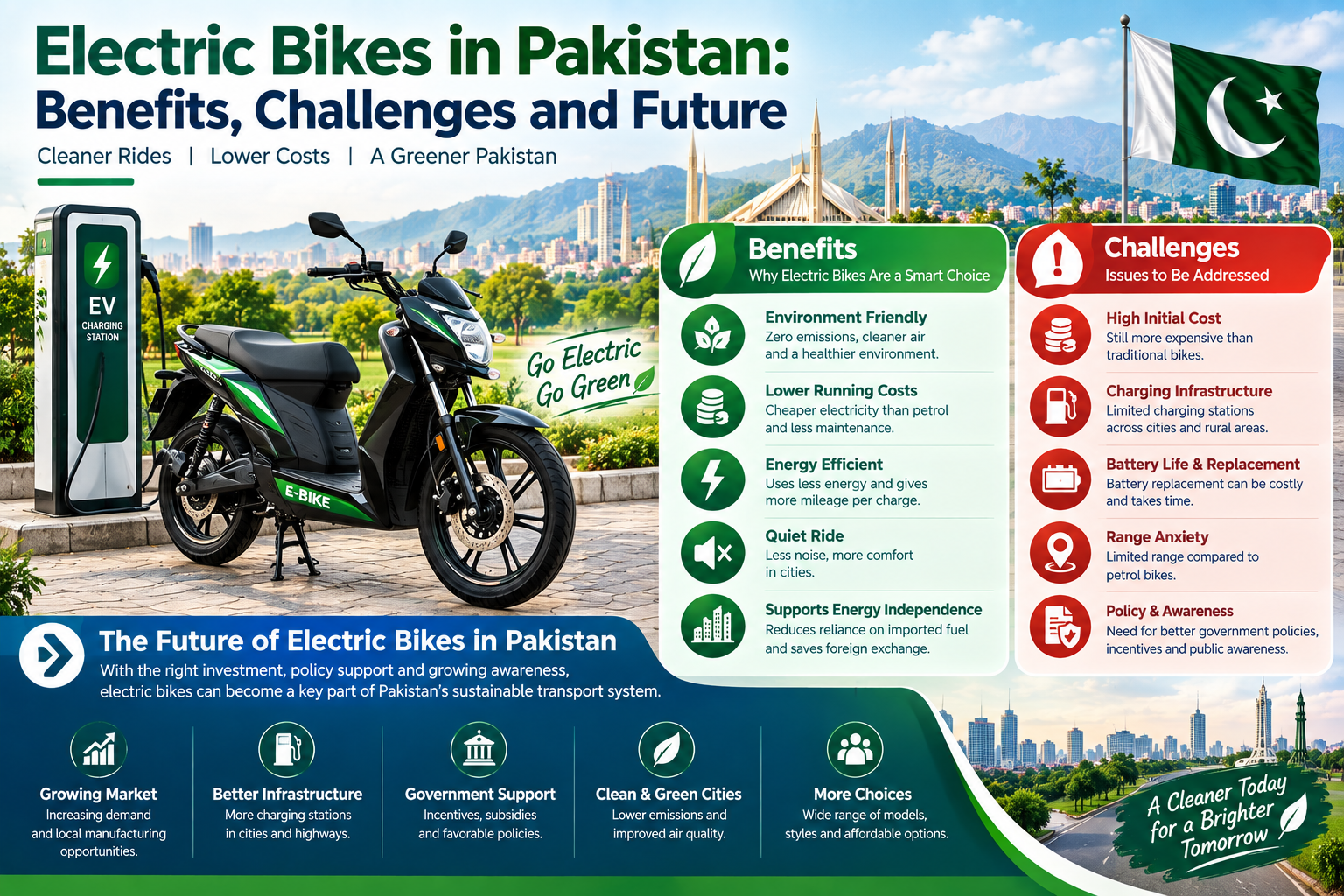
Electric bikes are becoming an increasingly visible part of Pakistan's transportation landscape. As cities grow, fuel costs remain an important concern, and interest in cleaner transportation increases, electric motorcycles and scooters are attracting attention from consumers, businesses and mobility companies.
Unlike traditional motorcycles that use petrol engines, electric bikes use rechargeable batteries and electric motors. This basic difference changes how the vehicle is operated, maintained and used. Electric bikes can offer quiet operation, simple controls and potentially lower day-to-day energy costs, particularly for people who travel short distances regularly.
Pakistan has a large motorcycle market, making electric mobility particularly relevant. Motorcycles are already widely used for commuting, education, business and local transportation. If electric technology becomes more affordable and convenient, it could gradually become an important part of the country's two-wheeler market.
However, electric bikes also have challenges. Battery cost, charging infrastructure, charging time, after-sales services, replacement parts and consumer awareness all influence their practicality.
This article explores the benefits, challenges, technology, maintenance requirements and future possibilities of electric bikes in Pakistan.
What Is an Electric Bike?
An electric bike is a two-wheeled vehicle powered partly or entirely by electricity. Instead of a conventional petrol engine, it normally uses an electric motor connected to a rechargeable battery.
The main components may include:
Battery pack
Electric motor
Motor controller
Charger
Throttle or electronic controls
Display
Braking system
Frame and suspension
Wheels and tires
When the battery contains sufficient charge, electrical energy is delivered to the motor. The motor converts this electrical energy into mechanical movement.
The exact design varies between different electric motorcycles and scooters.
Why Electric Bikes Are Gaining Attention in Pakistan
Electric bikes are receiving increasing attention because transportation costs and urban environmental concerns have encouraged people to consider alternatives to conventional petrol-powered vehicles.
For daily commuters, the possibility of charging a motorcycle at home can be attractive. Instead of visiting a fuel station regularly, an electric-bike owner may be able to recharge the battery using an appropriate charging system.
Electric bikes can also produce less operating noise than conventional motorcycles. This can make them particularly interesting for urban environments.
The growing interest in electric transportation is also connected with technological development. Improvements in batteries, motors and charging systems may gradually make electric vehicles more practical.
Main Benefits of Electric Bikes
Electric motorcycles offer several potential advantages.
Lower Dependence on Petrol
One of the most obvious differences between electric and petrol motorcycles is the energy source.
An electric bike does not require petrol to power its motor. This can reduce a rider's dependence on conventional fuel for suitable daily journeys.
For people who travel regularly over short distances, this can be an important consideration.
Quiet Operation
Electric motors generally operate much more quietly than conventional petrol engines.
This can reduce mechanical noise during urban travel. Quieter transportation can be particularly useful in densely populated areas.
Simple Power System
An electric motor has a different mechanical structure from a traditional internal-combustion engine.
Many electric vehicles have fewer engine-related components that require conventional maintenance. This can simplify certain aspects of ownership.
However, electric bikes still contain many components that require inspection and maintenance, including brakes, tires, suspension and electrical systems.
Potentially Lower Running Costs
Electricity and petrol have different costs, and the actual savings depend on electricity rates, battery efficiency, motorcycle specifications and usage.
For frequent short-distance commuting, an electric bike may offer potentially lower energy costs than a petrol motorcycle.
However, consumers should consider the complete cost of ownership rather than assuming that every electric motorcycle will automatically be cheaper.
Reduced Local Exhaust Emissions
Electric bikes do not produce tailpipe exhaust emissions while operating.
This is one of the major differences between battery-powered transportation and conventional petrol-powered vehicles.
The overall environmental impact of an electric bike also depends on how the electricity used for charging is generated and on battery manufacturing and disposal.
Electric Bikes for Daily Commuting
Daily commuting is one of the areas where electric motorcycles can be particularly relevant.
Many people travel relatively predictable routes between:
Home and workplace
Home and college
Markets
Local businesses
Nearby neighborhoods
Other urban destinations
For these journeys, an electric motorcycle can be convenient if the battery range is suitable and charging is easily available.
Before purchasing one, commuters should calculate their approximate daily distance and compare it with the practical range of the motorcycle.
Battery Range
Battery range refers to how far an electric bike can travel before the battery needs to be recharged.
Range depends on several factors, including:
Battery capacity
Motorcycle weight
Rider weight
Riding conditions
Speed
Road conditions
Weather
Tire pressure
Battery age
Use of electrical accessories
Manufacturers may provide estimated range figures, but real-world performance can vary.
For this reason, buyers should avoid planning their entire purchase around a single advertised range number.
Charging an Electric Bike
Charging is one of the most important parts of electric-bike ownership.
Depending on the motorcycle and charger, charging can take different amounts of time.
Some electric bikes can be charged using home electricity. Others may support faster charging systems.
Before purchasing an electric bike, consumers should understand:
Charger type
Charging time
Required electrical connection
Battery capacity
Charging location
Electricity cost
Availability of replacement chargers
A motorcycle with a suitable battery may still be inconvenient if the owner does not have a practical place to recharge it.
Home Charging
Home charging can be one of the biggest advantages of an electric bike for urban users.
A person with access to a suitable electrical connection may be able to charge the motorcycle at home, depending on the manufacturer's requirements.
However, charging equipment should be used according to the manufacturer's instructions.
Owners should avoid using unsuitable electrical equipment or damaged chargers.
Battery Technology
The battery is one of the most important components of an electric motorcycle.
Different electric vehicles may use different battery technologies. Lithium-based batteries are widely used in modern electric vehicles because of their energy density and other performance characteristics.
Battery performance can gradually change over time. Factors such as charging patterns, temperature, usage and battery quality can influence battery life.
This makes battery quality an important consideration when purchasing an electric bike.
Battery Replacement Cost
One of the most important questions for an electric-bike buyer is what happens when the battery eventually needs replacement.
The battery can be a significant component of the vehicle's overall cost.
Before buying an electric motorcycle, consumers should ask about:
Battery warranty
Expected battery service life
Replacement cost
Availability of replacement batteries
Battery recycling or disposal
Service-center support
A low purchase price may not necessarily represent the lowest long-term cost if replacement support is limited.
Electric Bike Maintenance
Electric bikes generally have different maintenance requirements from petrol motorcycles.
They may not require some conventional engine services associated with petrol motorcycles, but maintenance is still necessary.
Important areas include:
Brakes
Tires
Suspension
Battery
Charger
Electrical connections
Lights
Motor
Controller
Frame
Regular inspections can help identify problems before they become more serious.
Brake Maintenance
Electric bikes still require reliable braking systems.
Depending on the model, they may use disc brakes, drum brakes or other braking technologies.
Brake components can wear over time and should be inspected regularly.
A motorcycle's braking system should never be ignored simply because the vehicle is electric.
Tire Maintenance
Tires are equally important for electric and petrol motorcycles.
Correct tire pressure can support handling, comfort and tire life.
Riders should regularly inspect tires for:
Uneven wear
Cracks
Punctures
Damage
Low pressure
Excessive tread wear
Proper tire maintenance is especially important for daily commuting.
Electric Bikes and Pakistani Weather
Pakistan experiences a wide range of weather conditions, from very hot summers to rainy periods and colder winters in some regions.
Temperature can affect battery performance and charging behavior.
Electric-bike owners should follow the manufacturer's instructions for battery storage, charging and protection from environmental conditions.
Electrical components should also be protected from unnecessary exposure to water.
Electric Bikes in Major Pakistani Cities
Electric motorcycles can be relevant to transportation in cities such as Lahore, Karachi, Islamabad, Rawalpindi, Faisalabad, Multan, Peshawar and other urban areas.
Large cities contain many short and medium-distance journeys, making two-wheel transportation particularly important.
However, the suitability of electric bikes can vary depending on the availability of charging facilities and service centers in each area.
Electric Bikes for Students
Students may find electric bikes attractive because they can be used for local commuting.
For students considering an electric motorcycle, important factors include:
Range
Charging time
Weight
Comfort
Safety features
Battery warranty
Maintenance
Service availability
Parents and students should also consider legal requirements and safe riding practices.
Electric Bikes for Office Workers
Office commuters often have predictable travel schedules, which can make electric transportation easier to plan.
For example, someone travelling a fixed distance every day can calculate whether the motorcycle's practical range is sufficient.
However, office workers who frequently travel long distances or cannot recharge during the day may need to consider a motorcycle with suitable range and charging options.
Electric Bikes for Delivery Services
Delivery businesses are another potential area for electric motorcycles.
Delivery riders may travel many kilometres every day, making energy costs an important operating factor.
Electric motorcycles could potentially reduce dependence on petrol for suitable routes.
However, commercial users need to consider:
Battery range
Charging availability
Daily mileage
Charging downtime
Battery durability
Maintenance
Replacement costs
For high-mileage businesses, these factors can be more important than the initial purchase price.
Challenges Facing Electric Bikes in Pakistan
Despite their potential benefits, electric motorcycles face several challenges.
Limited Charging Infrastructure
Public charging infrastructure for two-wheelers is not yet as widespread as traditional petrol stations.
For users without convenient home charging, this can create difficulties.
Battery Concerns
Battery cost and long-term performance remain important considerations.
Consumers may worry about how long a battery will last and how much replacement will cost.
Consumer Awareness
Electric motorcycles are different from traditional motorcycles, so consumers need information about charging, battery care, maintenance and warranty conditions.
Better consumer education can help buyers make informed decisions.
After-Sales Service
Service support is extremely important for electric vehicles.
Consumers need access to trained technicians and replacement components.
A motorcycle may become difficult to maintain if the manufacturer or distributor has limited service coverage.
Availability of Spare Parts
Before purchasing an electric motorcycle, consumers should research the availability of replacement parts.
Important components can include:
Brake parts
Tires
Chargers
Controllers
Electrical components
Battery systems
Lighting components
Reliable parts availability can make long-term ownership easier.
Price and Total Cost of Ownership
The purchase price is only one part of the cost of owning an electric bike.
Buyers should consider:
Initial purchase price
Electricity consumption
Battery replacement
Maintenance
Insurance or registration costs where applicable
Spare parts
Charging equipment
Resale value
Comparing the total cost of ownership can provide a more realistic picture than comparing purchase prices alone.
Resale Value of Electric Bikes
Resale markets for electric motorcycles are still developing.
Traditional petrol motorcycles have a long-established used-bike market in Pakistan. Electric bikes are comparatively newer, so buyers may have fewer historical resale references.
Resale value can depend on:
Brand reputation
Battery condition
Vehicle age
Service history
Market demand
Availability of spare parts
Remaining warranty
As electric motorcycles become more common, the used electric-bike market may become more developed.
Electric Bikes and Environmental Considerations
Electric transportation is often discussed as a cleaner alternative to conventional vehicles.
Electric motorcycles have no tailpipe exhaust emissions while operating. This can reduce direct exhaust pollution in cities.
However, environmental impact is broader than vehicle operation. Battery manufacturing, electricity generation, transportation and end-of-life battery management also matter.
Responsible battery recycling and disposal will therefore become increasingly important as the number of electric vehicles grows.
Role of Renewable Energy
Pakistan has significant potential for renewable energy, including solar power.
Electric vehicles can potentially benefit from renewable electricity because charging can be connected with cleaner energy sources.
For homes and businesses using solar power, electric transportation may become part of a broader energy strategy.
The practicality depends on the size and design of the solar system, electricity usage and charging requirements.
Safety Considerations
Electric motorcycles require the same basic road-safety awareness as other motorcycles.
Riders should:
Wear an appropriate helmet
Follow traffic laws
Maintain the motorcycle properly
Check brakes and tires
Use lights and indicators correctly
Avoid distracted riding
Stay aware of surrounding traffic
Battery and charging safety is also important. Chargers should be used according to manufacturer instructions, and damaged batteries or electrical equipment should be professionally inspected.
Buying a New Electric Bike
Before purchasing a new electric bike, ask the seller about:
Battery capacity
Practical range
Charging time
Battery warranty
Motor warranty
Replacement battery cost
Service-center locations
Spare-parts availability
Charger specifications
Registration and documentation
Resale considerations
Recommended maintenance schedule
These questions can help consumers understand the complete ownership experience.
Buying a Used Electric Bike
Used electric bikes require additional attention because battery condition can be difficult to judge from appearance alone.
Buyers should inspect:
Battery health
Charging performance
Motor operation
Brakes
Tires
Suspension
Electrical system
Charger
Frame
Documentation
A professional inspection can be especially valuable when buying a used electric motorcycle.
Future of Electric Bikes in Pakistan
The future of electric bikes in Pakistan will depend on several factors.
These include:
Battery technology
Purchase affordability
Charging infrastructure
Government policies
Local manufacturing
Consumer demand
Financing options
Service networks
Availability of spare parts
If these areas continue to develop, electric motorcycles could become a more common transportation option.
Local Manufacturing and the Electric Vehicle Market
Pakistan already has experience with motorcycle manufacturing and assembly. This existing industrial base could support the development of electric two-wheelers.
Local production can potentially improve access to parts, technical knowledge and service networks.
The growth of an electric-bike industry could also create opportunities in areas such as battery technology, electronics, software, charging equipment and vehicle assembly.
Technology and Smart Features
Future electric bikes may include increasingly advanced digital features.
Potential features can include:
Digital dashboards
Battery monitoring
Smartphone connectivity
Navigation support
Theft alerts
Remote diagnostics
Ride statistics
Such technologies can improve the user experience, although they may also increase the complexity of the vehicle.
What Consumers Should Consider
The most suitable electric bike is not necessarily the one with the largest battery or the most features.
Instead, buyers should match the motorcycle with their actual needs.
Someone who travels a short distance every day may not require a very large battery. A long-distance commuter may have different requirements.
Consumers should also consider where they will charge the motorcycle and whether service support is available nearby.
Electric Bikes Compared With Petrol Bikes
Electric and petrol motorcycles each have different characteristics.
Electric bikes can offer quiet operation, charging-based energy use and a different maintenance structure.
Petrol motorcycles benefit from an established fuel-station network, widespread mechanic availability and a mature used-bike market.
The choice depends on individual travel patterns, budget, charging access, maintenance preferences and local infrastructure.
Conclusion
Electric bikes are becoming an important topic in Pakistan's transportation sector. They offer potential benefits such as reduced dependence on petrol, quiet operation, simple electric power systems and potentially lower energy costs for suitable journeys.
At the same time, consumers should carefully consider battery life, charging facilities, replacement costs, service networks and spare-parts availability before making a purchase.
For daily city commuting, an electric motorcycle can be practical when the rider has reliable charging access and a travel pattern that matches the vehicle's practical range. For high-mileage users, battery durability and charging time become particularly important.
Pakistan's large motorcycle market provides a significant opportunity for electric two-wheelers. As battery technology improves, charging infrastructure expands and consumer awareness increases, electric bikes may become an increasingly familiar part of urban transportation.
The future of electric motorcycles in Pakistan will depend not only on vehicle technology but also on affordability, infrastructure, after-sales service, local manufacturing and consumer confidence. With development in these areas, electric bikes could play a meaningful role in the country's future mobility system.
FAQs
1. Are electric bikes suitable for daily commuting in Pakistan?
Electric bikes can be suitable for daily commuting when the motorcycle's practical range matches the rider's travel distance and convenient charging is available.
2. How long does an electric bike battery last?
Battery life varies according to battery technology, quality, usage, charging practices and environmental conditions. Buyers should check the manufacturer's warranty and expected battery life.
3. Are electric bikes cheaper to maintain than petrol bikes?
Electric bikes may require less conventional engine maintenance, but they still require servicing for brakes, tires, suspension and electrical components. Battery replacement can also be a significant cost.
4. What should I check before buying an electric bike?
Check the battery capacity, practical range, charging time, warranty, replacement battery cost, service network, spare-parts availability and overall build quality.
5. What is the future of electric bikes in Pakistan?
The electric-bike market may continue developing as battery technology, charging infrastructure, local manufacturing and consumer awareness improve.