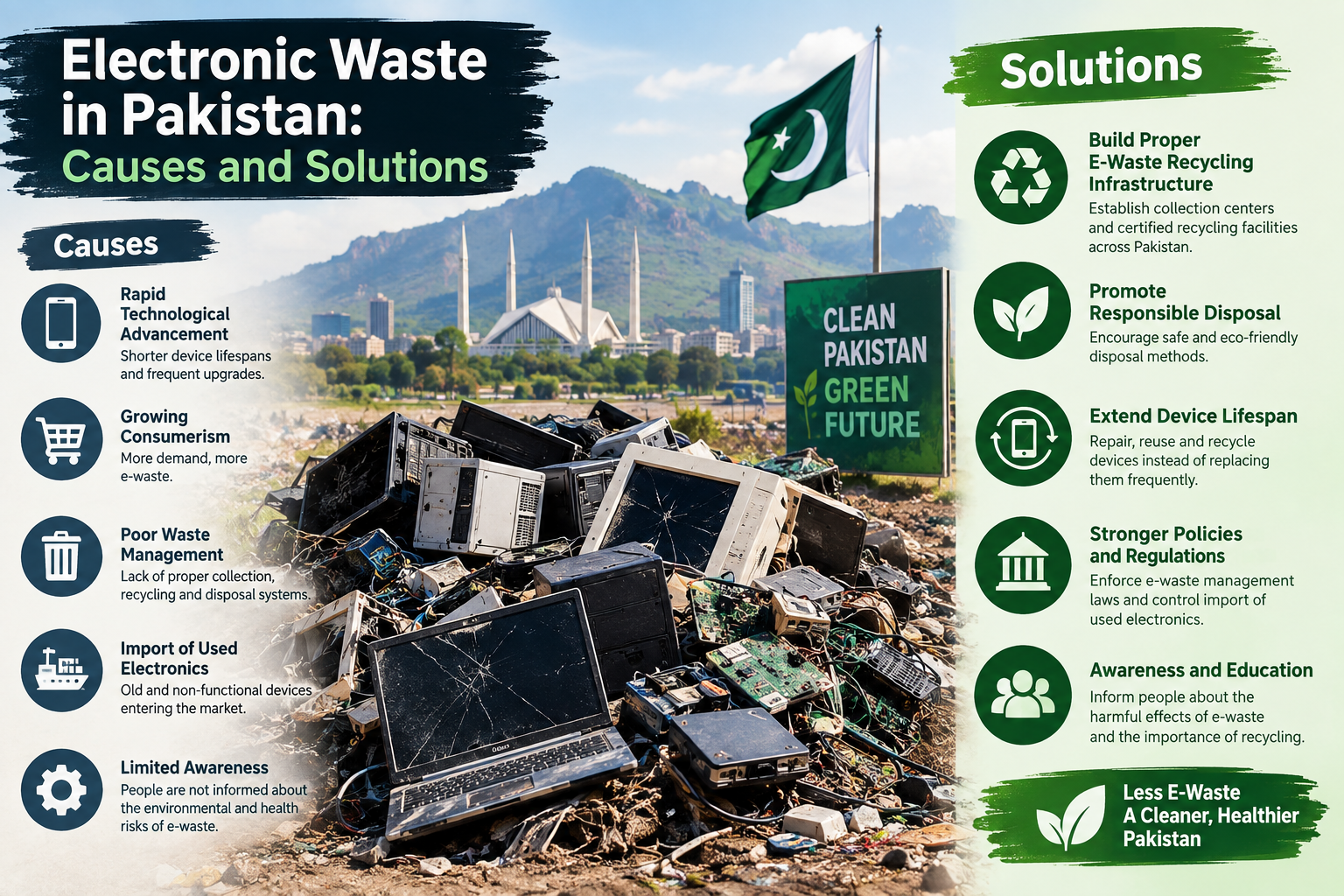
Introduction
Electronics have become an essential part of modern life. People use smartphones for communication, computers for education and work, televisions for entertainment, refrigerators for food storage, washing machines for household tasks, and many other electronic products every day.
Technology continues to develop rapidly. New models of smartphones, laptops, televisions, and appliances are regularly introduced into the market. As people purchase newer products, older devices may become unwanted.
This creates electronic waste, commonly known as e-waste.
E-waste includes discarded electrical and electronic equipment and components. It can include old mobile phones, computers, laptops, keyboards, printers, televisions, chargers, cables, batteries, refrigerators, air conditioners, washing machines, and many other products.
Electronic waste is different from ordinary household waste because electronic products contain many different materials. Some components can be recovered and reused, while certain parts require careful handling.
Pakistan's growing use of electronic technology makes responsible e-waste management increasingly important. Without suitable collection, recycling, and disposal systems, unwanted electronics can end up in ordinary waste streams or informal recycling operations.
The solution is not to stop using technology. Electronics provide major benefits in education, communication, healthcare, business, and everyday life. The goal is to use technology responsibly while ensuring that old equipment is repaired, reused, recycled, or disposed of through safer methods.
What Is Electronic Waste?
Electronic waste refers to electrical and electronic products that have been discarded because they are unwanted, damaged, outdated, or no longer useful to their owners.
Examples include:
Old mobile phones
Broken smartphones
Computers
Laptops
Monitors
Keyboards and mice
Printers
Televisions
Radios
Speakers
Chargers
Cables
Batteries
Refrigerators
Washing machines
Air conditioners
Microwaves
Other electronic appliances
E-waste can come from homes, schools, offices, businesses, factories, hospitals, and other institutions.
Some electronic products are repairable and can continue to be used. Others may be suitable for parts recovery or material recycling.
Why Is E-Waste Increasing in Pakistan?
Several factors contribute to the growth of electronic waste.
Increasing Use of Technology
More people are using smartphones, computers, internet devices, and electronic appliances.
As electronic products become more common, the amount of equipment eventually reaching the end of its useful life can also increase.
Rapid Product Development
Technology changes quickly. New features and improved models encourage consumers to replace older devices.
A smartphone may still function but may be replaced because a newer model offers a better camera, battery, display, or other features.
Damaged Electronics
Some devices become unusable because of physical damage, battery problems, electrical faults, or other technical issues.
If repair is not economical or easily available, owners may discard them.
Limited Repair
In some situations, consumers replace devices instead of repairing them.
Repair can extend the life of electronics and delay their entry into the waste stream.
Lack of Awareness
Some people may not know where electronic waste should be taken.
As a result, old electronics can be placed with ordinary household waste.
Common Sources of E-Waste in Pakistan
Electronic waste comes from many parts of society.
Households
Homes generate old phones, chargers, televisions, appliances, batteries, and computers.
Educational Institutions
Schools, colleges, and universities replace computers, printers, projectors, laboratory equipment, and other electronic devices.
Offices
Businesses regularly use computers, printers, networking equipment, telephones, monitors, and other electronic systems.
Healthcare Facilities
Hospitals and clinics use electronic and electrical equipment that may eventually require replacement.
Retail Businesses
Stores and service centers may receive damaged or returned electronics.
Industries
Factories and industrial organizations use electrical and electronic equipment that can become waste at the end of its service life.
What Materials Are Found in Electronic Waste?
Electronic products contain a mixture of materials.
Some devices contain valuable materials that can potentially be recovered through proper recycling.
Examples include:
Metals
Plastics
Glass
Copper
Aluminum
Steel
Other electronic components
Certain electronics can also contain substances that require controlled handling.
This is one reason why e-waste should not simply be treated like ordinary household garbage.
Environmental Effects of E-Waste
Improper e-waste disposal can create environmental problems.
When electronic products are dumped in unsuitable locations, their components may contribute to soil and water contamination.
Improper processing can also release harmful substances into the environment.
Electronic waste can therefore affect land, water, and air if it is not handled appropriately.
Soil Pollution
Discarded electronics can accumulate in landfills and dumping areas.
Certain materials can potentially enter the surrounding soil when waste is poorly managed.
Water Pollution
If contaminants from improperly discarded electronic products enter water systems, they can affect water quality.
This can become a concern for communities and ecosystems.
Air Pollution
Some informal recycling methods involve unsafe burning or processing of electronic materials.
Such practices can release pollutants into the air.
Proper recycling methods are therefore important.
E-Waste and Human Health
Improper handling of certain electronic waste can create health risks, particularly for people who work directly with discarded electronics without suitable protective measures.
Workers involved in informal dismantling or recycling may come into contact with hazardous substances.
Potential risks depend on the type of waste, exposure conditions, and handling methods.
Children should never be involved in unsafe dismantling or waste-processing activities.
Safe collection and professional recycling are important ways to reduce unnecessary exposure.
Informal E-Waste Recycling
Informal recycling is an important part of the waste economy in many developing countries.
People may collect discarded electronics and recover valuable materials from them.
This activity can provide income and recover materials that might otherwise be lost.
However, informal recycling can become dangerous when workers use unsafe methods, lack protective equipment, or process electronics in unsuitable locations.
The objective should not simply be to eliminate people's livelihoods. Instead, safer systems can help connect collection workers with responsible recycling processes.
Repairing Electronics Instead of Throwing Them Away
Repair is one of the simplest ways to reduce electronic waste.
A damaged phone, computer, television, or appliance may sometimes be repaired rather than discarded.
Repair extends the useful life of a product and delays the need for replacement.
Repair shops also create employment opportunities for technicians.
Pakistan has a large network of electronics repair businesses, and strengthening professional repair skills can contribute to a more sustainable electronics economy.
Reusing Electronic Devices
Not every unwanted electronic device is waste.
A person may no longer need a working laptop, phone, or television, but another person may still find it useful.
Working electronics can potentially be:
Donated
Sold
Given to another family member
Used by schools or community organizations
Refurbished
Reuse is valuable because it allows a product to continue serving its purpose without immediately becoming waste.
Refurbishment
Refurbishment involves restoring used electronic products so they can be used again.
A refurbished computer may receive a new storage drive, battery, software installation, or other replacement parts.
Refurbished electronics can provide more affordable access to technology.
For students and small businesses, refurbished devices may offer a practical alternative to purchasing brand-new equipment.
Reliable testing and transparent information about the condition of refurbished products are important.
Recycling Electronic Waste
Recycling involves processing discarded products to recover useful materials.
A proper recycling system can separate different materials and send them through suitable recovery processes.
Metals, plastics, glass, and other components may be recovered depending on the product and available technology.
Professional recycling facilities are better equipped to handle materials that require special treatment.
Why E-Waste Recycling Matters
Recycling can provide several benefits.
Material Recovery
Useful materials can be recovered from old devices.
Reduced Waste
Recycling can reduce the amount of electronic material going to dumps and landfills.
Resource Conservation
Recovering materials can reduce the need for extracting some new raw materials.
Employment
Collection, sorting, repair, refurbishment, and recycling can create jobs.
Environmental Protection
Responsible recycling can reduce the environmental problems associated with improper disposal.
E-Waste Collection Centers
Collection centers can make responsible disposal easier.
People need convenient locations where they can take old phones, batteries, computers, appliances, and other electronic waste.
Collection systems can sort products and direct them toward reuse, repair, refurbishment, or recycling.
Educational institutions, businesses, communities, and local authorities can potentially support collection programs.
Role of Manufacturers
Manufacturers have an important role in reducing electronic waste.
Companies can design products that are durable, repairable, and easier to recycle.
Manufacturers can also provide information about safe disposal and recycling.
Take-back programs can allow consumers to return old electronic products to appropriate collection channels.
Responsible product design can reduce waste throughout the product's life cycle.
Role of Consumers
Consumers also have an important role.
People can reduce e-waste by making thoughtful purchasing decisions.
Instead of replacing a working device simply because a newer model exists, consumers can consider whether replacement is actually necessary.
They can also:
Repair damaged devices when practical
Donate working electronics
Sell or exchange usable equipment
Keep devices in good condition
Recycle old electronics responsibly
Avoid throwing electronics into ordinary waste
Small individual decisions can contribute to a larger reduction in waste.
E-Waste and Students
Students use many electronic products, including smartphones, laptops, tablets, calculators, headphones, chargers, and other devices.
Schools and colleges can teach students about responsible electronic consumption.
Environmental education can explain why batteries, chargers, and broken electronics should not simply be thrown into ordinary waste.
Students can also participate in awareness campaigns and collection drives.
This can develop environmental responsibility from an early stage.
Role of Schools and Colleges
Educational institutions can establish electronic waste collection programs.
For example, a college could create a designated collection point for old batteries, chargers, and unused electronics.
Institutions can also educate students through seminars, posters, environmental clubs, and classroom activities.
Computer laboratories should also have responsible procedures for replacing old equipment.
Working computers that are no longer required by one department may potentially be transferred to another department or educational program instead of being immediately discarded.
E-Waste in Offices
Offices frequently replace computers, printers, monitors, networking equipment, keyboards, and other devices.
A responsible office can create an electronic asset management system.
Before disposing of equipment, the organization can determine whether a device can be repaired, reused, donated, refurbished, or recycled.
Data security is also important.
Before computers, phones, storage devices, or other data-containing equipment are transferred or recycled, organizations should use appropriate procedures to remove or securely handle sensitive information.
E-Waste and Data Security
Old electronic devices may contain personal or business information.
A discarded phone or computer could contain photographs, documents, accounts, contacts, or other private data.
Therefore, responsible e-waste management should include data protection.
Before disposing of a device, users should follow appropriate secure-data deletion procedures and, where necessary, seek professional assistance.
Simply deleting a few files may not always be enough for sensitive information.
Batteries and Electronic Waste
Batteries require special attention.
Many electronic products contain rechargeable batteries, including smartphones, laptops, tablets, power banks, and other devices.
Damaged or improperly handled batteries can create safety risks.
Batteries should be collected and processed through appropriate recycling or disposal channels rather than being casually thrown into ordinary household waste.
Consumers should follow the manufacturer's safety and disposal instructions.
E-Waste and the Circular Economy
The concept of a circular economy focuses on keeping products and materials useful for as long as possible.
Instead of a simple model of:
Buy → Use → Throw Away
a circular approach encourages:
Design → Use → Repair → Reuse → Refurbish → Recycle
This approach can reduce waste and improve resource efficiency.
Pakistan can benefit from stronger circular practices in the electronics sector.
Repair businesses, second-hand markets, refurbishment companies, recycling facilities, and manufacturers can all play a role.
Creating Awareness in Pakistan
Awareness is one of the most important parts of e-waste management.
People need clear information about:
What e-waste is
Why it matters
Which products are electronic waste
Where old electronics can be taken
How batteries should be handled
Why burning electronics is unsafe
How repair and reuse reduce waste
Awareness campaigns can be conducted through schools, colleges, television, social media, community organizations, and local programs.
Government and E-Waste Management
Government institutions can support better e-waste management through environmental standards, waste-management systems, public awareness programs, monitoring, and cooperation with recycling organizations.
Clear policies can help establish responsibilities for manufacturers, importers, retailers, consumers, recyclers, and waste-management organizations.
Effective implementation and enforcement are important because rules alone cannot solve the problem.
Technology for Better Waste Management
Technology itself can help improve e-waste management.
Digital systems can track electronic equipment from collection to recycling.
Organizations can maintain records of electronic assets and determine when equipment needs repair or replacement.
Online platforms can also connect people with repair services, refurbishment programs, or responsible collection options.
Data can help organizations understand what types of electronics are being discarded and plan better recycling systems.
Sustainable Electronics Consumption
Sustainable consumption means using electronic products thoughtfully.
Consumers can ask several questions before buying a new device:
Do I really need it?
Can my current device be repaired?
How long is the expected useful life?
Is the product durable?
Can replacement parts be obtained?
What happens when the device reaches the end of its life?
These questions can encourage more responsible purchasing.
Importance of Durable Electronics
Durability can reduce e-waste.
A device that lasts longer does not need to be replaced as frequently.
Consumers can consider product quality, warranty, repair support, and availability of replacement parts.
Manufacturers can also contribute by designing products that are reliable and maintainable.
Longer product life can reduce the frequency with which electronics enter the waste stream.
E-Waste and Employment Opportunities
Proper e-waste management can create economic opportunities.
People can work in:
Electronics repair
Device refurbishment
Collection
Sorting
Recycling
Equipment testing
Parts recovery
Waste-management services
Technical training can help workers develop safer and more professional skills.
This shows that environmental protection and economic activity can work together.
Role of Businesses
Businesses can adopt responsible electronic waste policies.
Companies can maintain records of their electronic equipment and establish procedures for replacement.
Old computers and other devices can be assessed for reuse or refurbishment.
Businesses can also work with appropriate recycling organizations rather than disposing of electronic equipment through ordinary waste channels.
Responsible e-waste practices can become part of broader environmental management programs.
Sustainable E-Waste Solutions for Pakistan
Pakistan can improve electronic waste management through several approaches.
Improve Collection
More accessible collection points can make responsible disposal easier.
Promote Repair
Repair services can extend the life of electronics.
Encourage Reuse
Working devices can be donated, sold, or refurbished.
Support Recycling
Professional recycling systems can recover valuable materials safely.
Educate the Public
Awareness can help people understand proper disposal.
Improve Technical Training
Workers can be trained in safe repair and recycling methods.
Encourage Responsible Manufacturing
Companies can design products with durability and recyclability in mind.
Strengthen Data Protection
Organizations should safely manage information stored on old devices.
The Future of E-Waste Management in Pakistan
As electronic technology continues to grow, e-waste management will become increasingly important.
Future solutions may involve better recycling facilities, improved collection networks, digital tracking systems, professional refurbishment businesses, and greater public awareness.
The growth of renewable energy, smart devices, electric technologies, and digital services may also introduce new categories of electronic waste that require appropriate management.
Pakistan can prepare for these changes by developing responsible systems today.
What Individuals Can Do
Every individual can contribute to reducing electronic waste.
A person can start with simple actions:
Take care of electronic devices.
Repair products when practical.
Donate working devices.
Avoid unnecessary replacement.
Keep old electronics separate from ordinary waste.
Handle batteries responsibly.
Use suitable recycling or collection services.
Protect personal data before disposing of devices.
Encourage family members to learn about e-waste.
Support responsible electronics businesses.
These actions may seem small, but widespread participation can make a meaningful difference.
Conclusion
Electronic waste is an important environmental and economic issue for Pakistan. The increasing use of smartphones, computers, televisions, appliances, batteries, and other electronic products means that more equipment will eventually reach the end of its useful life.
The answer is not to avoid technology. Electronics are essential for modern education, communication, healthcare, business, and everyday life. Instead, Pakistan needs responsible ways to manage electronic products throughout their life cycle.
Repairing, reusing, refurbishing, and recycling can reduce the amount of electronic waste that is improperly discarded. Consumers can make thoughtful purchasing decisions, while manufacturers can design more durable and recyclable products.
Schools and colleges can educate students about environmental responsibility. Businesses can establish proper procedures for old equipment. Government institutions can support effective collection, recycling, standards, and awareness programs.
Another important issue is the safe handling of batteries and personal data. Electronic waste should be managed carefully so that environmental protection and information security are both considered.
The development of a circular economy can provide a long-term approach. Instead of treating electronics as products that are simply purchased and eventually thrown away, Pakistan can promote systems in which devices are repaired, reused, refurbished, and recycled.
Better e-waste management can protect the environment, support employment, recover valuable materials, and encourage responsible use of technology.
With greater awareness, stronger systems, professional recycling, and cooperation among consumers, businesses, educational institutions, and authorities, Pakistan can move toward a more sustainable electronic future.
FAQs
1. What is electronic waste?
Electronic waste, or e-waste, includes unwanted or discarded electrical and electronic products such as mobile phones, computers, televisions, batteries, chargers, refrigerators, and other electronic equipment.
2. Why is e-waste a problem in Pakistan?
Improper disposal of electronic waste can contribute to environmental pollution and unsafe exposure. Pakistan also faces challenges related to collection, recycling, public awareness, and informal processing.
3. How can people reduce electronic waste?
People can reduce e-waste by repairing devices, using electronics for longer, donating working products, buying durable equipment, and taking unwanted electronics to appropriate collection or recycling channels.
4. Can old electronics be recycled?
Yes. Many electronic products contain materials that can be recovered through appropriate recycling processes. Professional recycling is preferable to unsafe dismantling or burning.
5. What is the role of students in reducing e-waste?
Students can learn about responsible electronic use, avoid unnecessary disposal, donate usable devices, participate in awareness activities, and encourage responsible recycling in their schools, colleges, and communities.