Introduction
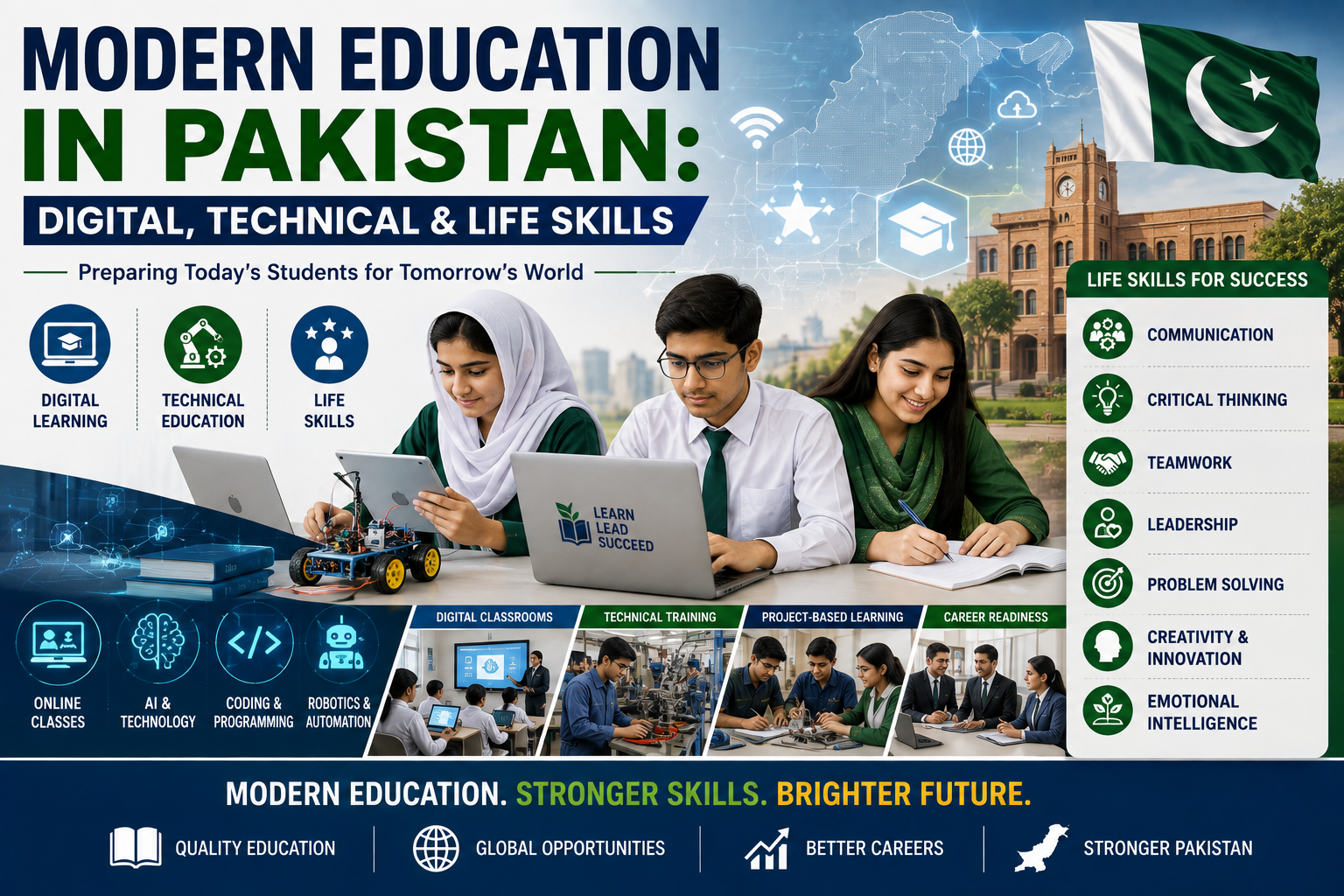
Education is changing rapidly around the world, and Pakistan is also moving toward a more modern approach to learning. In the past, education was often focused mainly on textbooks, examinations and academic qualifications. Today, students need much more than good grades. They need digital knowledge, technical abilities, communication skills, creativity, critical thinking and practical life skills to prepare for further education and future careers.
Pakistan has a large young population, making education and skills development especially important for the country's future. A modern education system can help students become more confident, productive and prepared for a changing economy.
The idea of modern education does not mean that traditional subjects are no longer important. Mathematics, science, languages, social studies and other academic subjects remain essential. The difference is that students should also learn how to apply their knowledge in real-life situations.
Digital technology is becoming an important part of education. Students can use computers, smartphones, online resources and educational platforms to access information and practice new skills. At the same time, technical and vocational skills can help students understand practical work and explore different career paths.
Life skills are equally important. Communication, teamwork, decision-making, time management and problem-solving can help students both inside and outside the classroom.
For Pakistan, the future of education should therefore focus on a balanced combination of academic knowledge, digital skills, technical skills and life skills.
What Is Modern Education?
Modern education is an approach to learning that prepares students for both academic success and real-world challenges.
It focuses on understanding rather than memorization alone.
A modern student should be able to:
Understand concepts
Ask meaningful questions
Solve problems
Use technology
Communicate clearly
Work with others
Think independently
Learn new skills
Adapt to change
Modern education can take place through traditional classrooms, digital platforms, laboratories, workshops, projects and practical activities.
The teacher remains an important part of the learning process, but students are encouraged to participate actively rather than simply listen and memorize.
Why Pakistan Needs Modern Education
Pakistan's economy and society are changing.
Technology has transformed businesses, communication and employment. New industries are developing while traditional professions are also adopting digital tools.
Students who are currently in schools, colleges and universities will eventually enter a job market that may look very different from today's market.
This means education needs to prepare them for change.
A student may earn excellent marks but still need additional skills to communicate with employers, work in teams, use technology or solve practical problems.
Modern education can help bridge this gap.
Digital Skills in Modern Education
Digital skills are becoming important in almost every field.
Students should understand how to use technology safely and effectively.
Digital education can teach students:
Basic computer skills
Internet research
Word processing
Presentations
Spreadsheets
Online communication
Digital collaboration
Basic programming
Cybersecurity awareness
Responsible social media use
These skills can benefit students regardless of their chosen careers.
For example, a future lawyer may need digital research skills, while a teacher may use online educational platforms. A business professional may need spreadsheets and digital communication.
Technology is no longer limited to computer-related careers.
The Importance of Technical Skills
Technical education can give students practical abilities that can be used in employment and entrepreneurship.
Technical skills may include:
Computer programming
Graphic design
Electrical work
Electronics
Web development
Mechanical skills
Digital marketing
Auto technology
Construction skills
Technical drafting
Students should have opportunities to explore different areas before choosing their future career paths.
Technical education should not be considered less valuable than academic education.
A modern economy needs professionals with many different types of expertise.
Vocational Education and Career Opportunities
Vocational education focuses on practical occupational skills.
It can prepare students for careers in areas such as:
Information technology
Healthcare support
Hospitality
Construction
Manufacturing
Automotive services
Electrical work
Fashion and design
Agriculture
Digital services
Pakistan can benefit from strengthening vocational and technical education because practical skills can create employment opportunities and support entrepreneurship.
Students should be able to choose academic, technical or vocational pathways according to their interests and abilities.
Life Skills: An Essential Part of Education
Academic knowledge is important, but students also need skills that help them manage everyday situations.
Life skills can include:
Communication
Decision-making
Problem-solving
Time management
Teamwork
Leadership
Adaptability
Financial awareness
Responsible behavior
These skills can help students become more independent.
For example, time management can help a student organize studies and activities, while communication skills can help during presentations, interviews and professional situations.
Communication Skills
Communication is one of the most useful skills students can develop.
Students should learn how to:
Express ideas clearly
Listen carefully
Write effectively
Give presentations
Participate in discussions
Communicate professionally
Good communication can improve both academic and professional performance.
Schools can develop communication skills through presentations, discussions, debates, group projects and writing activities.
Critical Thinking
Critical thinking means carefully analyzing information before accepting it.
Students encounter huge amounts of information through the internet and social media. Not all information is accurate.
Students should learn to ask:
Who provided this information?
Is the source reliable?
Is there evidence?
Are there other viewpoints?
Can the information be verified?
Critical thinking can help students make better decisions and become more responsible users of information.
Problem-Solving Skills
Modern workplaces require people who can solve problems.
Students can develop problem-solving skills through:
Practical projects
Experiments
Case studies
Puzzles
Group activities
Research assignments
Instead of giving students the answer immediately, teachers can encourage them to explore possible solutions.
This makes learning more active and can build confidence.
Creativity and Innovation
Creativity is not limited to artists.
Scientists, engineers, programmers, entrepreneurs, teachers and business professionals also need creative thinking.
Schools can encourage creativity by allowing students to:
Develop projects
Create presentations
Design solutions
Write creatively
Conduct experiments
Build models
Explore new ideas
Students should feel comfortable suggesting ideas and learning from unsuccessful attempts.
The Role of Teachers in Modern Education
Teachers remain at the center of education.
Technology cannot replace the personal guidance of a good teacher.
Teachers help students understand concepts, identify weaknesses and develop confidence.
In modern education, teachers can become facilitators who guide students toward independent learning.
They can combine traditional explanations with:
Videos
Digital presentations
Interactive exercises
Online resources
Practical activities
Group projects
This can create a more engaging classroom.
Teacher Training for Modern Education
Teachers need opportunities to update their skills.
Professional development can include training in:
Digital tools
Online learning
Modern assessment
Classroom technology
Project-based learning
Student-centered teaching
Inclusive education
The Federal Ministry of Education and Professional Training has included professional development and digital learning among its current education policy initiatives, showing the importance of modernizing both technology and teaching capacity.
Teacher development should be continuous rather than limited to occasional workshops.
Project-Based Learning
Project-based learning allows students to apply knowledge to practical tasks.
For example, students might:
Create a science model
Develop a simple computer program
Prepare a business plan
Research a local environmental issue
Create a presentation
Conduct a survey
Projects can combine multiple skills at once.
A student may use research, writing, teamwork, presentation and digital skills to complete one project.
This makes education more connected to real-world activities.
STEM Education
STEM stands for:
Science, Technology, Engineering and Mathematics.
STEM education is important because many modern industries depend on these fields.
Students can develop STEM skills through:
Experiments
Programming
Robotics
Mathematics activities
Engineering projects
Scientific research
Pakistan can benefit from increasing opportunities for students to explore STEM subjects from an early age.
Artificial Intelligence and Future Learning
Artificial intelligence is changing many areas of society and will likely influence education as well.
AI-based educational tools can help students understand topics, practice questions and explore information.
However, students need to understand that technology should support learning rather than replace their own thinking.
Schools should teach responsible technology use, including:
Checking information
Protecting personal information
Understanding digital ethics
Avoiding academic dishonesty
Using AI as a learning aid
The ability to work with new technologies may become an important skill for future students.
Digital Literacy and Online Safety
Digital education should also teach students how to stay safe online.
Students should understand basic principles such as:
Protecting passwords
Avoiding suspicious links
Respecting privacy
Checking information
Using trustworthy websites
Communicating respectfully online
Digital literacy is not simply knowing how to operate a device.
It also means knowing how to use technology responsibly and safely.
Financial Literacy for Students
Financial literacy is another useful life skill.
Students can learn basic concepts such as:
Saving
Budgeting
Needs and wants
Responsible spending
Understanding income
Basic banking concepts
Age-appropriate financial education can help students develop responsible habits before they enter professional life.
Entrepreneurship Education
Education can also encourage entrepreneurship.
Students can learn how businesses work through simple activities such as developing a business idea, creating a basic budget or studying customer needs.
Entrepreneurship education can develop:
Creativity
Planning
Communication
Leadership
Financial awareness
Problem-solving
It can help students understand that career development can involve both employment and creating opportunities.
Career Guidance
Students often face difficult decisions when choosing subjects, degrees and careers.
Modern education should provide career guidance that helps students understand different options.
Career counseling can introduce students to:
University programs
Technical education
Vocational careers
Digital professions
Entrepreneurship
Research careers
Emerging industries
Students should make career decisions based on informed choices rather than pressure or limited information.
Connecting Education With Industry
Universities, colleges and technical institutions can work with businesses to give students practical exposure.
This can happen through:
Internships
Workshops
Industry visits
Guest lectures
Training programs
Practical projects
Such partnerships can help students understand workplace expectations.
They can also help educational institutions identify which skills employers need.
Modern Education and Employment
One major purpose of education is to prepare students for productive lives.
Employers often value graduates who can combine knowledge with practical abilities.
A modern graduate may need:
Academic knowledge + Digital skills + Communication + Problem-solving + Professional behavior
This combination can make students better prepared for changing employment environments.
Equal Access to Modern Education
Modern education should be available to students from different backgrounds.
Technology can create opportunities, but unequal access to devices and internet services can create new barriers.
Students in rural or low-income communities may have fewer digital resources than students in major cities.
Pakistan's education reforms should therefore focus on making modern learning opportunities more inclusive.
Possible solutions include:
School computer labs
Community learning centers
Affordable connectivity
Digital educational content
Teacher training
Offline learning resources
The goal should be to reduce the digital divide.
Modern Education in Rural Areas
Rural education deserves particular attention.
Technology can help students in remote areas access educational content that may otherwise be difficult to find.
However, digital programs need reliable infrastructure.
Schools may require:
Electricity
Internet connectivity
Computers
Trained teachers
Digital learning materials
Investment in rural education can help create more equal opportunities.
The Role of Parents
Parents can support modern education by encouraging children to learn beyond textbooks.
They can:
Encourage reading
Support educational technology
Help develop study routines
Encourage questions
Discuss career interests
Promote responsible internet use
Parents should also recognize that every student has different strengths.
Academic marks are important, but students can develop many valuable abilities outside examination performance.
The Role of Students
Students are active participants in modern education.
They can improve themselves by:
Learning digital skills
Practicing communication
Reading regularly
Participating in projects
Asking questions
Developing time-management habits
Exploring career options
Learning from mistakes
Students who develop a habit of lifelong learning may be better prepared for changes in technology and employment.
Challenges in Implementing Modern Education
Modernizing education is not easy.
Pakistan may face challenges such as:
Limited Funding
Technology and infrastructure require investment.
Digital Divide
Not every student has equal access to devices and internet.
Teacher Training
Teachers need continuous professional development.
Outdated Resources
Some educational institutions may lack modern laboratories and digital materials.
Examination Pressure
Students and teachers may continue focusing heavily on examination results.
Unequal Opportunities
Educational resources can differ significantly between regions.
Addressing these challenges requires long-term planning.
How Pakistan Can Build a Modern Education System
Pakistan can strengthen modern education by focusing on several areas.
1. Update Curriculum
Curricula should include modern knowledge and practical skills.
2. Improve Teacher Training
Teachers should receive continuous professional development.
3. Expand Digital Learning
Schools should gain access to appropriate digital resources.
4. Strengthen Technical Education
Students should have more opportunities to develop practical skills.
5. Introduce Life Skills
Communication, teamwork, decision-making and financial awareness can become part of education.
6. Improve Career Guidance
Students should understand different academic and professional pathways.
7. Encourage Research
Students should have opportunities to explore questions and develop solutions.
8. Connect Education With Industry
Internships and practical projects can help students prepare for employment.
The Future of Education in Pakistan
The future of education in Pakistan will likely be more technology-oriented and skills-focused.
Classrooms may increasingly combine:
Traditional teaching
Digital resources
Artificial intelligence
Practical projects
Online learning
Career preparation
Students may have greater access to personalized educational resources.
However, technology should remain a tool rather than the ultimate goal.
The most important objective is to help students learn effectively and develop the skills needed for life and work.
Conclusion
Modern education is essential for preparing Pakistan's young population for the future. Students need more than textbooks and examination preparation. They need digital knowledge, technical abilities, communication skills, critical thinking, creativity and practical life skills.
Pakistan can strengthen its education system by updating curricula, improving teacher training, expanding digital learning, supporting technical education and creating stronger connections between educational institutions and industry.
Technology provides exciting opportunities, but equal access must remain a priority. Students in rural and underserved communities should also have opportunities to benefit from modern education.
The future should not be about choosing between traditional education and technology. Instead, Pakistan can combine the strengths of both.
A successful modern education system can provide students with knowledge, skills, confidence and the ability to continue learning throughout their lives.
If Pakistan invests consistently in its students and teachers, modern education can contribute not only to individual career success but also to innovation, employment and the country's long-term development.
FAQs
1. What is modern education?
Modern education combines academic knowledge with digital, technical, practical and life skills.
2. Why do Pakistani students need digital skills?
Digital skills can help students learn effectively and prepare for technology-based careers.
3. What are important life skills for students?
Communication, teamwork, problem-solving, decision-making and time management are important life skills.
4. Why is technical education important in Pakistan?
Technical education provides practical skills that can support employment and entrepreneurship.
5. How can Pakistan improve modern education?
Pakistan can improve it through updated curricula, teacher training, digital access, technical education and practical learning.