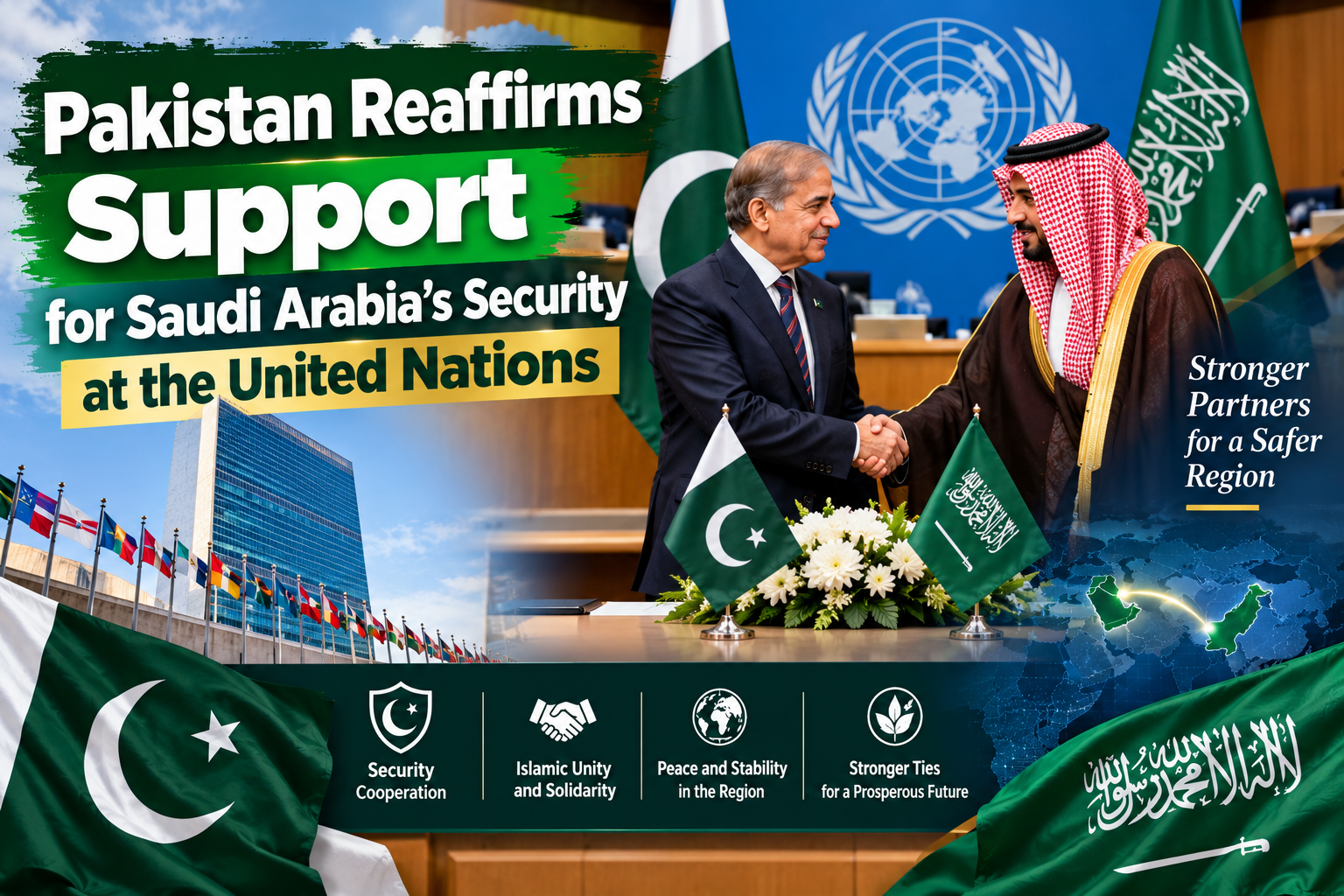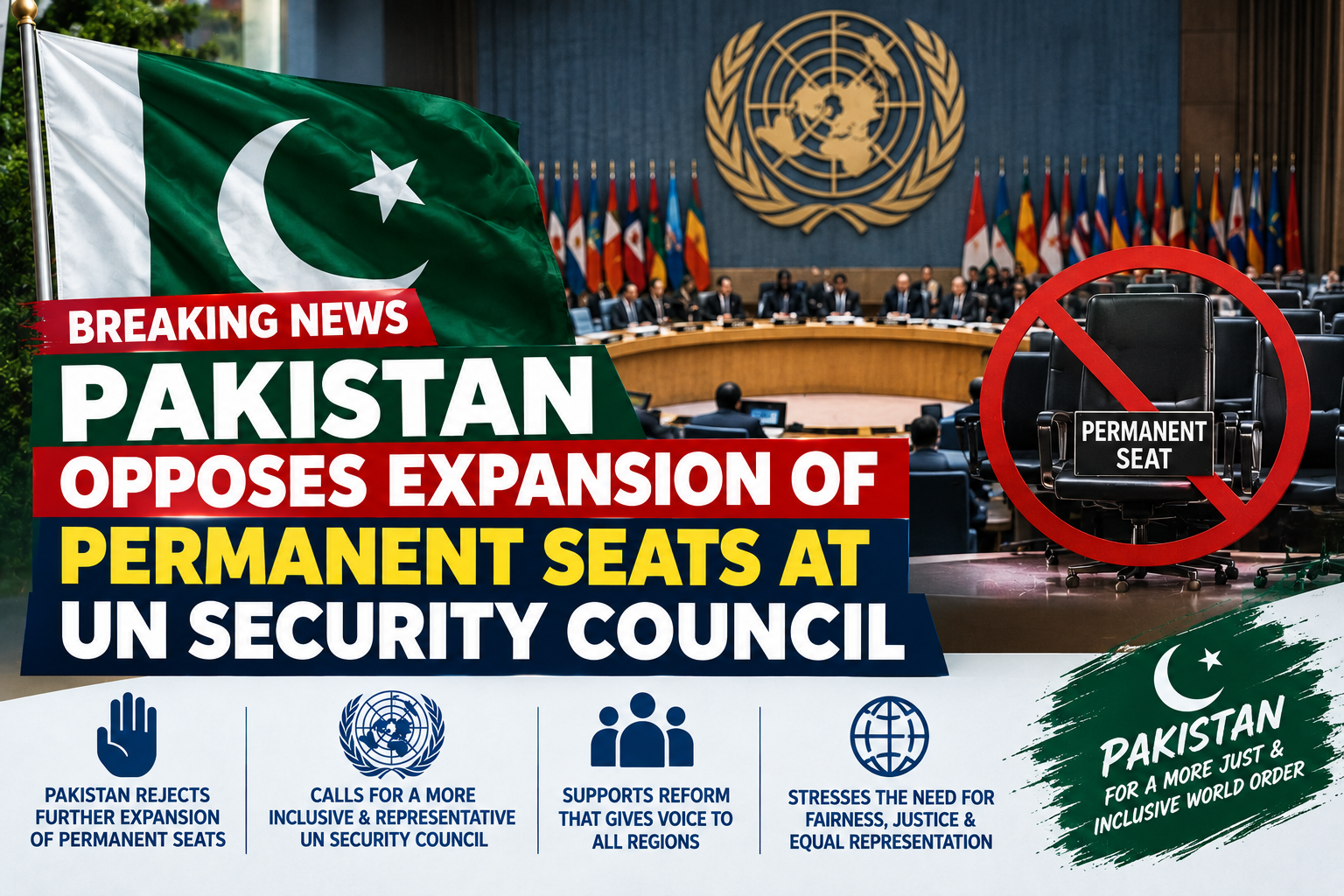
Pakistan has opposed proposals to expand the number of permanent seats on the United Nations Security Council, while supporting an increase in elected membership as part of broader efforts to make the international body more representative and accountable.
The position reflects Pakistan’s long-standing emphasis on strengthening the role of elected members in the Security Council and ensuring that reforms do not create additional permanent privileges for a limited number of countries.
The debate over Security Council reform has become increasingly important as countries discuss how the United Nations should respond to modern global challenges, including conflicts, economic instability, climate-related risks, humanitarian crises, and international security threats.
Understanding the UN Security Council
The United Nations Security Council is one of the most important organs of the UN. Its primary responsibility is maintaining international peace and security.
The Council currently has 15 members. Five countries hold permanent seats, while the remaining members are elected for limited terms by the UN General Assembly.
The permanent members have a special position because they possess veto power over substantive Council decisions.
The structure was established after the Second World War and reflected the global balance of power at that time.
However, the international system has changed considerably since then, leading many countries to argue that the Security Council should be reformed.
Pakistan’s Position
Pakistan’s position is based on the principle that expanding permanent membership could make the Council less representative rather than more democratic.
Islamabad has generally supported increasing the number of elected seats instead.
Under this approach, more countries would have opportunities to participate in the Security Council for limited terms, allowing broader representation from different regions.
Pakistan argues that an elected model provides greater accountability because members must return to the General Assembly and compete for another term rather than holding their seats permanently.
Why Security Council Reform Matters
The composition of the Security Council has remained a major international debate for decades.
Many countries believe that the existing structure does not adequately reflect the modern world.
The United Nations now has far more member states than it did when the organization was established. Regions such as Africa, Asia, Latin America, and the Caribbean argue that their representation should better reflect their population, political importance, and contribution to international affairs.
Reform supporters also argue that a more representative Council could improve the legitimacy of its decisions.
Permanent Versus Elected Membership
The central disagreement involves the type of new seats that should be created.
Some countries support adding permanent members to give greater representation to major powers and regions that currently lack permanent seats.
Others, including Pakistan, favor elected seats that rotate among member states.
Permanent seats can provide continuity and influence, but they can also create long-term concentrations of power.
Elected seats, by contrast, allow different countries to participate at different times.
Pakistan’s Focus on Accountability
Accountability is an important part of Pakistan’s position.
Elected members have to secure support from other UN member states. Their participation is therefore connected to the electoral process of the General Assembly.
Pakistan believes that expanding elected membership could provide broader participation without creating new permanent privileges.
This approach could also encourage greater cooperation among countries seeking regional support for Security Council elections.
Regional Representation
Regional representation is one of the major issues in the Security Council reform debate.
Africa currently has no permanent representation despite being home to a large number of UN member states.
Asia, Latin America, and other regions have also called for changes to improve their representation.
Pakistan has repeatedly emphasized the importance of fair representation and believes that reform should benefit the broader UN membership rather than a small group of countries.
Concerns About Permanent Seats
Opponents of permanent-seat expansion argue that creating additional permanent members could make the Security Council even more difficult to reform in the future.
Once a country receives permanent status, removing or changing that privilege could become extremely difficult.
There are also concerns that additional permanent members could increase geopolitical competition inside the Council.
Instead of making decision-making easier, critics argue that a larger group of permanently privileged states could produce more disagreements.
The Veto Question
The veto power is at the heart of the Security Council debate.
The five existing permanent members can use their veto to block substantive resolutions.
Any major reform involving new permanent members raises the question of whether those new members should also receive veto rights.
If new permanent members receive veto powers, decision-making could become even more complicated.
If they do not receive veto powers, questions about equality among permanent members could arise.
This makes the issue particularly difficult to resolve.
Pakistan and Multilateral Diplomacy
Pakistan has traditionally placed significant importance on multilateral diplomacy and the United Nations system.
The country has participated in UN peacekeeping missions, international negotiations, and discussions on global security.
Islamabad’s position on Security Council reform is connected to its broader support for multilateral institutions.
Pakistan argues that international decisions should involve a wide range of countries and should be based on principles of equality and representation.
Importance for Developing Countries
Security Council reform is particularly important for developing countries.
Many developing nations believe that international institutions should give greater consideration to the interests of countries in the Global South.
Issues such as development, food security, climate change, poverty, debt, and humanitarian emergencies directly affect developing countries.
Greater representation could allow these concerns to receive more attention within international decision-making institutions.
The Role of the General Assembly
The UN General Assembly plays a central role in discussions about Security Council reform.
All UN member states are represented in the General Assembly, making it a broad forum for discussing changes to the international system.
However, reaching agreement among a large number of countries can be difficult because different regions and major powers have competing interests.
Any major reform proposal therefore requires extensive diplomatic negotiations.
Challenges to Reform
Changing the Security Council is not simple.
Any reform requires broad political support among UN member states. The permanent members also have significant influence over the international system.
Countries seeking permanent seats may have different expectations regarding regional representation, veto powers, and responsibilities.
Other countries may oppose individual candidates because of regional rivalries or concerns about creating new centers of power.
These competing interests have made Security Council reform one of the longest-running institutional debates at the United Nations.
Pakistan’s Broader Foreign Policy
Pakistan’s opposition to expanding permanent seats is consistent with its emphasis on multilateral diplomacy and the interests of developing countries.
Islamabad has argued that international institutions should remain inclusive and representative.
From Pakistan’s perspective, increasing elected membership can provide countries with greater opportunities to participate without permanently changing the distribution of power.
This position also reflects Pakistan’s interest in maintaining a Security Council structure where regional representation can rotate.
Potential Benefits of More Elected Seats
Increasing elected seats could provide several benefits.
First, more countries would have opportunities to participate directly in Security Council discussions.
Second, regional representation could become broader.
Third, rotating membership could give smaller and middle-sized states a stronger voice in international security debates.
Finally, elected members could bring different perspectives to discussions on conflicts and international crises.
Possible Arguments for Permanent Expansion
Countries supporting permanent expansion argue that the Council should reflect current global political and economic realities.
They believe that major powers and underrepresented regions should have a more stable role in the institution.
Supporters also argue that countries with significant economic and military capabilities make important contributions to international peace and security and therefore deserve greater institutional representation.
The challenge is determining how to balance these arguments with concerns about equality and accountability.
Future of the Debate
The debate over Security Council reform is likely to continue.
There is broad agreement that the Council should become more representative, but there is much less agreement on how that should happen.
Pakistan’s preference for elected seats represents one approach to reform.
Other countries will continue advocating for different models, including permanent seats, longer-term elected seats, or combinations of both.
Finding a compromise will require sustained diplomacy and negotiations among UN member states.
Importance for International Peace
The structure of the Security Council matters because its decisions can have significant consequences for international peace and security.
Resolutions concerning conflicts, sanctions, peacekeeping operations, humanitarian emergencies, and international security can influence millions of people.
A Council viewed as legitimate and representative may have greater international credibility.
For this reason, reform is not simply an institutional issue; it is also connected to the effectiveness of global governance.
Conclusion
Pakistan’s opposition to expanding permanent seats at the UN Security Council reflects its preference for a more representative and accountable system based on elected membership.
Islamabad supports increasing opportunities for countries from different regions to participate in the Council while avoiding the creation of additional permanent privileges.
The debate over reform remains complex because countries have different views about representation, power, regional balance, and the veto.
As the international community continues discussing the future of the United Nations, Pakistan is expected to maintain its emphasis on elected representation and broader participation.
Ultimately, successful reform will require compromise among member states and a structure that reflects the realities of the modern international system while preserving the principles of fairness, accountability, and effective multilateral cooperation.
FAQs
1. What is Pakistan’s position on permanent seats?
Pakistan opposes expanding permanent membership of the UN Security Council and supports greater elected representation.
2. How many permanent members are currently on the Security Council?
The Security Council currently has five permanent members.
3. Why does Pakistan support elected seats?
Pakistan considers elected seats more representative and accountable because membership can rotate among UN member states.
4. What is the main issue with permanent seats?
Critics argue that permanent seats can concentrate power and make the Council less flexible and representative.
5. Why is Security Council reform important?
Reform could make the Council more representative of the modern international community and strengthen the legitimacy of its decisions.