Introduction
Pakistan is a country with a rich cultural identity shaped by centuries of history, regional traditions, languages, crafts, food, clothing, music, literature, architecture, and family values. From the colorful traditions of Punjab and Sindh to the cultural heritage of Khyber Pakhtunkhwa, Balochistan, Gilgit-Baltistan, and Kashmir, Pakistan has a wide variety of traditions that make its cultural identity unique.
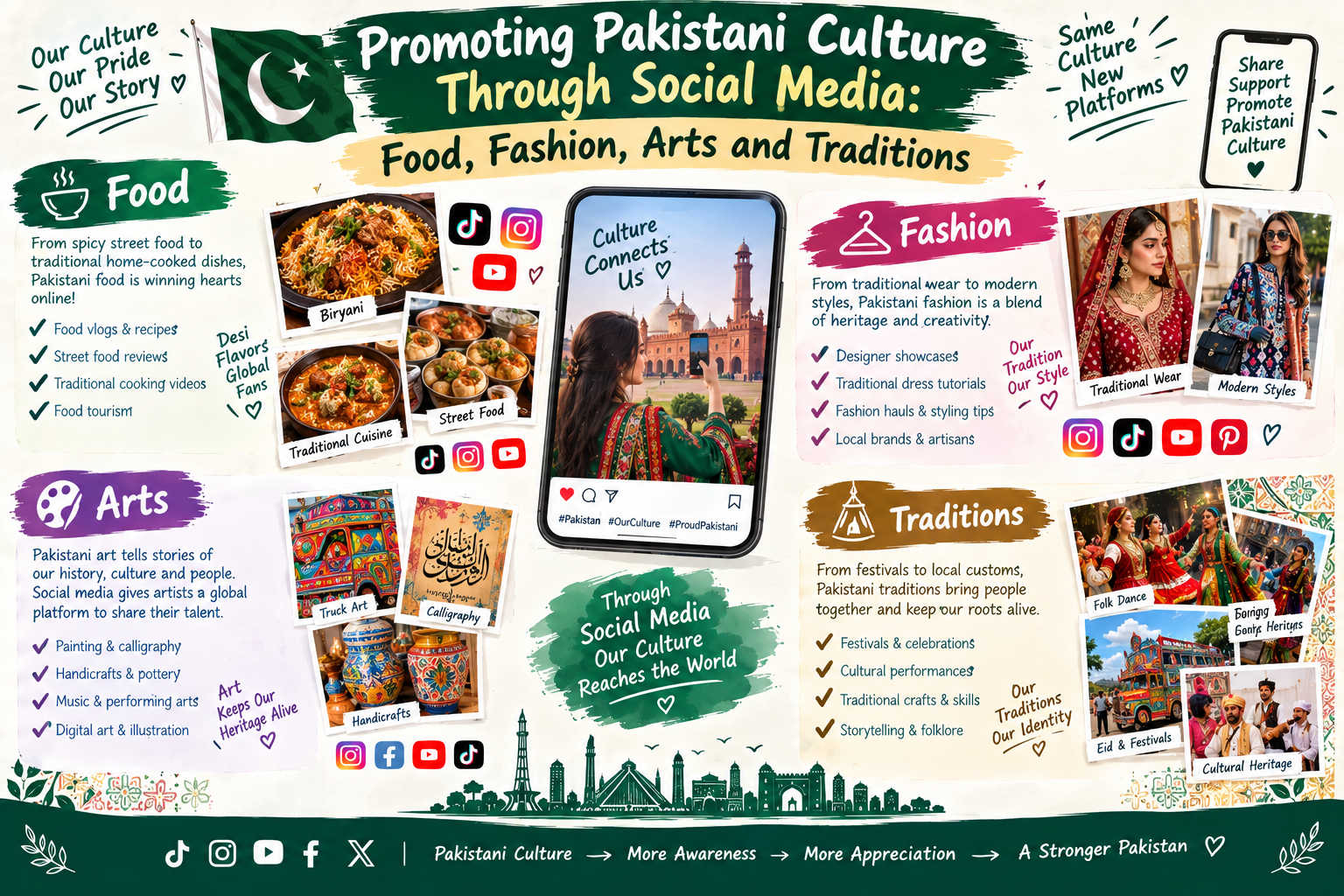
In the modern digital age, social media has created new opportunities to introduce this cultural richness to people across Pakistan and around the world. Platforms such as social networking sites, video-sharing platforms, photography apps, and digital communities allow Pakistani creators to share food, fashion, arts, festivals, traditional crafts, historical places, and everyday cultural practices with large audiences.
Social media has made cultural promotion more accessible. A person can photograph a traditional dish, record a craft-making process, share a regional dress, explain a traditional celebration, or create a short educational video about a historical place. Such content can introduce Pakistani culture to people who may never have experienced these traditions directly.
The positive use of social media can therefore help preserve cultural knowledge, support local artists and businesses, encourage tourism, and create interest among younger generations.
Pakistan's Cultural Diversity
Pakistan's culture is not represented by one single tradition. It contains many regional identities and communities, each contributing something valuable to the country's cultural landscape.
Punjab is known for its colorful clothing, folk traditions, agriculture-based heritage, poetry, music, food, and celebrations. Sindh has a strong tradition of Ajrak, Sindhi embroidery, handicrafts, folk music, and historic architecture. Khyber Pakhtunkhwa has distinctive Pashtun traditions, handicrafts, hospitality, music, and cultural clothing.
Balochistan has its own traditional dresses, embroidery, crafts, music, and tribal heritage. Gilgit-Baltistan is known for mountain communities, traditional clothing, local foods, crafts, and breathtaking cultural landscapes. Azad Jammu and Kashmir also has distinctive traditions, languages, foods, crafts, and forms of music.
Social media provides a space where these different cultures can be represented and appreciated.
Social Media as a Digital Cultural Window
Social media can work like a digital window into Pakistani culture.
Someone living in Karachi can discover traditional crafts from Gilgit-Baltistan. A student in Lahore can learn about Sindhi Ajrak. A Pakistani living abroad can watch videos about traditional Pakistani food and festivals.
This type of cultural exchange can strengthen awareness and appreciation.
Creators can share:
Traditional recipes
Regional clothing
Local languages
Folk stories
Handicrafts
Traditional music
Poetry
Historical buildings
Festivals
Wedding traditions
Regional landscapes
Traditional games
Local businesses
This content can make cultural knowledge more accessible to younger audiences.
Promoting Pakistani Food Online
Food is one of the strongest parts of Pakistani culture, and social media has provided a powerful platform for sharing it.
Pakistani cuisine includes a wide range of regional dishes. Biryani, nihari, haleem, karahi, pulao, saag, lassi, kebabs, parathas, sweets, and many other foods are enjoyed in different parts of the country.
Food creators can introduce these dishes through photographs, cooking videos, recipes, and stories about their cultural background.
Regional foods can also receive greater recognition.
For example, a creator can highlight a traditional dish from a particular city or region instead of focusing only on nationally famous foods. This gives smaller food traditions an opportunity to reach a wider audience.
Pakistani Recipes and Family Traditions
Many Pakistani recipes are connected to family traditions.
Grandparents and parents often pass recipes from one generation to another. Social media can provide another way to preserve these culinary traditions.
A creator can record a traditional recipe and explain:
Its ingredients
Its preparation method
When it is commonly served
Its regional background
Its connection with family traditions
This creates a digital record that younger generations can revisit.
Traditional recipes that may otherwise remain within individual families can become part of a broader cultural conversation.
Pakistani Fashion on Social Media
Pakistani fashion has a strong connection with culture and tradition.
Traditional clothing such as shalwar kameez, kurta, dupatta, waistcoats, embroidered dresses, and regional outfits continues to be part of Pakistani cultural life.
Social media allows designers, boutiques, photographers, and fashion creators to showcase traditional clothing alongside modern styles.
Pakistani fashion content can demonstrate how traditional elements can be incorporated into contemporary clothing while maintaining cultural identity.
For example, traditional embroidery, regional patterns, handcrafted fabrics, and cultural motifs can appear in modern designs.
This creates an interesting connection between heritage and contemporary fashion.
Regional Dresses and Cultural Identity
Different regions of Pakistan have distinctive clothing traditions.
Regional dresses often reflect local history, climate, craftsmanship, and community identity.
Social media creators can explain the meaning and background of different outfits rather than simply showing photographs.
This educational approach can help viewers understand that clothing is not only about appearance. It can also carry cultural history.
Sharing regional clothing can encourage young Pakistanis to learn more about the traditions of their own communities and those of other regions.
Supporting Pakistani Handicrafts
Pakistan has a long history of handicrafts.
Artisans create products using embroidery, pottery, woodwork, metalwork, weaving, block printing, carpet making, and other traditional techniques.
Social media can give these crafts greater visibility.
An artisan who previously depended mainly on local customers can potentially introduce their work to audiences in other Pakistani cities and abroad.
Creators can show the process behind a handmade product, helping viewers understand the time, skill, and creativity involved.
This can increase appreciation for handmade products and support traditional craftsmanship.
Ajrak and Sindhi Cultural Heritage
Ajrak is one of the best-known symbols associated with Sindhi cultural heritage.
Its distinctive patterns and traditional production techniques have cultural significance. Social media can help explain the history and craftsmanship associated with Ajrak.
Creators can share photographs, interviews with artisans, educational information, and demonstrations of traditional techniques.
Such content can help younger audiences understand the cultural meaning behind traditional crafts.
It also provides an opportunity to promote local artisans and businesses.
Pakistani Embroidery
Embroidery is another important part of Pakistani cultural expression.
Different regions have their own embroidery styles, patterns, colors, and techniques.
Social media can showcase this variety through close-up photographs, short videos, artisan interviews, and educational posts.
A traditional embroidery design can become more than a fashion trend when people understand its cultural background.
Digital platforms can therefore help connect modern audiences with traditional craftsmanship.
Promoting Pakistani Arts
Pakistan has a rich artistic tradition that includes painting, calligraphy, miniature art, pottery, sculpture, photography, textile art, and other creative forms.
Artists can use social media to display their work and connect with audiences.
Young artists in particular can create digital portfolios and introduce their work without depending entirely on traditional exhibition spaces.
Art lovers can discover emerging Pakistani artists and learn about different artistic styles.
This can contribute to a stronger digital art community in Pakistan.
Pakistani Calligraphy and Islamic Art
Calligraphy has an important place in Pakistani artistic traditions.
Artists create beautiful designs using Urdu, Arabic, Persian, and other forms of written expression.
Social media can provide a platform for calligraphers to display their work and explain different techniques.
Educational content can also introduce younger audiences to the history of calligraphy and its place in South Asian art.
This can help preserve interest in traditional artistic skills.
Urdu Literature and Poetry
Pakistan has a strong literary heritage.
Urdu poetry and literature have been an important part of cultural life for generations. Social media has introduced literary content to younger digital audiences.
Readers can discover information about Pakistani poets, writers, literary movements, books, and cultural history.
Short educational posts can introduce the background of famous literary works, while book-focused communities can encourage reading.
Digital platforms can therefore help connect traditional literature with modern audiences.
Regional Languages on Social Media
Pakistan is home to many languages, including Urdu, Punjabi, Sindhi, Pashto, Balochi, Saraiki, Hindko, Kashmiri, Shina, Balti, and others.
Social media can help people share content in regional languages.
Creators can produce:
Poetry
Stories
Educational videos
Proverbs
Traditional songs
Cultural explanations
Interviews
Historical discussions
Using regional languages online can contribute to their continued visibility.
Young people may become more interested in learning about the language spoken by their grandparents or local communities.
Pakistani Music and Folk Traditions
Music is another important part of Pakistani cultural heritage.
Pakistan has many forms of folk and traditional music associated with different regions and communities.
Social media provides musicians with opportunities to share performances and introduce audiences to traditional instruments and styles.
Young musicians can also experiment with modern presentations while maintaining connections to traditional musical heritage.
This can create new interest in cultural music among younger audiences.
Promoting Pakistani Festivals and Celebrations
Festivals and cultural celebrations are important parts of social life in Pakistan.
Social media allows people to share information about cultural celebrations, traditional foods, clothing, decorations, and community activities.
Content about regional festivals can help people from different parts of Pakistan learn about each other's traditions.
This can promote cultural understanding and appreciation.
At the same time, cultural content should represent traditions respectfully and avoid presenting one community's practices as representative of every Pakistani community.
Pakistani Weddings and Cultural Traditions
Pakistani weddings contain many cultural elements, including clothing, food, decorations, family gatherings, poetry, music, and regional traditions.
Social media has made wedding culture highly visible.
Creators can use this interest to explain the cultural history behind traditional ceremonies and clothing.
This can turn entertainment-focused content into an opportunity for cultural education.
Different communities have different wedding traditions, and social media can help highlight this diversity.
Promoting Historical Places
Pakistan has many historical and cultural sites.
These include ancient archaeological locations, forts, mosques, shrines, old markets, colonial-era buildings, museums, and historic neighborhoods.
Social media creators can visit these places and share photographs, videos, and historical explanations.
Such content can encourage people to learn more about Pakistan's history and visit cultural sites responsibly.
Historical content can also support domestic tourism.
Social Media and Pakistani Tourism
Cultural promotion and tourism are closely connected.
A person watching a video about a traditional market, historical fort, mountain village, or cultural festival may become interested in visiting that location.
Travel creators can highlight:
Local food
Traditional markets
Historical buildings
Handicrafts
Regional clothing
Cultural festivals
Natural landscapes
Local traditions
This can introduce lesser-known destinations to Pakistani audiences.
Responsible tourism content should also encourage visitors to respect local communities, traditions, and the environment.
Giving Local Businesses More Visibility
Cultural promotion can also benefit small Pakistani businesses.
A local clothing brand, handicraft shop, restaurant, bakery, artist, or artisan can use social media to introduce products to a larger audience.
This is especially useful for small businesses that may not have large advertising budgets.
A simple video or photograph can introduce a traditional product to customers in another city.
Digital visibility can therefore connect culture with entrepreneurship.
Young Pakistanis and Cultural Preservation
Young people are among the most active users of social media, making them important participants in cultural preservation.
Instead of seeing traditional culture as something limited to the past, young creators can present it in modern and engaging formats.
They can create videos about:
Traditional foods
Old family recipes
Regional clothing
Folk stories
Local history
Traditional crafts
Urdu literature
Regional languages
This allows cultural traditions to become part of modern digital life.
Preserving Family Stories
Culture is not only found in museums or historical books. It also exists in family stories.
Grandparents may know stories about old neighborhoods, traditional celebrations, family crafts, migration journeys, local customs, or historical events.
Young people can record these stories with permission and preserve them digitally.
This can create valuable personal and cultural records for future generations.
Social Media and Cultural Education
Cultural education can become more interesting through digital content.
A teacher can use a short video about Pakistani architecture during a history lesson. A student can prepare a presentation about regional clothing. A creator can explain the background of a traditional dish.
Visual content can help learners connect information with real examples.
This is especially useful for younger audiences who regularly consume digital content.
Connecting Pakistanis Living Abroad With Their Culture
Many Pakistanis live outside the country, and social media can help them maintain connections with Pakistani culture.
People living abroad can follow Pakistani food creators, artists, musicians, writers, travel creators, and cultural pages.
They can watch traditional celebrations, learn recipes, follow Pakistani fashion, and stay connected with Urdu and regional languages.
For younger generations living abroad, this digital connection can provide an accessible introduction to their family's cultural heritage.
Modern Technology and Traditional Culture
Technology does not necessarily mean abandoning traditional culture.
Instead, digital tools can help preserve and present cultural traditions in new ways.
A traditional craft can be photographed professionally. An old recipe can be recorded as a video. A folk story can be turned into an animated educational presentation. A historical building can be documented through digital photography.
In this way, modern technology can become a tool for cultural preservation.
Responsible Cultural Representation
Positive cultural promotion also requires responsibility.
Creators should try to present traditions accurately and respectfully. Cultural content should avoid unnecessary stereotypes or misleading claims.
When discussing historical information, creators should check reliable sources.
When filming people or artisans, permission should be respected.
Cultural diversity should also be recognized. Pakistan contains many communities and traditions, and no single cultural practice represents everyone.
Responsible representation makes cultural content more informative and respectful.
The Role of Pakistani Content Creators
Pakistani content creators can play an important role in promoting culture.
Creators can combine entertainment with education by explaining the stories behind the food, clothing, crafts, places, and traditions they feature.
High-quality cultural content can help audiences appreciate the effort behind traditional practices.
Creators can also collaborate with artisans, historians, chefs, artists, designers, writers, and local communities.
Such collaborations can create more authentic and informative content.
The Future of Pakistani Culture on Social Media
The future of cultural promotion in Pakistan is likely to become increasingly digital.
New technologies can make cultural storytelling more interactive through short videos, digital exhibitions, virtual tours, animations, podcasts, and educational content.
Young Pakistanis can become active participants in documenting their communities.
At the same time, traditional knowledge can continue to come from elders, artisans, artists, writers, historians, and local communities.
The combination of traditional knowledge and modern technology can create a strong cultural record for future generations.
Conclusion
Social media has created a powerful opportunity to promote Pakistani culture in a modern and accessible way. Food, fashion, arts, handicrafts, languages, literature, music, historical places, festivals, and family traditions can all be shared with wider audiences through digital platforms.
Pakistani creators can use social media to introduce regional traditions, support local artisans, encourage tourism, promote small businesses, and connect young people with their cultural heritage.
The most valuable cultural content is not simply attractive; it also tells a story. A traditional dress can explain regional history. A recipe can preserve a family tradition. A handmade craft can introduce the skill of an artisan. A historical place can connect people with the past.
When social media is used responsibly, it can help Pakistan's diverse cultural traditions remain visible, appreciated, and relevant in the modern digital world.
FAQs
1. How does social media promote Pakistani culture?
Social media promotes Pakistani culture by sharing traditional food, clothing, arts, crafts, music, literature, languages, festivals, historical places, and regional traditions with wider audiences.
2. Can social media help preserve Pakistani traditions?
Yes. Digital photographs, videos, interviews, recipes, stories, and educational posts can help document cultural knowledge and make it accessible to younger generations.
3. How can social media support Pakistani artisans?
Social media can give artisans greater visibility by showcasing their handmade products and explaining the traditional techniques behind their work.
4. How does social media promote Pakistani food?
Food creators can share traditional recipes, cooking methods, regional dishes, and the cultural stories connected with Pakistani cuisine.
5. Can social media help young Pakistanis learn about their culture?
Yes. Young people can explore regional languages, clothing, food, literature, crafts, history, festivals, and family traditions through educational and creative digital content.