Introduction
Mental health is an important part of overall health and well-being. Just as people need to take care of their physical health, they also need to pay attention to their emotional and mental well-being. Mental health can affect how people think, feel, learn, communicate, and deal with everyday challenges.
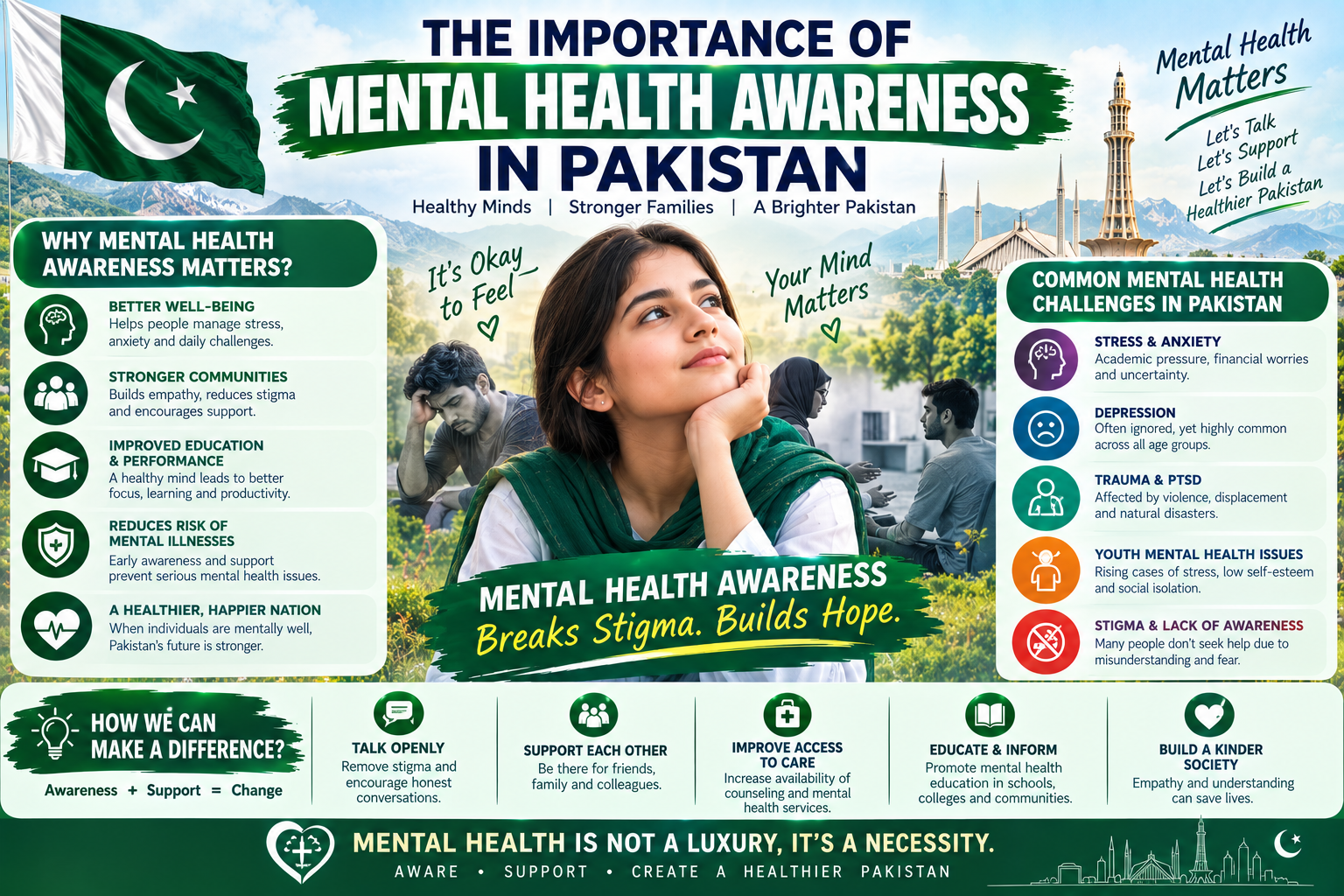
In Pakistan, awareness about mental health is becoming increasingly important. People from different age groups and backgrounds can experience stress, emotional difficulties, anxiety, sadness, or other mental health concerns. However, social stigma, lack of information, and limited access to appropriate support can make it difficult for people to talk openly about these issues.
Mental health awareness can help communities understand that emotional well-being is a normal part of healthcare. Better awareness can encourage people to seek appropriate professional support when needed and create more supportive environments in families, schools, workplaces, and communities.
What Is Mental Health?
Mental health refers to a person's emotional, psychological, and social well-being. It influences how people handle everyday situations, interact with others, make decisions, and respond to challenges.
Good mental health does not mean that a person is happy all the time. Everyone experiences difficult emotions at different points in life. Mental well-being involves having healthy ways of dealing with everyday challenges and knowing when additional support may be needed.
Why Mental Health Awareness Matters
Mental health awareness helps people understand common emotional and psychological difficulties. It can reduce misunderstanding and encourage respectful conversations.
When people have accurate information, they may be more likely to recognize when they or someone they know needs support. Awareness can also reduce harmful stereotypes surrounding mental health.
For Pakistan, improving awareness can help create communities where people feel more comfortable discussing well-being and seeking appropriate professional help.
Mental Health and Physical Health
Mental and physical health are closely connected. Emotional difficulties can affect sleep, concentration, energy, and everyday activities. Similarly, physical health problems can sometimes affect a person's emotional well-being.
A complete approach to healthcare should therefore consider both physical and mental health.
Healthcare professionals can help people understand their individual concerns and identify appropriate forms of support.
Mental Health Challenges Among Young People
Young people experience many changes as they grow and develop. Schoolwork, examinations, family expectations, friendships, social pressures, and uncertainty about the future can sometimes create stress.
Students may also find it difficult to talk about emotional concerns because they fear being misunderstood or judged.
Schools and families can help by creating supportive environments where students can communicate their concerns and learn healthy ways of managing everyday stress.
Mental Health and Education
Education plays an important role in mental health awareness. Schools and colleges can provide students with basic information about emotional well-being and encourage respectful conversations.
Teachers can help create a positive learning environment by treating students with understanding and encouraging them to seek appropriate support when needed.
Mental health education should be age-appropriate, factual, and focused on awareness rather than diagnosis.
Role of Families
Families have a major influence on emotional well-being. A supportive family environment can make it easier for individuals to talk about their concerns.
Parents and guardians can listen without immediately judging or dismissing a person's feelings. They can also encourage appropriate professional support when concerns significantly affect everyday life.
Open communication can help build trust between family members.
Social Stigma Around Mental Health
One of the major barriers to mental healthcare is stigma. Some people may incorrectly believe that mental health difficulties are a sign of weakness or a personal failure.
These beliefs can prevent individuals from seeking appropriate support.
Mental health awareness campaigns can challenge these misconceptions by explaining that mental health is a normal part of healthcare and that professional support can be appropriate when someone is struggling.
Importance of Professional Support
Qualified mental health professionals can provide appropriate assessment, guidance, and support. Depending on the situation, this may involve psychologists, psychiatrists, counselors, or other trained professionals.
People should avoid relying on unqualified individuals for serious mental health concerns.
Professional support can help individuals better understand their situation and identify suitable ways to manage difficulties.
Mental Health in Schools
Schools can support mental well-being by creating respectful and inclusive environments.
Teachers and school staff can encourage healthy communication, reduce unnecessary stigma, and guide students toward appropriate support when concerns arise.
Schools can also promote balanced routines that include education, rest, physical activity, friendships, and recreational activities.
Stress and Students
Students can experience stress because of exams, assignments, competition, expectations, or changes in their personal lives.
Some level of stress can occur naturally, but persistent or overwhelming stress should not be ignored.
Students can benefit from organized study routines, adequate rest, healthy activities, communication with trusted adults, and professional support when needed.
Mental Health and Social Media
Social media has become an important part of modern communication. It can help people stay connected and access useful information, but it can also create challenges.
Comparing oneself with others online, exposure to negative content, cyberbullying, and excessive online engagement can affect emotional well-being.
Young people should be encouraged to use digital platforms responsibly and to seek reliable information about mental health.
Importance of Healthy Communication
Communication is an important part of emotional well-being. People often feel more supported when they have someone they trust to talk to.
Families, teachers, friends, and community members can contribute by listening respectfully and avoiding unnecessary judgment.
Good communication does not replace professional mental healthcare, but it can help create a supportive environment.
Mental Health and Workplace Well-Being
Adults can experience stress related to employment, financial responsibilities, work pressure, and family responsibilities.
Workplaces can support mental well-being by encouraging respectful communication, reasonable working environments, and access to appropriate support.
Employers can also help reduce stigma by treating mental health as part of general employee well-being.
Mental Health in Rural Areas
People living in rural communities may face additional barriers to mental healthcare, including fewer specialized professionals and greater travel distances.
Improving primary healthcare and using appropriate digital services may help expand access to information and professional support.
Community awareness can also help people understand that mental health deserves attention just like physical health.
Role of Technology
Technology can provide new opportunities for mental health awareness. Websites, educational platforms, telehealth services, and digital resources can help people find reliable information.
However, not all online mental health information is accurate. People should rely on trustworthy sources and qualified professionals for important health decisions.
Technology should support healthcare rather than replace professional assessment when it is needed.
Importance of Mental Health Campaigns
Public awareness campaigns can help normalize conversations about mental health.
Campaigns can provide information about emotional well-being, stress, professional support, and ways to help others.
Messages should be simple, respectful, culturally appropriate, and based on reliable information.
Schools, healthcare organizations, government institutions, and community groups can all contribute to awareness campaigns.
Mental Health and Community Support
Communities can play an important role in creating supportive environments. Community organizations can organize educational programs and promote reliable health information.
Reducing stigma requires people to treat mental health concerns with respect and compassion.
A supportive community can make it easier for individuals to seek appropriate help without fear of unnecessary judgment.
Importance of Early Support
Early support can be valuable when emotional or psychological difficulties begin to interfere with everyday life.
Recognizing changes in behavior, mood, concentration, sleep, or daily functioning can encourage people to seek appropriate professional guidance.
Early attention does not mean diagnosing oneself. Instead, it means taking concerns seriously and talking to a qualified professional when appropriate.
Mental Health and Nutrition
Nutrition is part of overall well-being. A balanced diet supports physical health, energy, and normal body functions.
Healthy eating should be considered as one part of a broader healthy lifestyle that also includes adequate rest, physical activity, social connection, and appropriate healthcare.
Mental health concerns should not be reduced to diet alone, and people with significant difficulties should seek qualified professional support.
Physical Activity and Well-Being
Age-appropriate physical activity can support general physical and emotional well-being. Walking, sports, recreational activities, and other enjoyable movement can be part of a balanced lifestyle.
Schools and communities can encourage safe opportunities for physical activity.
The goal should be overall health and well-being rather than unrealistic physical standards.
Sleep and Mental Well-Being
Adequate sleep is important for concentration, learning, mood, and general health.
Students can benefit from maintaining a consistent routine and allowing enough time for rest.
Persistent sleep problems may have different causes, so individuals experiencing ongoing difficulties should consider discussing them with a qualified healthcare professional.
Role of Teachers
Teachers interact with students regularly and may notice changes in behavior or academic performance.
Teachers are not mental health diagnosticians, but they can provide supportive communication and guide students toward trusted adults or appropriate school resources when concerns arise.
A respectful classroom can help students feel safer discussing difficulties.
Role of Parents
Parents and guardians can help children and teenagers by listening carefully, avoiding unnecessary criticism, and encouraging open communication.
If a young person is experiencing persistent difficulties, parents can consider seeking guidance from an appropriate healthcare professional.
Supportive parenting can help children develop confidence and healthy communication skills.
Mental Health and Academic Performance
Mental well-being can influence concentration, motivation, memory, and learning. Students who are dealing with significant emotional difficulties may find academic tasks more challenging.
Schools can support students by promoting healthy study routines and making appropriate support available.
Academic success is important, but students' overall well-being should also be valued.
Challenges to Mental Healthcare in Pakistan
Pakistan faces several barriers to mental healthcare. These can include social stigma, limited awareness, shortage of specialized professionals, financial barriers, unequal access, and misinformation.
Some people may also hesitate to discuss emotional concerns because of cultural or social pressures.
Addressing these barriers requires long-term awareness, education, accessible services, and community support.
Improving Mental Health Awareness in Pakistan
Pakistan can improve mental health awareness through education, public campaigns, school programs, professional training, and accessible healthcare services.
Mental health information should be included in broader health education.
Digital platforms can also be used to share reliable information, provided that the content is based on trustworthy medical and psychological guidance.
Role of Government
Government institutions can support mental healthcare through policies, funding, professional training, public awareness campaigns, and integration of mental health services into broader healthcare systems.
Mental health should be considered an important part of public health planning.
Role of Healthcare Professionals
Healthcare professionals can help communities understand mental health and identify when specialized support may be appropriate.
Psychologists, psychiatrists, counselors, doctors, nurses, and other trained professionals can contribute to awareness and care within their areas of expertise.
Professional ethics, confidentiality, and respectful communication are important parts of mental healthcare.
Role of Young People
Young people can contribute to mental health awareness by learning from reliable sources and avoiding the spread of misinformation.
They can support friends by listening respectfully and encouraging them to talk to a trusted adult or qualified professional when appropriate.
Young people should also understand that they are not responsible for solving another person's mental health problems on their own.
Building a Supportive Society
A mentally healthier society is one where people can discuss well-being without unnecessary shame or judgment.
Families, schools, workplaces, healthcare providers, media organizations, and communities can all contribute to reducing stigma.
Small changes in the way people talk about mental health can create a more supportive environment.
Future of Mental Health Awareness in Pakistan
The future of mental health awareness in Pakistan can improve through education, technology, professional training, accessible services, and community involvement.
As awareness increases, more people may understand the importance of emotional well-being and the value of professional support.
A stronger mental healthcare system can contribute to healthier families, better educational environments, and more supportive communities.
Conclusion
Mental health awareness is an important part of building a healthier Pakistan. Mental well-being affects individuals, families, schools, workplaces, and communities.
Pakistan can improve mental health awareness by reducing stigma, expanding education, increasing access to qualified professionals, and providing reliable information.
Families, teachers, healthcare professionals, government institutions, communities, and young people all have important roles to play.
Mental health should be treated as an essential part of overall healthcare. By creating supportive environments and encouraging appropriate professional help, Pakistan can move toward a healthier and more understanding society.
ealthier communities in Pakistan.
FAQs
1. Why is mental health awareness important in Pakistan?
It helps reduce stigma, improve understanding, and encourage people to seek appropriate professional support when needed.
2. What can schools do to support mental health?
Schools can provide health education, encourage respectful communication, and guide students toward appropriate support when necessary.
3. What role do families play in mental health?
Families can provide supportive communication, listen without unnecessary judgment, and encourage appropriate professional help.
4. How can Pakistan improve mental health awareness?
Through education, public campaigns, professional training, accessible services, and reliable health information.
5. Can technology help with mental health awareness?
Yes. Technology can provide educational resources and help connect people with appropriate healthcare services, when used responsibly.