Introduction
Healthcare is an important part of a healthy and successful society. When people are healthy, they can study, work, support their families, and contribute to the development of their communities. Healthcare is not only about treating people after they become sick. It is also about preventing diseases and health problems before they become serious. This approach is known as preventive healthcare.
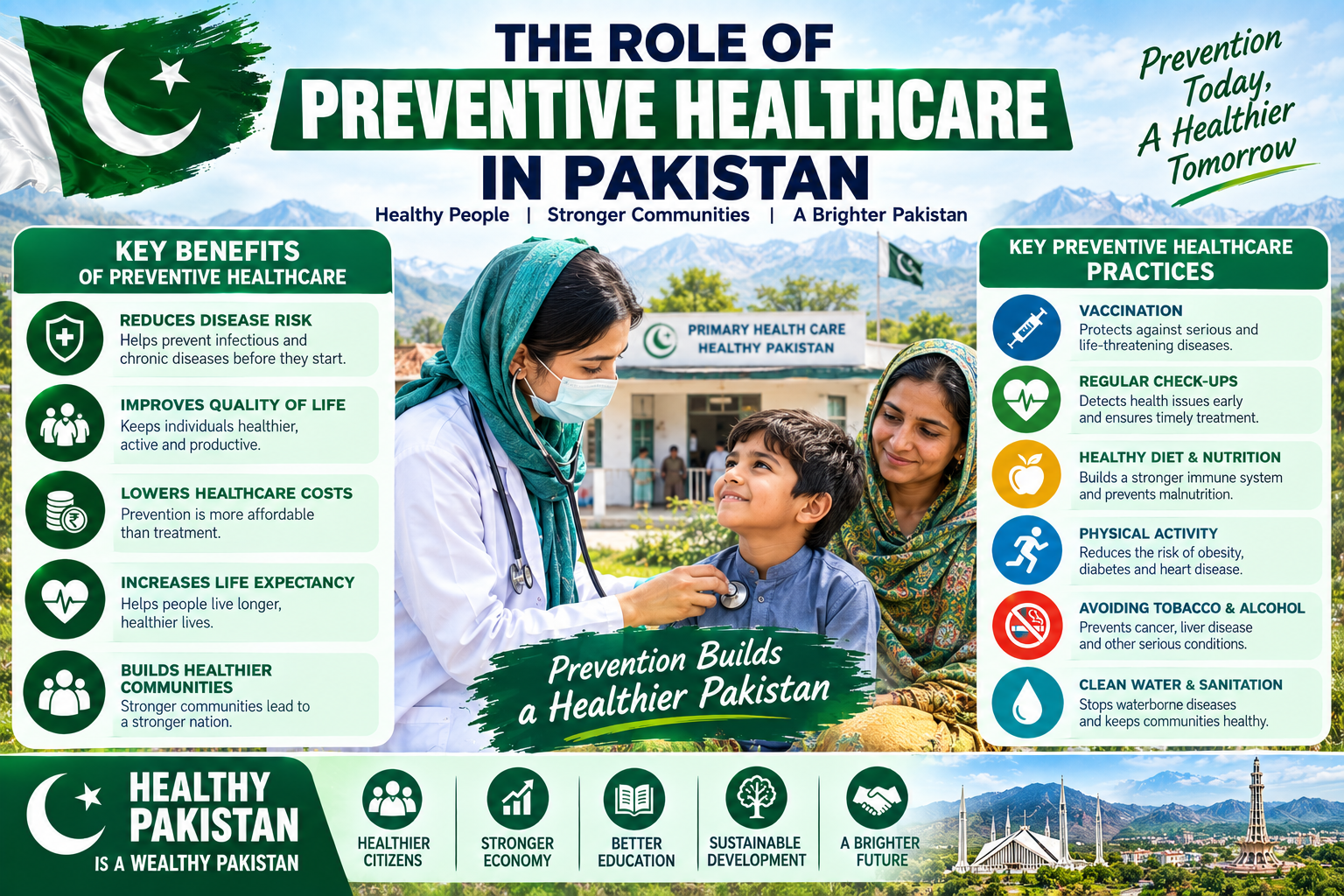
Preventive healthcare plays an important role in Pakistan because many health problems can be reduced through awareness, healthy habits, vaccination, proper nutrition, sanitation, regular checkups, and early detection. A strong preventive healthcare system can reduce pressure on hospitals and help people maintain better health.
Pakistan has a large and diverse population, with people living in cities, towns, villages, and remote areas. Healthcare needs can therefore be different from one community to another. Preventive healthcare can help address these needs by focusing on education, early action, and accessible health services.
What Is Preventive Healthcare?
Preventive healthcare means taking steps to protect health and reduce the risk of diseases before they become serious. Instead of waiting for an illness to develop, preventive healthcare encourages people to identify risks and take appropriate action early.
Examples include vaccination, health education, proper hygiene, nutritious food, physical activity, regular medical checkups, and disease screening when recommended by healthcare professionals.
The main goal is to keep people healthier and reduce avoidable health problems.
Why Preventive Healthcare Is Important in Pakistan
Preventive healthcare is important because prevention can reduce the burden of disease on individuals, families, hospitals, and the wider healthcare system.
When people understand how diseases spread and how health risks can be reduced, they can make better decisions. Prevention can also help identify certain health problems earlier, when professional care may be more effective.
For Pakistan, preventive healthcare can support healthier communities and improve the overall quality of life.
Health Education and Awareness
Health education is one of the most important parts of preventive healthcare. People need accurate information about hygiene, nutrition, vaccination, physical activity, disease prevention, and healthcare services.
Schools, hospitals, community organizations, television, radio, and responsible online platforms can all contribute to health education.
Health information should be easy to understand and based on reliable sources. Better awareness can help people recognize health risks and seek appropriate professional advice.
Importance of Vaccination
Vaccination is an important preventive healthcare measure. Vaccines help protect people from several infectious diseases and can also help reduce the spread of disease within communities.
Parents and families need access to reliable information about recommended vaccinations. Healthcare professionals can answer questions and provide guidance about vaccination schedules.
Strong vaccination programs can contribute to healthier communities and protect vulnerable people.
Importance of Personal Hygiene
Personal hygiene is another basic part of disease prevention. Regular handwashing, maintaining cleanliness, safe food handling, and keeping living spaces clean can help reduce exposure to germs.
Children should learn good hygiene habits from an early age. Schools and families can work together to make hygiene education a normal part of everyday life.
Small healthy habits can make an important difference when practiced consistently.
Clean Water and Sanitation
Access to clean water and proper sanitation is essential for public health. Unsafe water and poor sanitation can increase the risk of various infectious diseases.
Preventive healthcare therefore goes beyond hospitals and clinics. It also includes improving community infrastructure and promoting safe water and sanitation practices.
Government agencies, local authorities, and communities can work together to improve water quality and sanitation facilities.
Healthy Nutrition
Good nutrition supports growth, development, energy, and overall health. A balanced diet can help the body receive the nutrients it needs.
Nutrition education is particularly important for children and young people. Families can benefit from learning about balanced meals, food safety, and the importance of a varied diet.
Preventive healthcare programs can include nutrition education to help communities make healthier food choices.
Physical Activity
Regular physical activity is an important part of a healthy lifestyle. It can support physical fitness and overall well-being.
Schools can encourage students to participate in age-appropriate physical activities. Communities can also support safe spaces where people can walk, play, or exercise.
Physical activity should be approached as part of a balanced and healthy lifestyle rather than as an extreme goal.
Regular Health Checkups
Regular health checkups can help people understand their general health and identify certain problems early. The appropriate type and frequency of checkups can vary depending on age, family history, and individual circumstances.
People should consult qualified healthcare professionals when they have concerns about their health.
Early professional guidance can sometimes prevent minor concerns from becoming more serious problems.
Early Detection of Diseases
Early detection is an important part of preventive healthcare. Some diseases may not produce obvious symptoms during their early stages.
Appropriate screening and medical evaluation can help identify certain conditions earlier. However, screening recommendations differ according to age, risk factors, and other circumstances.
People should follow guidance from qualified healthcare professionals rather than relying on random online information.
Prevention of Infectious Diseases
Infectious diseases can affect individuals and communities. Preventive measures such as vaccination, hand hygiene, safe water, sanitation, food safety, and public awareness can help reduce health risks.
During disease outbreaks, accurate public health information becomes especially important. Communities should follow guidance from recognized health authorities and healthcare professionals.
Prevention of Non-Communicable Diseases
Preventive healthcare is also important for reducing the risk of non-communicable diseases. These include conditions such as diabetes, cardiovascular diseases, certain cancers, and chronic respiratory diseases.
Healthy eating, regular physical activity, avoiding tobacco, maintaining healthy habits, and receiving appropriate medical advice can contribute to disease prevention.
Public awareness can encourage people to pay attention to long-term health instead of focusing only on immediate symptoms.
Mental Health Prevention and Awareness
Mental well-being is an important part of overall health. Stress and emotional difficulties can affect students, workers, parents, and other members of society.
Mental health awareness can help reduce stigma and encourage people to seek support when they need it. Schools, families, and communities can promote healthy communication and supportive environments.
Preventive mental health education should focus on awareness, emotional well-being, healthy coping strategies, and professional support when appropriate.
Preventive Healthcare for Children
Children benefit greatly from preventive healthcare. Vaccination, good nutrition, hygiene, health education, and regular access to appropriate healthcare can support healthy growth and development.
Schools can contribute by teaching students about cleanliness, healthy food, physical activity, and general health awareness.
Parents and guardians also play an important role by supporting healthy routines and seeking professional healthcare when needed.
Preventive Healthcare for Women
Women need access to appropriate preventive healthcare throughout different stages of life. Health education, nutrition, maternal healthcare, and appropriate medical checkups are important areas.
Women living in rural or underserved communities may face additional barriers to healthcare access.
Improving preventive services for women can benefit families and communities as a whole.
Preventive Healthcare in Rural Areas
Rural communities can face challenges such as long distances to hospitals, limited healthcare facilities, transportation difficulties, and shortages of healthcare professionals.
Preventive healthcare can help by bringing health education and basic preventive services closer to communities.
Community health workers, mobile healthcare services, vaccination programs, and local awareness campaigns can support preventive healthcare in underserved areas.
Preventive Healthcare in Urban Areas
Urban communities also face health challenges. Pollution, traffic, sedentary lifestyles, unhealthy food choices, stress, and overcrowding can contribute to health risks.
Urban preventive healthcare can focus on health education, environmental awareness, physical activity, disease prevention, and accessible medical services.
Cities can also benefit from public spaces that encourage healthy and active lifestyles.
Role of Schools in Preventive Healthcare
Schools are powerful places for health education because children develop many lifelong habits during their school years.
Schools can teach students about hand hygiene, nutrition, physical activity, environmental cleanliness, and general health awareness.
Health education can also encourage students to share reliable information with their families.
Role of Families
Families strongly influence health habits. Parents and guardians can encourage children to maintain good hygiene, eat balanced meals, stay active, and seek appropriate healthcare.
Family members can also support one another during illness and encourage healthy routines.
A supportive home environment can make preventive healthcare easier to practice.
Role of Healthcare Professionals
Doctors, nurses, pharmacists, health educators, and other healthcare professionals have an important role in preventive healthcare.
They can provide health education, vaccination services, screening guidance, professional advice, and information about disease prevention.
Healthcare professionals can also help communities understand the difference between reliable medical information and misinformation.
Role of Technology
Technology can make preventive healthcare more accessible. Digital platforms can provide health education, appointment services, reminders, telemedicine, and access to reliable information.
Mobile phones and internet services can help connect people with healthcare professionals, particularly when physical access is difficult.
However, digital health information should come from trustworthy sources, and technology should complement—not replace—appropriate professional healthcare.
Public Health Campaigns
Public health campaigns can raise awareness about important health issues. Campaigns may focus on vaccination, hygiene, nutrition, disease prevention, sanitation, or other public health priorities.
For campaigns to be effective, information should be simple, accurate, culturally appropriate, and available in languages understood by local communities.
Community leaders, schools, healthcare professionals, and media organizations can help spread reliable messages.
Preventive Healthcare and the Economy
Health and economic development are closely connected. When people remain healthier, they may be better able to attend school, work, and participate in economic activities.
Preventing avoidable illness can also reduce some healthcare costs for families and health systems.
A healthier population can therefore contribute to a more productive economy.
Reducing Pressure on Hospitals
Hospitals can become overcrowded when many people require treatment at the same time. Strong preventive healthcare can reduce some avoidable health problems and encourage early professional care.
Primary healthcare centers can provide health education, basic services, preventive care, and referrals when specialized treatment is needed.
A stronger prevention system can support the wider healthcare network.
Challenges to Preventive Healthcare in Pakistan
Several challenges can limit preventive healthcare efforts in Pakistan.
These include limited public awareness, unequal access to healthcare, financial barriers, misinformation, rural healthcare gaps, limited infrastructure, and difficulties in reaching remote communities.
Cultural and social factors can also influence healthcare decisions.
Addressing these challenges requires long-term planning and cooperation among government institutions, healthcare professionals, schools, communities, and families.
How Pakistan Can Strengthen Preventive Healthcare
Pakistan can strengthen preventive healthcare through several measures.
First, health education should be expanded in schools and communities. Second, vaccination and disease-prevention programs should remain accessible. Third, rural and underserved areas should receive greater attention.
Healthcare facilities should also promote preventive services alongside treatment. Digital technology can be used to spread reliable health information and improve communication.
Finally, communities should be encouraged to participate in public health initiatives.
Importance of Government Policies
Government policies play an important role in preventive healthcare. Governments can support vaccination programs, sanitation projects, health education, nutrition initiatives, disease surveillance, and primary healthcare.
Effective implementation and monitoring are essential to ensure that health programs reach the people who need them.
Long-term investment in prevention can strengthen the healthcare system and improve public well-being.
Role of Communities
Communities can support preventive healthcare by maintaining clean surroundings, participating in awareness activities, supporting vaccination efforts, and sharing reliable health information.
Community participation can make public health programs more effective because local people understand the needs and challenges of their communities.
Role of Young People
Young people can become positive contributors to preventive healthcare. Students can learn about healthy habits and share accurate information with friends and family.
They can also participate in cleanliness activities, environmental initiatives, school health programs, and awareness campaigns.
Educating young people about prevention can create healthier habits that continue into adulthood.
Future of Preventive Healthcare in Pakistan
The future of preventive healthcare in Pakistan depends on awareness, accessibility, technology, education, and strong public health policies.
Digital healthcare can create new opportunities for health education and communication. Better primary healthcare can bring preventive services closer to communities.
At the same time, basic needs such as clean water, sanitation, nutrition, vaccination, and health education should remain important priorities.
A successful healthcare system should not only treat disease but also help people avoid preventable health problems.
Conclusion
Preventive healthcare is an essential part of improving public health in Pakistan. It focuses on preventing diseases, promoting healthy lifestyles, encouraging vaccination, improving hygiene, supporting nutrition, and identifying health concerns early.
Government institutions, healthcare professionals, schools, families, communities, and young people all have important roles to play.
By strengthening preventive healthcare, Pakistan can build healthier communities, reduce pressure on healthcare facilities, improve quality of life, and support long-term social and economic development.
Prevention is not a replacement for medical treatment, but it is an important part of a complete healthcare system. A stronger focus on prevention can help create a healthier future for Pakistan.
FAQs
1. What is preventive healthcare?
Preventive healthcare focuses on preventing diseases and reducing health risks before they become serious.
2. Why is preventive healthcare important in Pakistan?
It can improve public health, increase awareness, reduce preventable diseases, and support healthier communities.
3. What are examples of preventive healthcare?
Examples include vaccination, hygiene, healthy nutrition, physical activity, health education, and appropriate medical checkups.
4. What role do schools play in preventive healthcare?
Schools can teach students about hygiene, nutrition, physical activity, disease prevention, and healthy habits.
5. How can technology support preventive healthcare?
Technology can provide health education, reminders, digital services, telemedicine, and access to reliable health information.